
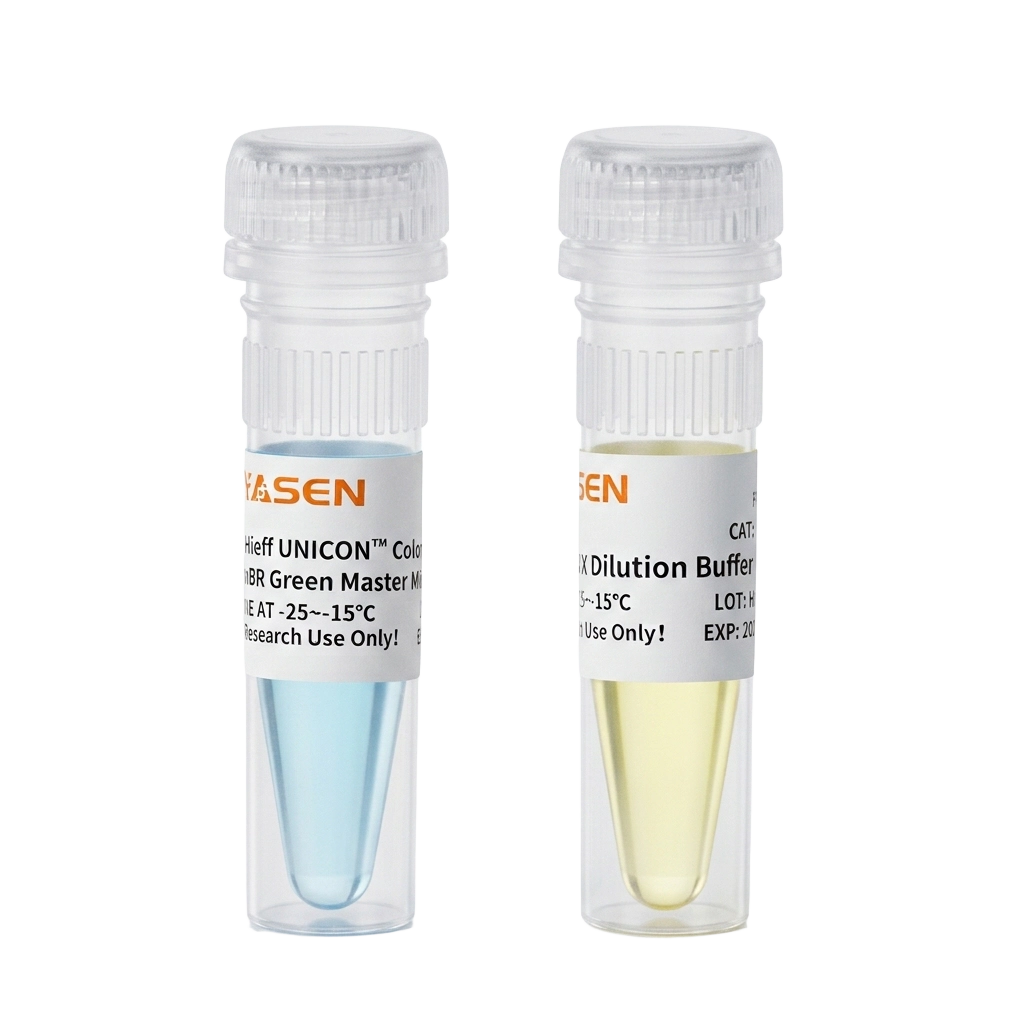


Hieff UNICON™ ColorGPS qPCR Master Mix (Low Rox) เป็นสารละลายเบื้องต้นสำหรับการขยายสัญญาณ PCR เชิงปริมาณแบบเรียลไทม์ 2 เท่า ที่มีความเข้มของฟลูออเรสเซนต์สูง ความไวและความจำเพาะสูง และผลผลิตการขยายสัญญาณสูง ส่วนประกอบหลักคือ Hieff UNICON™ Taq DNA Polymerase ซึ่งเริ่มต้นอย่างรวดเร็วด้วยวิธีแอนติบอดี ซึ่งสามารถยับยั้งการขยายสัญญาณแบบไม่จำเพาะที่เกิดจากการอบไพรเมอร์ระหว่างการเตรียมตัวอย่างได้อย่างมีประสิทธิภาพ ในเวลาเดียวกัน สูตรจะเพิ่มปัจจัยเพื่อเพิ่มประสิทธิภาพการขยายสัญญาณของปฏิกิริยา PCR และตัวกระตุ้นเพื่อปรับให้การขยายสัญญาณของยีนที่มีเนื้อหา GC ต่างกัน (30~70%) เท่ากัน เพื่อให้ PCR เชิงปริมาณสามารถได้ความสัมพันธ์เชิงเส้นที่ดีในช่วงกว้างของภูมิภาคเชิงปริมาณ ผลิตภัณฑ์นี้ใช้ปฏิกิริยาเปลี่ยนสีผสมของสีย้อมต่าง ๆ เพื่อตรวจสอบการทำงานของการปิเปต ซึ่งช่วยลดการเกิดข้อผิดพลาดในการปิเปตได้อย่างมีประสิทธิภาพ
คุณสมบัติ
การติดตามการปิเปต: ลดความเสี่ยงของข้อผิดพลาดที่พลาด/การเพิ่มเติม
การขยายที่ยอดเยี่ยม: ความเป็นเส้นตรงที่ดีในช่วงเส้นตรงที่กว้าง
ความแม่นยำสูง: สามารถแยกแยะเทมเพลตได้อย่างแม่นยำด้วยความแตกต่างของความเข้มข้น 2 เท่า
ความสามารถในการทำซ้ำที่ดี: ความแปรปรวนระหว่างหลุมที่น้อยในหลุมจำลอง ส่งผลให้สามารถทำซ้ำได้ดีขึ้น
เสถียรและเชื่อถือได้: ระบบปฏิกิริยาสามารถเก็บไว้ที่อุณหภูมิห้องได้ 24 ชั่วโมง และผลิตภัณฑ์ยังคงไม่ได้รับผลกระทบหลังจากการแช่แข็งและละลาย 20 รอบ
แอปพลิเคชั่น
การวิเคราะห์ความแตกต่างของการแสดงออกของยีน
การวิเคราะห์เชิงปริมาณสัมบูรณ์
ข้อมูลจำเพาะ
| ความเข้มข้น | 2 (qPCR มิกซ์) |
| วิธีการตรวจจับ | วิธีการย้อมสี |
| วิธี PCR | คิวพีซีอาร์ |
| โพลิเมอเรส | ดีเอ็นเอโพลีเมอเรส |
| ประเภทของตัวอย่าง | ดีเอ็นเอ |
| อุปกรณ์การใช้งาน | Applied Biosystems 7500, 7500 Fast, ViiA7;Stratagene MX4000, MX3005P, MX3000P และเครื่องมือ PCR เชิงปริมาณเรืองแสงอื่นๆ ที่ต้องมีการเติม ROX Reference Dye ในความเข้มข้นต่ำ |
| ประเภทสินค้า | พรีมิกซ์สำหรับ PCR เชิงปริมาณฟลูออเรสเซนต์แบบเรียลไทม์ |
| สมัครเข้าใช้งาน (ใบสมัคร) | การแสดงออกของยีน |
ส่วนประกอบ
| ส่วนประกอบ หมายเลข | ชื่อ | 11189ES03 | 11189ES08 | 11189อีเอส60 |
| 11189-ก | ไฮฟ์ ยูนิคอน™ คัลเลอร์จีพีเอส qPCR มาสเตอร์มิกซ์ -ลโอ้ว ร็อกซ์) | 1 มล. | 5×1 มล. | 100×1 มล. |
| 11189-บี | บัฟเฟอร์เจือจาง 10× | 1 มล. | 1 มล. | 20×1 มล. |
การขนส่งและการเก็บรักษา
ควรเก็บผลิตภัณฑ์นี้ไว้ที่ -25~-15℃ เป็นเวลา 1 ปี
ตัวเลข
 รูปที่ 1 สามารถได้ผลลัพธ์ที่เชื่อถือได้ภายในช่วงไดนามิก
การใช้เทมเพลตพลาสมิด 2 µL ที่มีระดับความชัน 10^1-10^7 ทำให้ยีนที่เกี่ยวข้องได้รับการขยาย Hieff UNICON™ มาสเตอร์มิกซ์ ColorGPS สามารถตรวจจับช่วงปริมาณเทมเพลตได้อย่างมีประสิทธิภาพที่ระดับ 7 ลำดับขนาด โดยให้ความเป็นเส้นตรงที่ดีภายในช่วงเชิงเส้นที่กว้าง
 รูป2. สามารถแยกแยะความแตกต่างของความเข้มข้นของเทมเพลตได้แม่นยำถึง 2 เท่า
การใช้พลาสมิด 2 µL ที่เจือจางแบบไล่ระดับ 2 เท่าเป็นแม่แบบ ยีนที่เกี่ยวข้องจะถูกขยาย Hieff UNICON™ มาสเตอร์มิกซ์ ColorGPS สามารถแก้ไขความแตกต่างของความเข้มข้นของเทมเพลตได้อย่างแม่นยำ
 รูป3สังเกตเห็นความแปรปรวนระหว่างหลุมที่เล็ก แสดงให้เห็นถึงความสามารถในการทำซ้ำได้ดีกว่า
โดยใช้พลาสมิดหลายสิบชุดเป็นแม่แบบ การขยายพันธุ์จะดำเนินการโดยใช้รีเอเจนต์เรืองแสงเชิงปริมาณต่าง ๆ ตามขั้นตอนที่ระบุไว้ในคู่มือการใช้งานของแต่ละรีเอเจนต์ ค่า SD บ่งชี้ว่าเมื่อเทียบกับรีเอเจนต์ถอดรหัสย้อนกลับอื่น ๆ ผลิตภัณฑ์ใหม่นี้มีความแตกต่างระหว่างหลุมจำลองน้อยกว่าและมีความสามารถในการทำซ้ำได้ดีกว่า
 รูป4. มีความยืดหยุ่นมากขึ้น เหมาะกับขั้นตอนมาตรฐานหรือแบบรวดเร็ว
ในขั้นตอนมาตรฐาน เวลาแปรสภาพและเวลาขยายจะถูกตั้งไว้ที่ 10 วินาทีและ 30 วินาทีตามลำดับ ในขณะที่ขั้นตอนด่วน เวลาแปรสภาพและเวลาขยายจะถูกตั้งไว้ที่ 3 วินาทีและ 10 วินาทีตามลำดับ เพื่อตรวจจับค่า Ct ที่สอดคล้องกับยีนเป้าหมาย 10 ตัว ผลลัพธ์แสดงให้เห็นว่าค่า Ct ที่ได้จากผลิตภัณฑ์ใหม่ทั้งในขั้นตอนมาตรฐานและขั้นตอนด่วนมีความสัมพันธ์กันอย่างมาก และผลิตภัณฑ์ใหม่สามารถให้ผลลัพธ์ที่ดีได้โดยใช้ขั้นตอนด่วน
 รูป5. หลังจากที่เตรียมระบบปฏิกิริยาแล้ว สามารถคงความคงตัวที่อุณหภูมิห้องได้เป็นเวลา 24 ชั่วโมง
โดยใช้ยีนต่าง ๆ จากหนู เซลล์มนุษย์ 293 และ Arabidopsis thaliana เป็นเป้าหมาย หลังจากเตรียมระบบปฏิกิริยาแล้ว ระบบจะถูกวางไว้ในที่มืดที่อุณหภูมิต่างกันเป็นเวลา 24 ชั่วโมงก่อนการตรวจจับ เมื่อเปรียบเทียบกับการประมวลผลทันที ความแตกต่างของการตรวจจับสำหรับยีนต่าง ๆ จะไม่เกิน 0.5 Ct ซึ่งบ่งชี้ว่าสามารถได้ผลลัพธ์ที่เสถียรด้วยการดำเนินการระยะยาวได้เช่นกัน
เอกสาร:
คู่มือการใช้งาน
Storage
FAQ
1. The instrument has not been calibrated for a long time or it is aging. Usually, the instrument needs to be calibrated once a year. It is necessary to have an instrument engineer perform the calibration or replace the aging components.
2. A 10 μL reaction system was used. The normal system is a 20 μL system. Using half of the normal system would result in an excessively low total concentration of Rox, increasing the probability of BadRox occurrence. It is recommended to conduct the experiment using the 20 μL system.
2.Is the length of the product too long? If the length of the product is set to 500bp or more, this situation may occur. It is recommended that during primer design, the length of the product be controlled within the range of 80-300bp.
3. Are the primers inappropriate? If the primers are not designed correctly, they need to be redesigned. If the primers are correctly designed but seem to be degraded, PAGE electrophoresis can be used to check the integrity of the primers.
4. Template degradation: Prepare the template anew and repeat the experiment.
2. What if CT is ≥ 30 but the repeatability is very poor? At this point, due to the low abundance of the effective template, the randomness of collisions between the template and the primers increases, thereby causing a greater difference between the replicons. It is recommended to try adding 2-3 replicons, and then eliminate the data with large differences for data analysis.
Citations
Documents
Applications
คุณอาจชอบ
การสอบถาม
คำถามที่พบบ่อย
ผลิตภัณฑ์นี้มีวัตถุประสงค์เพื่อการวิจัยเท่านั้น และไม่ได้มีวัตถุประสงค์เพื่อใช้ในการรักษาหรือวินิจฉัยโรคในมนุษย์หรือสัตว์ ผลิตภัณฑ์และเนื้อหาได้รับการคุ้มครองโดยสิทธิบัตร เครื่องหมายการค้า และลิขสิทธิ์ที่เป็นของ
แอปพลิเคชั่นบางตัวอาจต้องใช้สิทธิ์ในทรัพย์สินทางปัญญาของบุคคลที่สามเพิ่มเติม