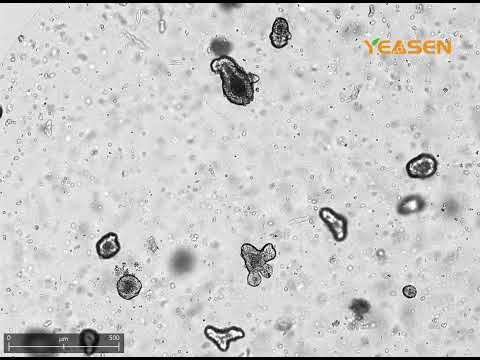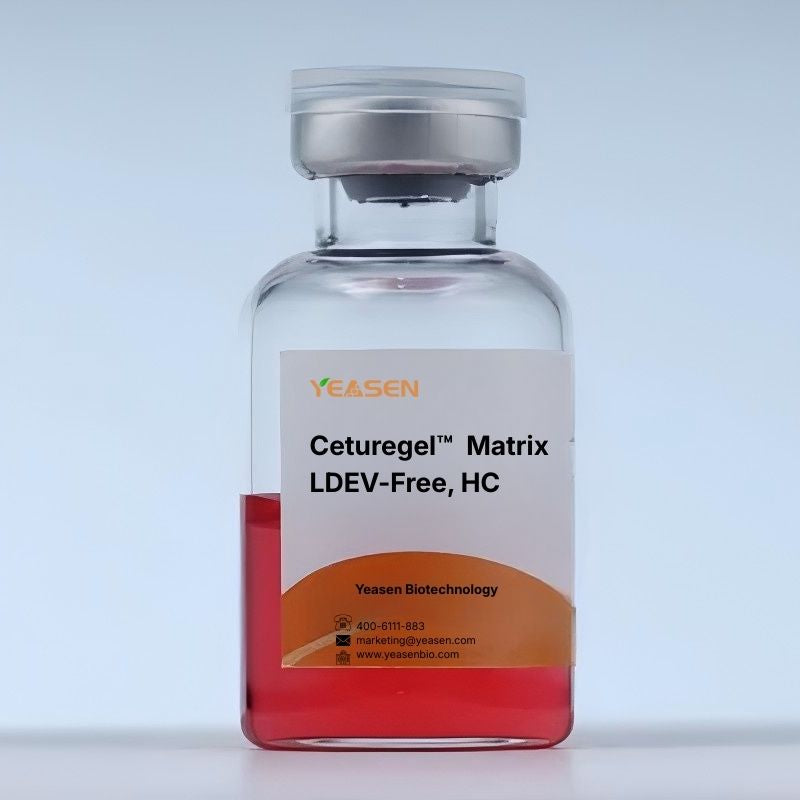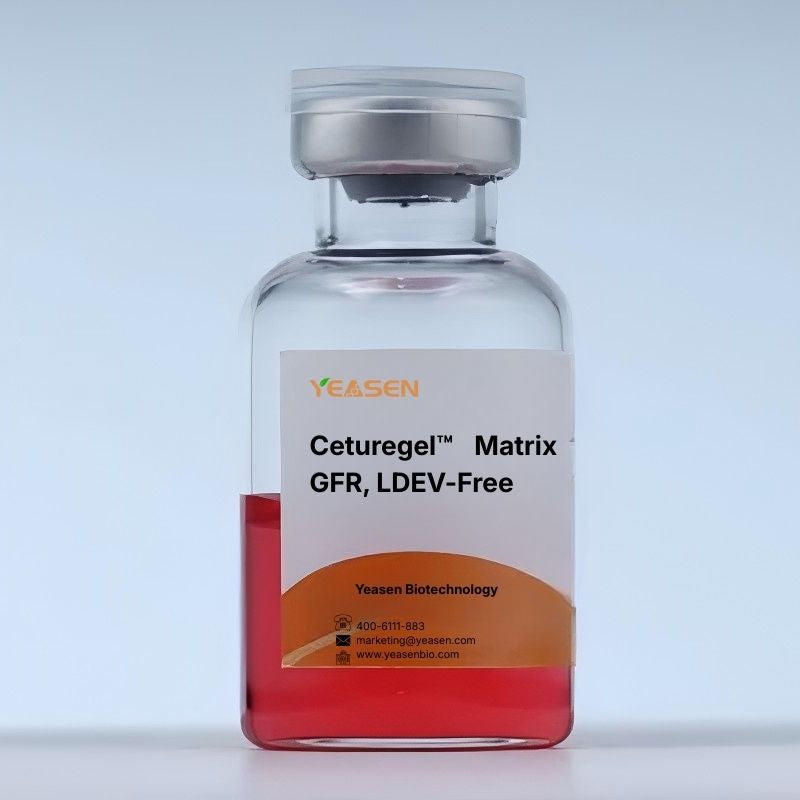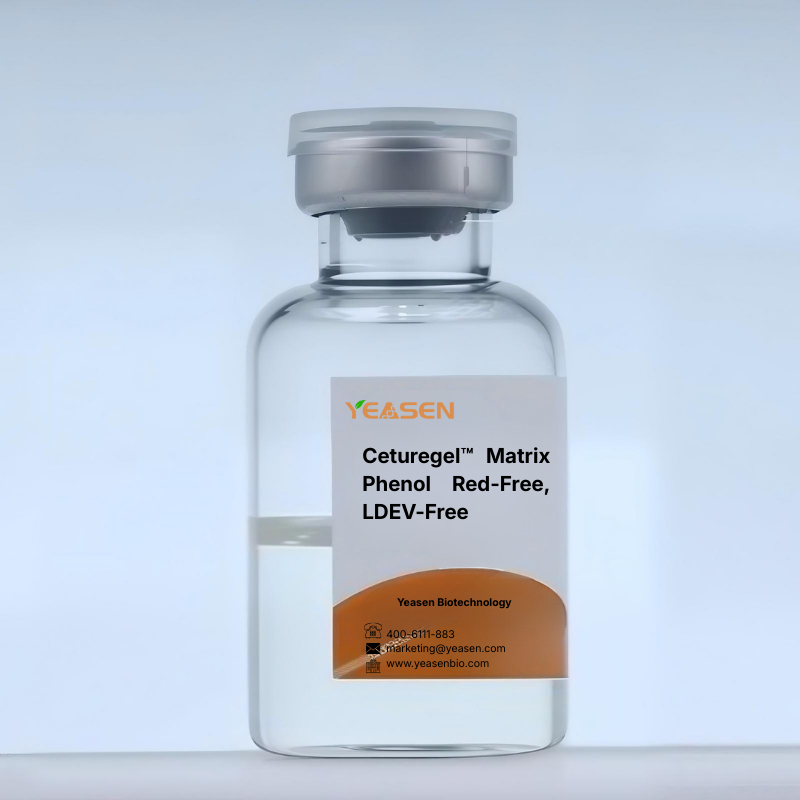
Organoids are 3D stem cell–derived models that closely mimic native tissue structure and function, enabling advanced applications in disease modeling, drug discovery, and precision medicine.
Yeasen provides a one-stop solution for organoid workflows, including matrix gel, culture media, cytokines, small molecules, and tissue processing reagents.
Ceturegel™ Matrix Gel
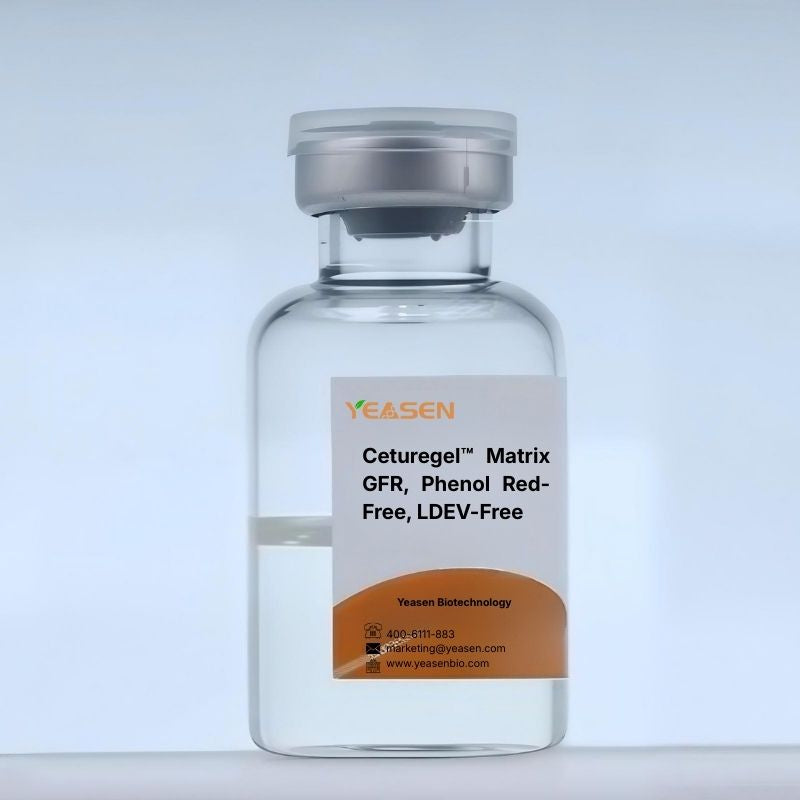
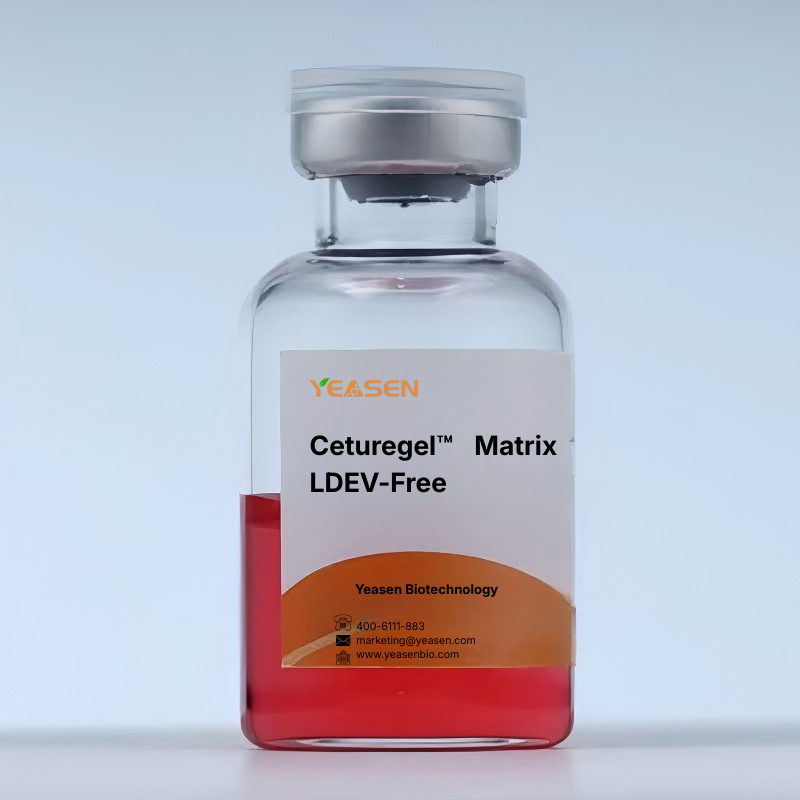
Ceturegel™ Matrix Gel is a high-quality extracellular matrix (ECM) that supports cell growth, differentiation, and 3D self-organization—making it ideal for organoid culture.
Key Advantages
- SPF-grade sourcing with strict pathogen control
- Rigorous QC (pathogens, mycoplasma, LDEV, endotoxin)
- High batch consistency for reproducible results
- Versatile use: organoids, invasion, angiogenesis, and in vivo models
For Organoid Culture
Ceturegel provides a biomimetic microenvironment that enables reliable organoid formation with high purity, low endotoxin levels, and consistent performance.
Product Selection Guide
|
Category |
Name |
Cat. No. |
Note |
|
Basic concentration of Matrigel 8-12 mg/mL |
40183ES |
Suitable for 2D/3D culture, invasion and migration assays, and in vivo tumor formation studies. |
|
|
40184ES |
|||
|
High concentration 18-20 mg/mL |
40187ES |
High-concentration gel is viscous and gels quickly, ideal for in vivo tumor formation with hard-to-grow cell lines. |
|
|
Ceturegel™ Matrix High Concentration,GFR,LDEV-Free |
40189ES |
||
|
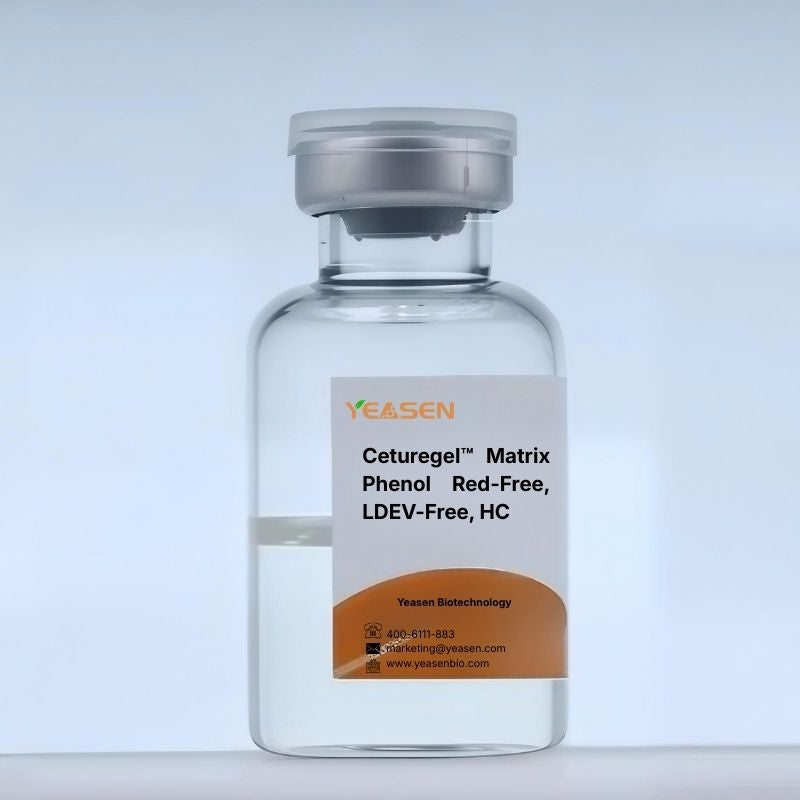
Ceturegel™ Matrix High Concentration,Phenol Red-Free,LDEV-Free |
40188ES |
||
|
Low Growth Factor |
40185ES |
Minimizes growth factor interference in signaling pathway studies. |
|
|
40186ES |
|||
|
Stem cell |
40190ES08/10 |
Mainly used for hESC/iPSC stem cell culture |
|
|
Organoid-Specific |
Ceturegel™ Matrix for Organoid culture, Phenol Red-Free, LDEV-Free |
40192ES08/10 |
Upgraded organoid matrix gel for normal and tumor tissues with improved culture performance. |
Organoid Research Cas
|
Experiment Type |
Case ID |
Organism / Model |
|
Organoid Construction(Cat#40192ES) |
Cas 1 |
|
|
Cas 2 |
||
|
Cas 3 |
||
|
Cas 4 |
||
|
Cas 5 |
||
|
Cas 6 |
||
|
Cas 7 |
||
|
Cas 8 |
Subcutaneous Tumorigenesis(Cat#40183ES)
|
Case ID |
Organism / Model |
Cell Line |
|
Cas 1 |
MCF7 |
|
|
Cas 2 |
LLC |
|
|
Cas 3 |
Hepa1-6 |
Angiogenesis(Cat#40186ES)
|
HUVEC Angiogenesis Assay |
|||
|
Cas 11 |
|||
|
|
|||
Cell Invasion Case Studies(Cat#40183ES)
|
Case ID |
Cancer Type |
Cell Line |
|
Cas 1 |
MDA-MB-231 |
|
|
Cas 2 |
UMR106 |
|
|
Cas 3 |
SiHa |
|
|
U-87 |
||
|
Cas 5 |
HCT116 |
|
|
Cas 6 |
B16F10 |
|
|
Cas 7 |
CT26 |
|
|
Cas 8 |
PC-9 |
|
|
Cas 9 |
U-87 |
|
|
Cas 10 |
AN3CA |
|
|
Cas 11 |
U-251 |
|
|
Cas 12 |
4T1 |
|
|
Cas 13 |
CaSki |
|
|
Cas 14 |
Huh7 |