
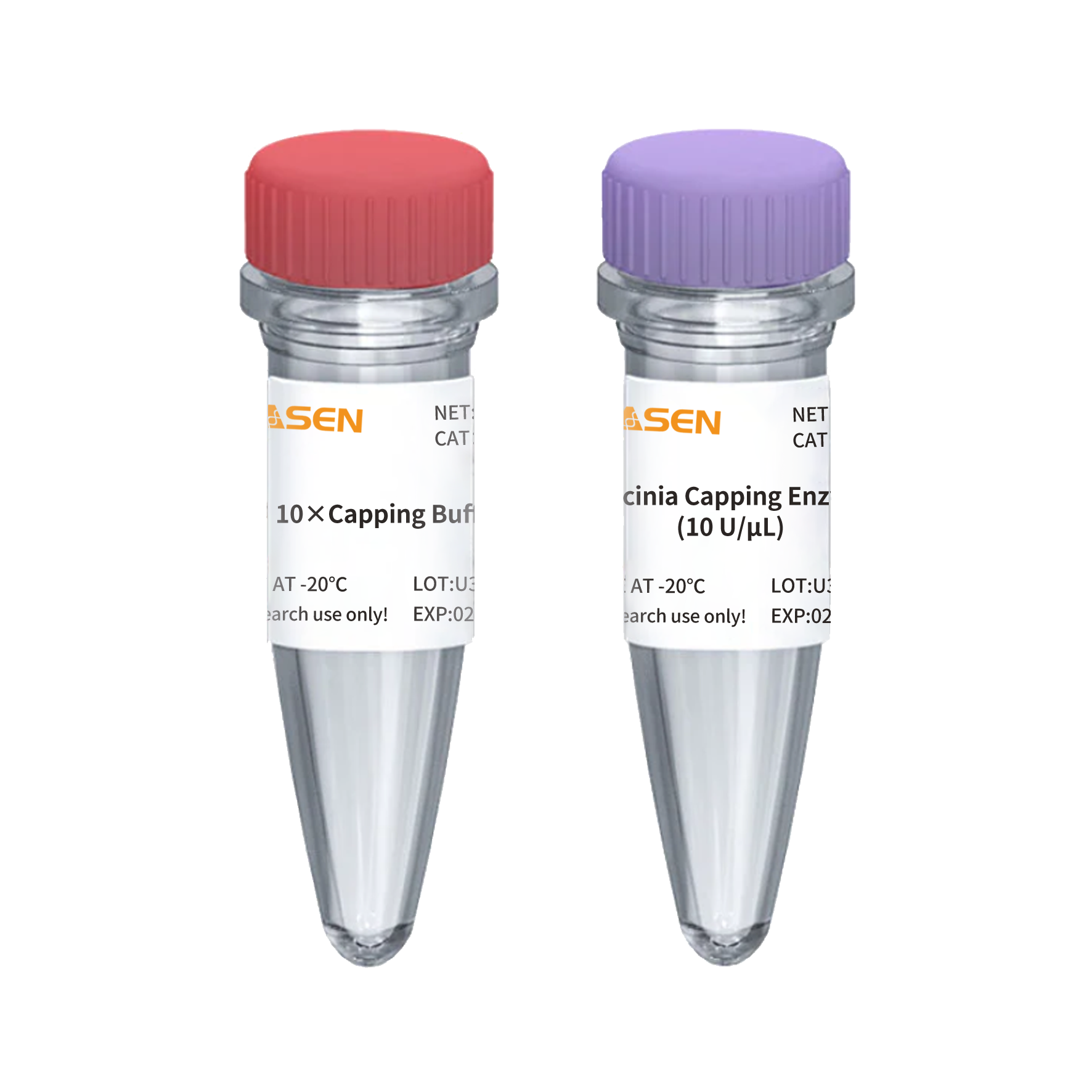
mRNA वैक्सीनिया कैपिंग एंजाइम (10 U/μL) _ 10615ES

YeasenSku: 10615ES84

आकार: 2 केयू
कीमत:
विक्रय कीमत$365.00
भंडार:
स्टॉक में

यूकेरियोट्स mRNA प्रतिलेखन के बाद 5' छोर पर एक विशेष संरचना बनाता है, जिसे कैप संरचना कहा जाता है। कैप संरचना mRNA की स्थिरता, परिवहन और अनुवाद में महत्वपूर्ण भूमिका निभाती है। वैक्सीनिया वायरस कैपिंग एंजाइम एक प्रभावी एंजाइम है जो कैप संरचना के निर्माण को उत्प्रेरित कर सकता है। यह दो सबयूनिट D1 और D12 से बना है। इसमें RNA ट्राइफॉस्फेट गतिविधि, ग्वानिलेट एसाइलट्रांसफेरेज़ गतिविधि और ग्वानिन मिथाइलट्रांसफेरेज़ गतिविधि भी है जो 7-मेथिलगुआनिन कैप संरचना (m7Gppp) को RNA के 5' छोर (m7Gppp5'N) से जोड़ सकती है। वैक्सीनिया वायरस कैपिंग एंजाइम कैपिंग बफर, ग्वानोसिन ट्राइफॉस्फेट (GTP), S-एडेनोसिलमेथियोनीन (SAM), आदि की उपयुक्त सांद्रता पर मौजूद होने पर एक घंटे के भीतर RNA को सही दिशा में कैप कर सकता है।

विशेषता

  • पुनः संयोजक स्रोत से पृथक
  • एंडोन्यूक्लिऐस, एक्सोन्यूक्लिऐस, आरएनएज़ की अनुपस्थिति के लिए परीक्षण किया गया

आवेदन

  • अनुवाद परख/इन विट्रो अनुवाद से पहले mRNA को कैप करना
  • mRNA के 5´ सिरे को लेबल करना

विनिर्देश

स्रोत पुनः संयोजक ई कोलाई वैक्सीनिया वायरस कैपिंग एंजाइम जीन के साथ
इष्टतम तापमान 37℃
भंडारण बफर 20 मिमी ट्रिस-एचसीएल पीएच 8.0, 100 मिमी NaCl, 1 मिमी डीटीटी, 0.1 मिमी EDTA, 0.1% ट्राइटन एक्स-100, 50% ग्लिसरीन
इकाई परिभाषा 1 इकाई: 10 pmol GTP (α- 32P) को 1 घंटे के भीतर 37℃ पर 80 न्यूक्लियोटाइड्स (80 nt) वाले प्रतिलेख में शामिल करने के लिए आवश्यक एंजाइम की मात्रा।

अवयव

घटक सं. नाम 10615ES84 (2,000 यू) 10615ES92 (10,000 यू) 10615ES96 (100,000 यू) 10615ES99 (5 एमयू)
10615 mRNA वैक्सीनिया कैपिंग एंजाइम (10 यू/μएल) 200 μएल 1 एमएल 10 एमएल 500 एमएल


शिपिंग और भंडारण

mRNA वैक्सीनिया कैपिंग एंजाइम जीएमपी-ग्रेड उत्पादों को सूखी बर्फ के साथ भेजा जाता है और उन्हें एक वर्ष के लिए -15℃ ~ -25℃ पर संग्रहीत किया जा सकता है।

आंकड़ों
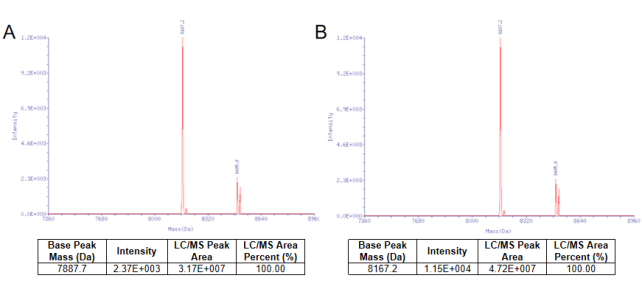
चित्र 1. YEASEN के वैक्सीनिया कैपिंग सिस्टम द्वारा कैपिंग दक्षता लगभग 100% तक पहुँच गई। कैप प्रतिक्रिया से पहले न्यूक्लिक एसिड मास स्पेक्ट्रोमेट्री को चित्र 1A में दिखाया गया था। कैप प्रतिक्रिया के बाद न्यूक्लिक एसिड मास स्पेक्ट्रोमेट्री को चित्र 1B में दिखाया गया था।

दस्तावेज़:


Storage

mRNA Vaccinia Capping Enzyme GMP-grade products are shipped with dry ice and can be stored at -15℃ ~ -25℃ for one year.

FAQ

The purpose of preheating is to unfold the secondary structure of RNA and bring it to a single-stranded state. If this step is not carried out, it will affect the efficiency of capping. This part is indeed a current technical challenge in production. Some companies now directly predict the secondary structure of RNA when determining the template sequence. The capping enzyme only recognizes the first few nucleotides of mRNA. If it is determined that this structure will not result in the secondary structure of RNA, then heating can be omitted.
In industry, the most commonly used method for enzymatic cap addition is to treat IVT products with vaccinia virus cap-adding enzyme, which can modify them into Cap 0 mRNA. The Cap 0 structure can be further modified into Cap 1 (m7GpppmN) under the action of 2'O-methyltransferase. With enzymatic cap addition, the cap addition efficiency can reach over 95%. The co-transcription cap addition method is simple to operate, but because GTP competes with the cap dimer, the cap addition rate of this method is a little lower; both methods have their own advantages and disadvantages.
By increasing the amount of VCE, for example, adding 10 ul of 100 U of enzyme activity to a 100 ul system, the main purpose is to enhance the methyltransferase activity of VCE. It can also be achieved by increasing SAM (0.5 mmol) to enhance the guanine transfer activity and increase the cap formation rate. For instance, our new single-strand cap enzyme has a significantly improved cap formation rate. This is because its guanine transfer activity is better than that of traditional VCE. For traditional VCE, the small subunit D12 is prone to precipitation and polymer formation, which makes purification difficult and leads to loss, thus resulting in higher costs and inability to control batches.
Currently, the industry has not specifically targeted this aspect. In the industry, the main focus is on the efficiency of the cap application. The current best cap application rate is above 80%. Of course, the higher the better. There is still no absolute standard for this. For the synthesized mRNA, purification methods can be employed, such as the one-step membrane encapsulation method by Kang*. This significantly reduces the purification process. The traditional method uses Oligo d(T) columns for purification, with good results achieving a recovery rate of 70-80%; poor results have a recovery rate of 40-50%. An additional step of a hydrophobic column can also be added after the Oligo d(T) column.
The co-transcription requirement stipulates that the starting position of the template must begin with AGG*. The two-step method does not have any specific requirements for the position. However, our current products have the highest yield for the AGGG starting position, mainly due to the preference of the T7 enzyme.

Citations

Applications

आपको यह भी पसंद आ सकता हैं

जाँच करना

उपवास

यह उत्पाद केवल शोध उद्देश्यों के लिए है और मनुष्यों या जानवरों में चिकित्सीय या नैदानिक ​​उपयोग के लिए अभिप्रेत नहीं है। उत्पाद और सामग्री येसेन बायोटेक्नोलॉजी के स्वामित्व वाले पेटेंट, ट्रेडमार्क और कॉपीराइट द्वारा संरक्षित हैं। ट्रेडमार्क प्रतीक मूल देश को इंगित करते हैं, जरूरी नहीं कि सभी क्षेत्रों में पंजीकरण हो।

कुछ अनुप्रयोगों के लिए अतिरिक्त तृतीय-पक्ष बौद्धिक संपदा अधिकारों की आवश्यकता हो सकती है।

येसेन नैतिक विज्ञान के प्रति समर्पित हैं, उनका मानना ​​है कि हमारे शोध में सुरक्षा और नैतिक मानकों को सुनिश्चित करते हुए महत्वपूर्ण प्रश्नों का समाधान किया जाना चाहिए।