
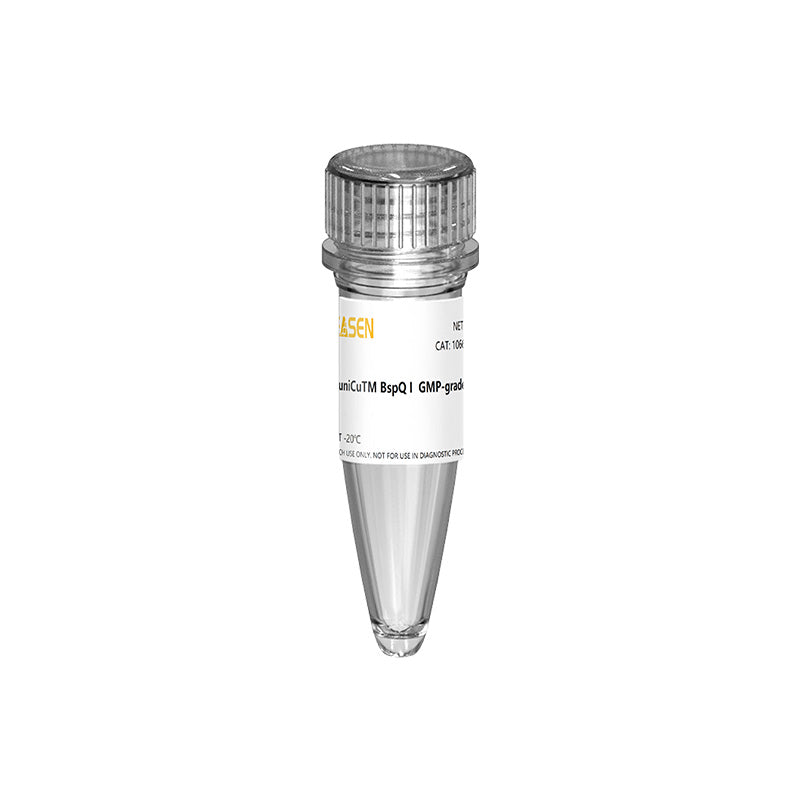

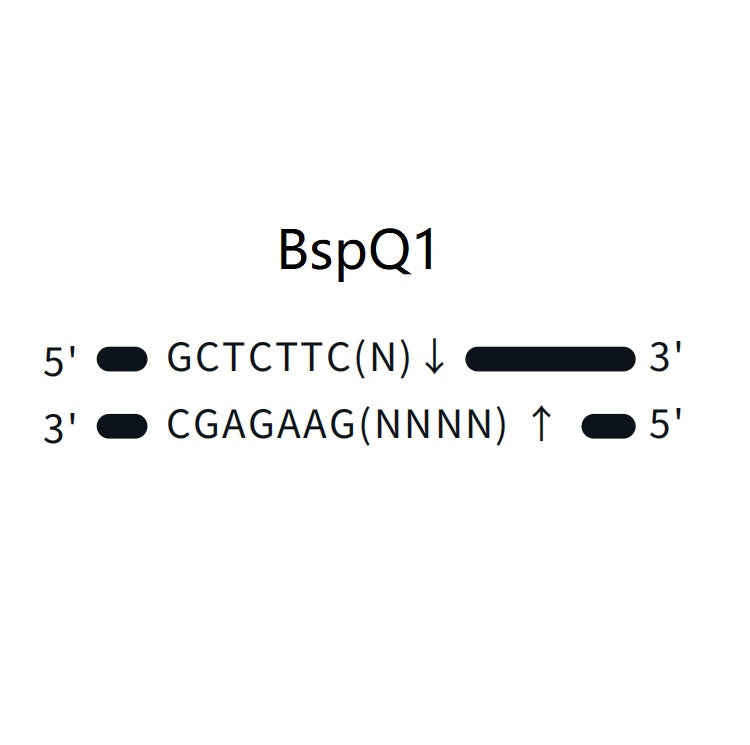


ผลิตภัณฑ์นี้เป็นเอนไซม์ตัดจำเพาะเอ็นโดนิวคลีเอสชนิด II ที่ได้มาจากโปรตีนรีคอมบิแนนท์ที่เข้ารหัสโดยยีน BspQI ใน Bacillus sphaericus ที่แสดงออกโดย E.coli ลำดับการจดจำคือ 5'-GCTCTTCN1/N4-3' ใช้ในการย่อยพลาสมิดเพื่อเตรียมชิ้นส่วนดีเอ็นเอเชิงเส้นที่มีปลายโพลี (A/T/G/C) เพื่อให้ได้ปลายที่ยึดเกาะกันเฉพาะ ผลิตภัณฑ์นี้ผลิตขึ้นตามข้อกำหนดกระบวนการ GMP และให้มาในรูปแบบของเหลว
คุณสมบัติ
- เอนไซม์จำกัดชนิด IIS จดจำลำดับดีเอ็นเอที่ไม่สมมาตรและแยกส่วนนอกลำดับการจดจำ
- ไซต์ตัดเอนไซม์จำกัด: GCTCTTC (1/4)
- การย่อย DNA เพื่อให้ได้ปลายเหนียวเฉพาะ
- แยกจากแหล่งรีคอมบิแนนท์
- ทดสอบการไม่มีเอ็นโดนิวคลีเอส เอ็กโซนิวคลีเอส RNases
แอปพลิเคชัน
- ย่อยพลาสมิดเพื่อเตรียมชิ้นส่วน DNA เชิงเส้นที่ปลายโพลี (A/T/C/G)
- สร้างเทมเพลตพลาสมิดเชิงเส้นก่อนการถอดรหัสในหลอดทดลอง
- การจำกัดการย่อย
ข้อมูลจำเพาะ
| โฮสต์การแสดงออก | อีโคไลรีคอมบิแนนท์ ที่มียีน BspQI |
| อุณหภูมิปฏิกิริยา | 50℃ |
| บัฟเฟอร์เก็บข้อมูล | ทริส-HCl 20 มิลลิโมลาร์, 0.5 โมลาร์ KCl, 0.1 มิลลิโมลาร์ EDTA, 1 มิลลิโมลาร์ DTT, 0.1% ไทรทัน X-100, กลีเซอรอล 50% |
| คำจำกัดความของหน่วย | 1 หน่วย: ปริมาณเอนไซม์ที่ต้องการในการย่อย λDNA 1 μg ภายใน 1 ชั่วโมงที่อุณหภูมิ 50℃ ในระบบ 50 μL |
ส่วนประกอบ
| ส่วนประกอบ หมายเลข | ชื่อ | 10664ES76 (500 ยู) | 10664ES86 (2,500 ยู) | 10664ES92 (10 ก.ว.) | 10664ES98 (100 ก.ว.) |
| 10664 | BspQI เกรด GMP (10 U/μL) | 50 ไมโครลิตร | 250 ไมโครลิตร | 1 มล. | 10 มล. |
การขนส่งและการเก็บรักษา
ผลิตภัณฑ์นี้จัดส่งพร้อมกับน้ำแข็งแห้งและสามารถจัดเก็บได้ที่อุณหภูมิ -15℃ ~ -25℃ สำหรับหนึ่ง ปี.
ตัวเลข
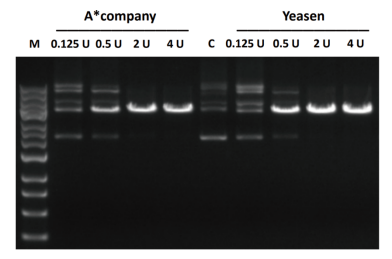
รูปที่ 1. ประสิทธิภาพของ
ในระบบปฏิกิริยา 50 μL λDNA 1 μg ได้รับการบำบัดด้วย BspQI ในปริมาณที่สอดคล้องกัน (ฟักที่อุณหภูมิ 50 °C เป็นเวลา 60 นาที จากนั้นฟักที่อุณหภูมิ 80 °C เป็นเวลา 20 นาทีเพื่อทำให้ BspQI ไม่ทำงาน) จากนั้นจึงบรรจุสารละลายปฏิกิริยา 20 μL
ม.: เครื่องหมายดีเอ็นเอ
C: กลุ่มควบคุมที่ไม่ได้รับการรักษาด้วย BspQI

Storage
FAQ
1. The cut site should be such that the 5' end protrudes or is flush with the end. The presence of the 3' protruding end will increase the generation of false by-products during in vitro transcription (IVT) from the template body.
2. The recognition sequence of the restriction enzyme cleavage site should be as long as possible; the longer the recognition sequence, the less likely it is to appear in the gene fragment.
3. IIS-type endonucleases are the preferred enzymes for linearizing plasmids in vaccine development, as their cleavage sites are outside the recognition sequence, ensuring the integrity of the designed poly(A) tail. After linearizing DNA templates using IIS-type endonucleases, no "scars" will remain, and no unnecessary nucleotides will be added during the IVT process.
4. The endonucleases meet the pharmaceutical production grade requirements (GMP, without animal-derived components, etc.)
At present, for most mRNA development projects, especially vaccine projects, the endonucleases used for linearization of plasmids are still BspQI, BsaI, and XbaI. Among them, BspQI is the most frequently used. It is estimated that there is a certain relationship with the previous designed plasmid sequences from abroad. Of course, it is not limited to these enzymes; we have also encountered cases where other enzymes were used for linearization.
Citations
Applications
คุณอาจชอบ
การสอบถาม
คำถามที่พบบ่อย
ผลิตภัณฑ์นี้มีวัตถุประสงค์เพื่อการวิจัยเท่านั้น และไม่ได้มีวัตถุประสงค์เพื่อใช้ในการรักษาหรือวินิจฉัยโรคในมนุษย์หรือสัตว์ ผลิตภัณฑ์และเนื้อหาได้รับการคุ้มครองโดยสิทธิบัตร เครื่องหมายการค้า และลิขสิทธิ์ที่เป็นของ
แอปพลิเคชั่นบางตัวอาจต้องใช้สิทธิ์ในทรัพย์สินทางปัญญาของบุคคลที่สามเพิ่มเติม