
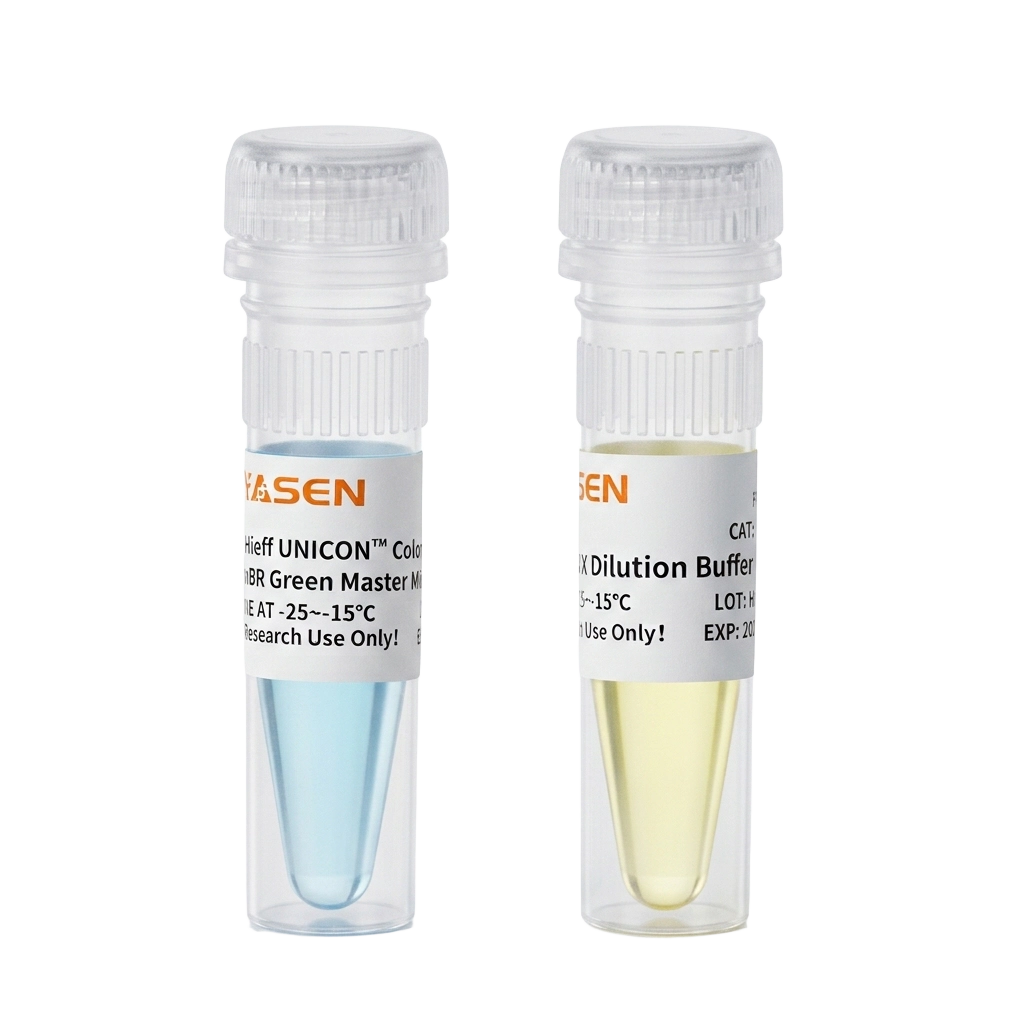


Hieff UNICON™ ColorGPS qPCR Master Mix (Low Rox) — это предварительное решение для 2-кратной количественной ПЦР-амплификации в реальном времени, характеризующееся высокой интенсивностью флуоресценции, высокой чувствительностью и специфичностью, а также высоким выходом амплификации. Основной компонент, ДНК-полимераза Hieff UNICON™ Taq, запускается методом антител, что может эффективно ингибировать неспецифическую амплификацию, вызванную отжигом праймера во время подготовки образца. В то же время формула добавляет факторы для повышения эффективности амплификации реакции ПЦР и посредников для выравнивания амплификации генов с различным содержанием GC (30~70%), так что количественная ПЦР может получить хорошую линейную зависимость в широком диапазоне количественных областей. Продукт использует смешанную реакцию изменения цвета различных красителей для контроля операции пипетирования, что эффективно снижает возникновение ошибок пипетирования.
Функции
Отслеживание пипетирования: снижение риска пропущенных/дополнительных ошибок
Превосходное усиление: хорошая линейность в широком линейном диапазоне
Высокая точность: позволяет точно различать шаблоны с двукратной разницей в концентрации.
Хорошая повторяемость: небольшая межлуночная вариабельность в повторных лунках, что обеспечивает лучшую повторяемость.
Стабильность и надежность: реакционную систему можно хранить при комнатной температуре в течение 24 часов, а продукт остается неизменным после 20 циклов замораживания-оттаивания.
Приложения
Анализ разницы экспрессии генов
Абсолютный количественный анализ
Технические характеристики
| Концентрация | 2 ×(смесь для ПЦР) |
| Метод обнаружения | Метод окрашивания |
| Метод ПЦР | кПЦР |
| Полимераза | Taq ДНК-полимераза |
| Тип образца | ДНК |
| Оборудование для нанесения | Applied Biosystems 7500, 7500 Fast, ViiA7;Stratagene MX4000, MX3005P, MX3000P и другие приборы для количественной флуоресцентной ПЦР, требующие добавления низких концентраций контрольного красителя ROX |
| Тип продукта | Премикс для количественной флуоресцентной ПЦР в реальном времени |
| Подать заявку (заявка) | Экспрессия генов |
Компоненты
| Номер компонента | Имя | 11189ES03 | 11189ES08 | 11189ES60 |
| 11189-А | Хайфф ЮНИКОН™ ColorGPS qPCR Мастер-микс (Лож Рокс) | 1 мл | 5×1 мл | 100×1 мл |
| 11189-Б | 10×Буфер для разбавления | 1 мл | 1 мл | 20×1 мл |
Доставка и хранение
Данный продукт следует хранить при температуре от -25 до -15℃ в течение 1 года.
Цифры
 Рисунок 1. Надежные результаты могут быть получены в динамическом диапазоне.
Используя 2 мкл плазмидных шаблонов с градиентом 10^1-10^7, были амплифицированы родственные гены. Hieff UNICON™ Мастер-микс ColorGPS может эффективно определять диапазон значений шаблона в 7 порядков, достигая хорошей линейности в широком линейном диапазоне.
 Фигура2. Может точно различать различия в концентрации шаблона в 2 раза.
Используя 2 мкл плазмиды, разведенной в 2-кратном градиенте в качестве матрицы, были амплифицированы соответствующие гены. Hieff UNICON™ Мастер-микс ColorGPS может точно устранить различия в концентрации шаблонов.
 Фигура3. Наблюдается небольшая межскважинная изменчивость, что свидетельствует о лучшей повторяемости.
Используя десятки копий плазмиды в качестве шаблона, амплификация была проведена с различными флуоресцентными количественными реагентами в соответствии с процедурами, указанными в соответствующих инструкциях. Значения SD указывают на то, что по сравнению с другими реагентами обратной транскрипции новый продукт имеет меньшие различия между лунками-репликами и лучшую повторяемость.
 Фигура4. Более гибкий, подходит для стандартных или быстрых процедур.
В стандартной процедуре время денатурации и время удлинения устанавливаются на 10 секунд и 30 секунд соответственно, в то время как в быстрой процедуре время денатурации и время удлинения устанавливаются на 3 секунды и 10 секунд соответственно, чтобы обнаружить значения Ct, соответствующие 10 целевым генам. Результаты показывают, что значения Ct, полученные с новым продуктом как в стандартных, так и в быстрых процедурах, имеют сильную корреляцию, и новый продукт может достигать хороших результатов с использованием быстрой процедуры.
 Фигура5После приготовления реакционной системы она может оставаться стабильной при комнатной температуре в течение 24 часов.
Используя различные гены из мыши, человеческих клеток 293 и Arabidopsis thaliana в качестве мишеней, после подготовки реакционной системы ее помещали в темноту при разных температурах на 24 часа перед обнаружением. По сравнению с немедленной обработкой, разница в обнаружении для разных генов не превышает 0,5 Ct, что указывает на возможность получения стабильных результатов при длительных операциях.
Документы:
Руководства
Storage
FAQ
1. The instrument has not been calibrated for a long time or it is aging. Usually, the instrument needs to be calibrated once a year. It is necessary to have an instrument engineer perform the calibration or replace the aging components.
2. A 10 μL reaction system was used. The normal system is a 20 μL system. Using half of the normal system would result in an excessively low total concentration of Rox, increasing the probability of BadRox occurrence. It is recommended to conduct the experiment using the 20 μL system.
2.Is the length of the product too long? If the length of the product is set to 500bp or more, this situation may occur. It is recommended that during primer design, the length of the product be controlled within the range of 80-300bp.
3. Are the primers inappropriate? If the primers are not designed correctly, they need to be redesigned. If the primers are correctly designed but seem to be degraded, PAGE electrophoresis can be used to check the integrity of the primers.
4. Template degradation: Prepare the template anew and repeat the experiment.
2. What if CT is ≥ 30 but the repeatability is very poor? At this point, due to the low abundance of the effective template, the randomness of collisions between the template and the primers increases, thereby causing a greater difference between the replicons. It is recommended to try adding 2-3 replicons, and then eliminate the data with large differences for data analysis.
Citations
Documents
Applications
Вам также может понравиться
Расследование
Часто задаваемые вопросы
Продукт предназначен только для исследовательских целей и не предназначен для терапевтического или диагностического использования на людях или животных. Продукты и содержимое защищены патентами, товарными знаками и авторскими правами, принадлежащими Yeasen Biotechnology. Символы товарных знаков указывают на страну происхождения, а не обязательно на регистрацию во всех регионах.
Для некоторых приложений могут потребоваться дополнительные права интеллектуальной собственности третьих лиц.
Йесен привержен этической науке, полагая, что наши исследования должны затрагивать важнейшие вопросы, обеспечивая при этом безопасность и соблюдение этических стандартов.