
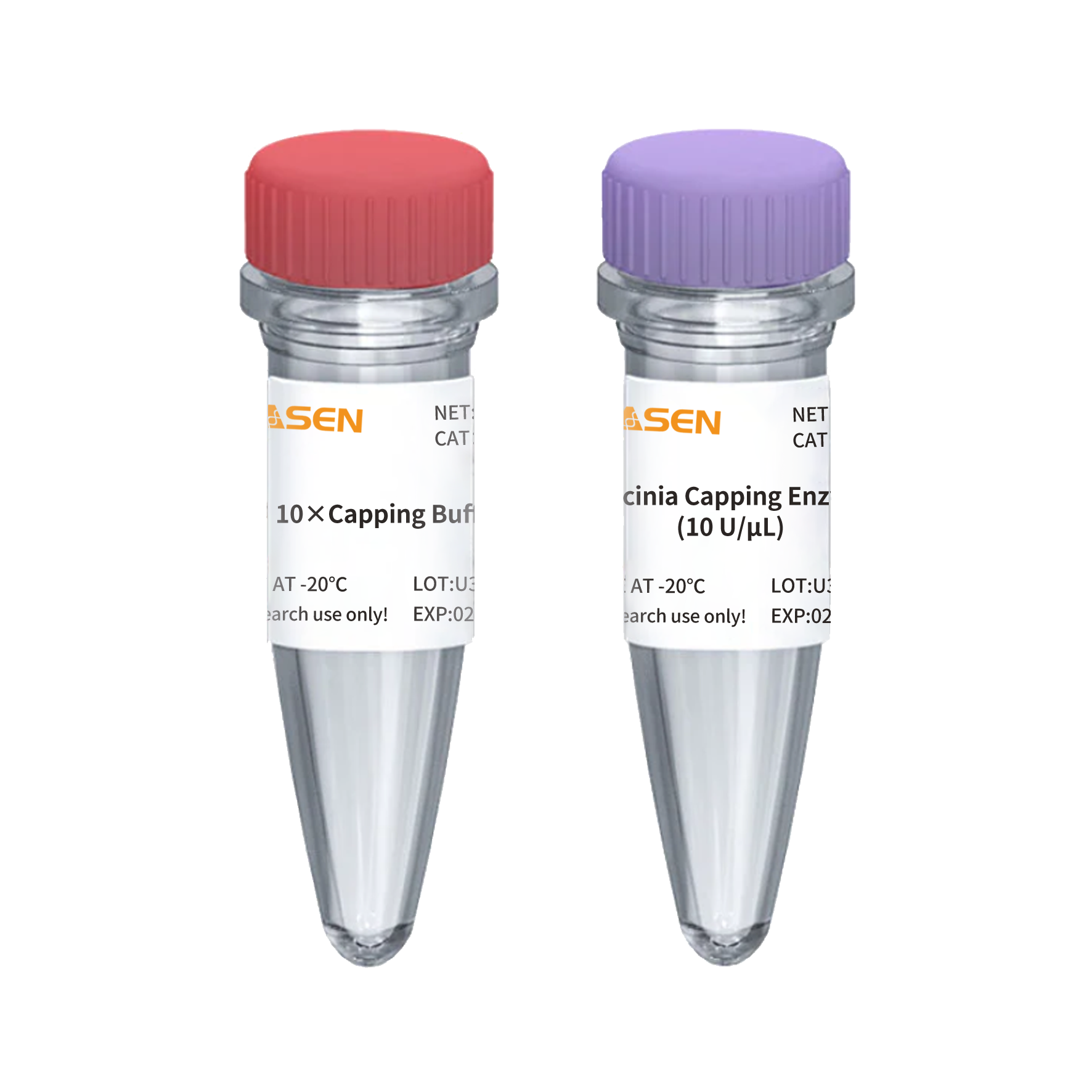

мРНК эукариот образует особую структуру на 5'-конце после транскрипции, которая является структурой кэпа. Структура кэпа играет важную роль в стабильности, транспортировке и трансляции мРНК. Фермент кэпа вируса осповакцины является эффективным ферментом, который может катализировать образование структуры кэпа. Он состоит из двух субъединиц D1 и D12. Он также обладает активностью РНК-трифосфатазы, активностью гуанилат-ацилтрансферазы и активностью гуанин-метилтрансферазы, которые могут связывать структуру кэпа 7-метилгуанина (m7Gppp) с 5'-концом РНК (m7Gppp5'N). Фермент кэпа вируса осповакцины может кэпировать РНК в правильном направлении в течение одного часа, если присутствует подходящая концентрация буфера кэпа, гуанозинтрифосфата (GTP), S-аденозилметионина (SAM) и т. д.
Особенность
- Выделено из рекомбинантного источника
- Проверено на отсутствие эндонуклеаз, экзонуклеаз, РНКаз
Приложение
- Кэпирование мРНК перед анализами трансляции/трансляцией in vitro
- Маркировка 5'-конца мРНК
Спецификация
| Источник | Рекомбинантный кишечная палочка с геном фермента, покрывающего вирус коровьей оспы |
| Оптимальная температура | 37℃ |
| Буфер хранения | 20 мМ Трис-HCl pH 8,0, 100 мМ NaCl, 1 мМ ДТТ, 0,1 мМ ЭДТА, 0,1% Тритон X-100, 50% глицерин |
| Определение единицы измерения | 1 единица: количество фермента, необходимое для включения 10 пмоль ГТФ (α-32P) в транскрипт из 80 нуклеотидов (80 нт) при 37 ℃ в течение 1 часа. |
Компоненты
| Номер компонента | Имя | 10615ES84 (2000 U) | 10615ES92 (10 000 ед.) | 10615ES96 (100 000 ед.) | 10615ES99 (5 МЕ) |
| 10615 | Фермент, блокирующий мРНК вируса коровьей оспы (10 ЕД/мкл) | 200 мкл | 1 мл | 10 мл | 500 мл |
Доставка и хранение
Продукция класса GMP на основе фермента кэппинга мРНК вакцины поставляется с сухим льдом и может храниться при температуре от -15℃ до -25℃ в течение одного года.
Цифры
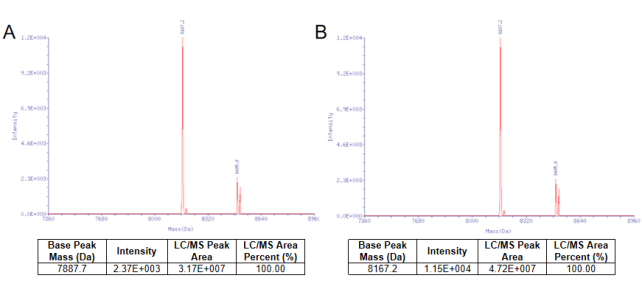
Рисунок 1. Эффективность колпачка почти достигла 100% с помощью системы колпачка вакцины от YEASEN. Масс-спектрометрия нуклеиновых кислот до реакции колпачка показана на рисунке 1A. Масс-спектрометрия нуклеиновых кислот после реакции колпачка показана на рисунке 1B.
Storage
FAQ
Citations
Documents
| Manual |
|---|
| 10615-Manual-Ver.EN20260718.pdf |
| MSDS |
|---|
| MSDS-10615-Vaccinia_Capping_Enzyme_10_U__L_-HB220701.pdf |
Applications
Вам также может понравиться
Расследование
Часто задаваемые вопросы
Продукт предназначен только для исследовательских целей и не предназначен для терапевтического или диагностического использования на людях или животных. Продукты и содержимое защищены патентами, товарными знаками и авторскими правами, принадлежащими Yeasen Biotechnology. Символы товарных знаков указывают на страну происхождения, а не обязательно на регистрацию во всех регионах.
Для некоторых приложений могут потребоваться дополнительные права интеллектуальной собственности третьих лиц.
Йесен привержен этической науке, полагая, что наши исследования должны затрагивать важнейшие вопросы, обеспечивая при этом безопасность и соблюдение этических стандартов.