

Frequently Bought Together
O T7 High Yield RNA Synthesis Kit otimiza o sistema de reação de transcrição. O kit pode sintetizar o RNA fita simples de forma eficiente usando a T7 RNA polimerase, o DNA fita dupla linear com a sequência promotora T7 como molde, NTPs como substrato para controlar a sequência de DNA a jusante do promotor. Durante a transcrição, nucleotídeos modificados podem ser adicionados ao substrato para preparar biotina ou RNA marcado com corante.
Este kit pode sintetizar transcrições longas e transcrições curtas, o RNA pode ser produzido 100-200 μg com 1 μg de entrada de molde de DNA. O RNA sintetizado pela transcrição pode ser usado para várias aplicações downstream, como pesquisa de estrutura e função de RNA, proteção de RNase, hibridização de sonda, RNAi, microinjeção e in vitro tradução.
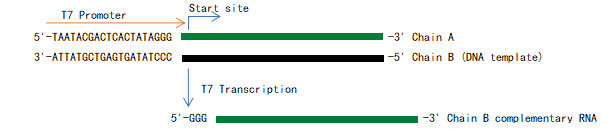
Figura 1: In vitro Processo de transcrição de RNA
Recurso
- Até 180 μg de RNA por reação a partir de 1 μg do modelo de controle
- Sistema de reação otimizado para o processo IVT
- Diminuir a produção de dsRNA
- Maior integridade e pureza do RNA
Aplicativo
- Em vitro Síntese de RNA
Componentes
| Componentes No. | Nome | 10623ES50 (50 toneladas) | 10623ES60 (100 toneladas) | 10623ES70 (500 toneladas) |
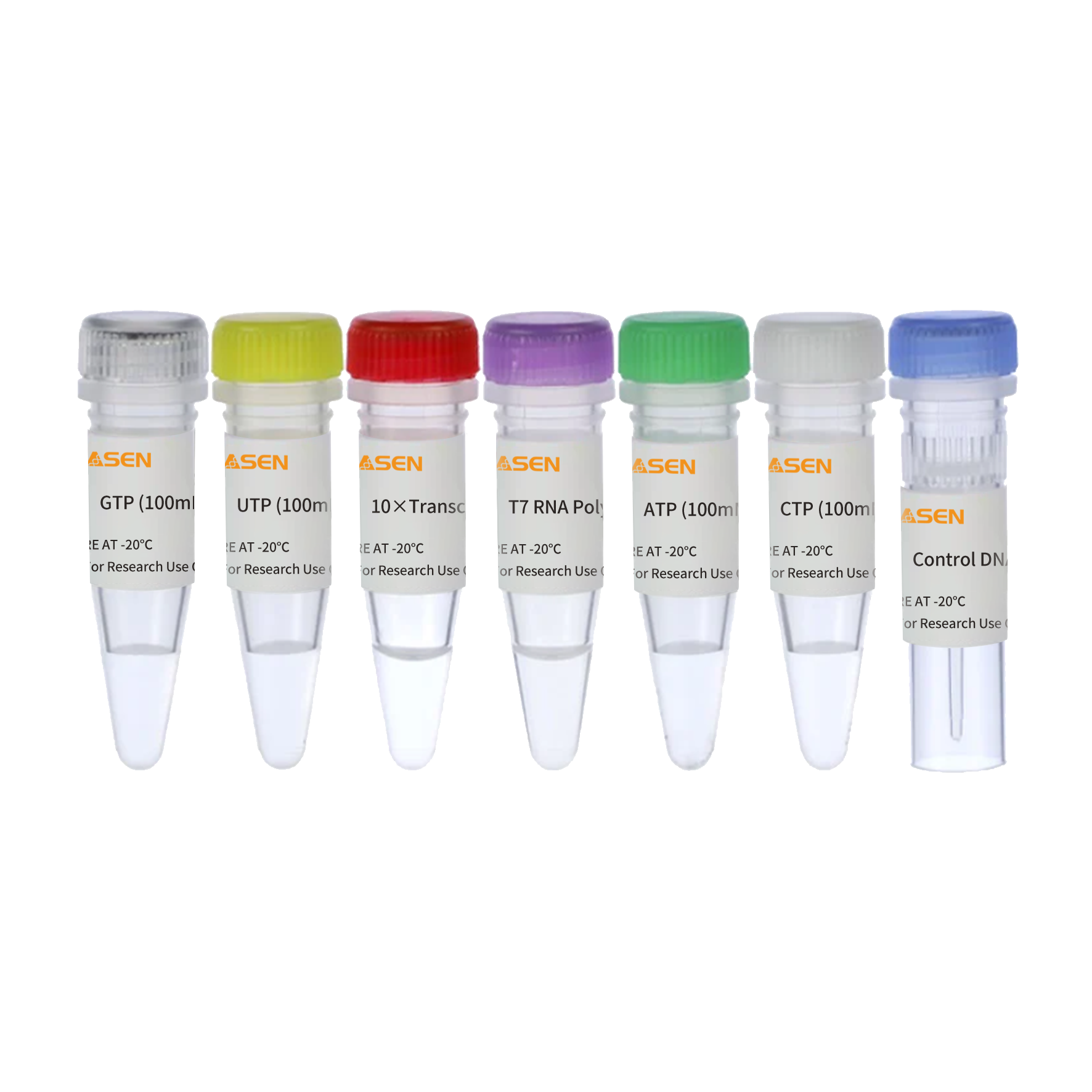
| 10623-A | Mistura de RNA polimerase T7 | 100 μL | 200 μL | 1 mL |
| 10623-B | 10×Buffer de transcrição | 100 μL | 200 μL | 1 mL |
| 10623-C | ATP (100 mM) | 100 μL | 200 μL | 1 mL |
| 10623-D | CTP (100 mM) | 100 μL | 200 μL | 1 mL |
| 10623-E | GTP (100 mM) | 100 μL | 200 μL | 1 mL |
| 10623-F | UTP (100 mM) | 100 μL | 200 μL | 1 mL |
| 10623-G | Modelo de DNA de controle (500ng/μL) | 10 μL | 20 μL | 100 μL |
Envio e armazenamento
Transporte de gelo seco. Armazene a -15℃ ~ -25℃, válido por dois anos.
Figuras
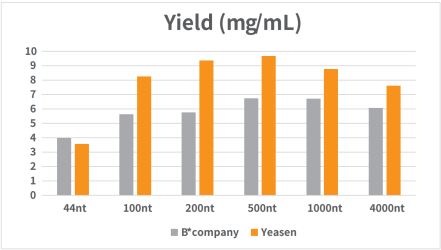
Figura 1. O RNA padrão foi sintetizado in vitro usando o kit de síntese de RNA T7.
A reação foi incubada em um instrumento de PCR a 37℃ por 2h e então purificada por esferas magnéticas (Cat#12602). O resultado do rendimento foi analisado pelo espectrofotômetro NanoDrop, conforme mostrado na Figura 1.
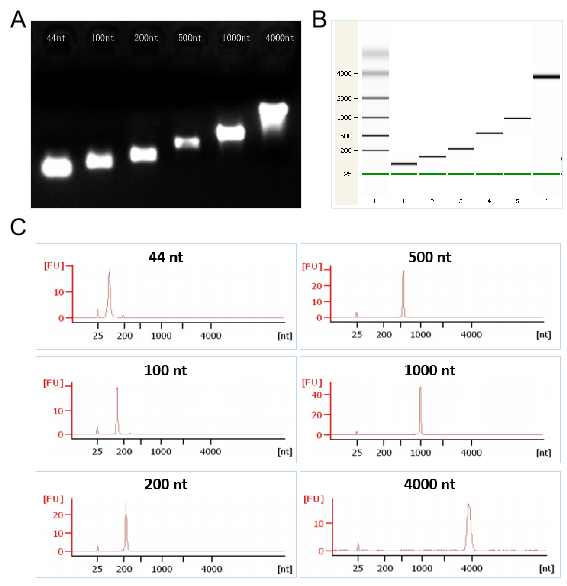
Figuras 2. Demonstração da transcrição de diferentes comprimentos de RNA pelo kit T7, respectivamente no eletroforetograma (Figuras 2A), no diagrama de eletroforese capilar (Figuras 2B) e no cromatograma (Figuras 2C)
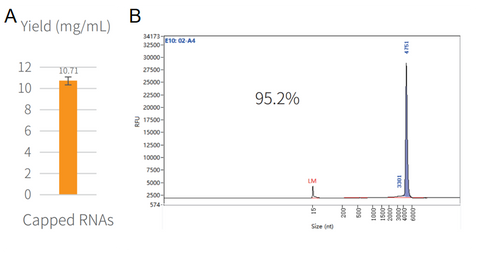
Figura 3. Síntese de RNA encapsulado in vitro.
A reação foi incubada em instrumento de PCR a 37℃ por 2h e então purificada por esferas magnéticas (Cat#12602). O resultado do rendimento foi analisado pelo espectrofotômetro NanoDrop, conforme mostrado na Figura 3A. O resultado da integridade foi analisado por eletroforese capilar, conforme mostrado na Figura 3B.
1. Baixo rendimento de transcrição
A qualidade do template está intimamente relacionada ao rendimento. Se o rendimento do grupo experimental for significativamente menor que o do grupo de controle, as possíveis razões são:
① o modelo experimental contém componentes inibitórios;
② O modelo tem algo errado.
Sugestões:
① Repurifique o modelo;
② Determinar a quantificação do modelo e sua integridade;
③ Aumente o tempo de reação;
④ Aumentar a quantidade de entrada do modelo;
⑤ Experimente outros promotores e RNA polimerases.
2. Baixo rendimento de transcrições curtas
Um pequeno fragmento de iniciação de transcrição inibirá a reação. Quando o produto de transcrição for menor que 100 nt, estender o tempo de reação para 4-8 hs ou aumentar a quantidade de molde para 2 μg aumentará o rendimento de RNA.
3. O comprimento da transcrição do RNA é maior do que o esperado
Se a eletroforese mostrar que a banda do produto é maior que o tamanho esperado, as possíveis razões:
①O modelo do plasmídeo pode não ser completamente linearizado;
②A extremidade 3' da fita sentido tem uma estrutura proeminente;
③O RNA tem uma estrutura secundária que não é completamente desnaturada.
Sugestões:
①Verifique se o modelo está completamente linearizado e, se necessário, execute linearização adicional;
②Selecione uma enzima de restrição adequada para evitar saliências 3' ou use o Fragmento Klenow/DNA polimerase T4 para completar a transcrição antes de prosseguir;
③Use gel desnaturado para detectar produtos de RNA.
4. O comprimento da transcrição do RNA é menor do que o esperado
Se a eletroforese mostrar que a banda do produto é menor que o tamanho esperado, as possíveis razões:
①O modelo contém uma sequência de terminação semelhante à RNA polimerase T7;
②O conteúdo GC no modelo é alto.
Sugestões:
①Abaixe a temperatura da reação (por exemplo, 30°C). Às vezes, abaixar a temperatura pode aumentar o comprimento da transcrição, mas reduzirá o rendimento. Ou tente diferentes RNA polimerases para transcrição;
②Se o conteúdo do GC do modelo for alto, use 42℃ para transcrever ou adicionar SSB para aumentar o rendimento e o comprimento da transcrição.
5. Cauda de eletroforese de produtos de transcrição
Há um fenômeno de cauda durante a eletroforese.
Possíveis razões:
①Contaminado por RNase durante operação experimental;
②Modelo de DNA contaminado por RNase.
Sugestões:
①Use pontas de pipeta e tubos EP livres de RNase, use luvas e máscaras de látex descartáveis e todos os reagentes são preparados com H2O livre de RNase.
②Repurifique o DNA modelo.
[1] Dong Z, Zheng N, Hu C, et al.Nosema bombycis microRNA-like RNA 8 (Nb-milR8) aumenta a patogenicidade fúngica ao modular a expressão do gene BmPEX16 em seu hospedeiro, Bombyx mori. Microbiol Spectr. 2021;9(2):e0104821. doi:10.1128/Spectrum.01048-21(IF:7.171)
[2] Wang X, Tang S, Ye S, et al. Quantificação ultrassensível de miR-195-5p circulante com cascata de amplificação de deslocamento de fita tripla. Talanta. 2022;242:123300. doi:10.1016/j.talanta.2022.123300(IF:6.057)
Storage
FAQ
The optimization of the IVT system can be achieved by adjusting the template, the amount of T7 enzyme used, and if it is co-transcription with cap addition, the ratio between the cap and NTP can be considered; for enzymatic cap addition, the conditions can be optimized in terms of the dosage of the cap-adding enzyme, 2-O-methyltransferase, and SAM. Regarding the template, apart from the requirement of complete linearization, there is another point, which is sequence design. For example, in the 5'UTR region, pay attention to uAUG and Kozak sequence; for CDS, consider the codon preference, GC3 content, and dinucleotide preference, etc.; 3'UTR: RBP and miRNA binding sites: and another point is the secondary structure of RNA. The stable secondary structure of the 5'UTR pre-sequence will reduce the expression of mRNA; the stable secondary structure of 3'UTR will increase the stability of mRNA and promote the expression of the encoded protein. For the recommended IVT system and more detailed tips, please refer to the mRNA in vitro synthesis experiment manual of Vivian Biotechnology.
The average yield is between 120-220 ug/ul (the yield is highly dependent on the sequence design). In the co-transcription method, the mRNA yield is 8 g/L. With process optimization, the yield will increase. Currently, the quality parameters of the available processes include observing the fluorescence value of GFP and measuring the cap addition rate using LC-MS.
The T7 pol enzyme will use the product RNA as a template and continue to extend the RNA at its 3' end. The extended sequence will form complementary pairing with the 3' end sequence of the original RNA molecule, thereby creating a hairpin structure.
The T7 pol enzyme can use RNA as a template to replicate RNA molecules, and synthesize the complementary strand.
(At present, there is no effective method for removing dsRNA. However, there is a patent report suggesting that a fiber column (sigma) could be tried.)
1. Reduce the concentration of magnesium ions; however, reducing the concentration of magnesium ions will also lead to a decrease in the production of RNA, and a balance point needs to be reached.
2. Increase the reaction temperature of IVT to 50-56℃. This temperature can effectively reduce the content of dsRNA in the product; however, the requirements for equipment for high-temperature reactions will vary, and it may also increase the cost.
3. In the IVT reaction system, certain dispersants such as urea and formamide are added; our process research team has also conducted some experiments on this route, which can achieve the effect of inhibiting dsRNA. However, whether it is suitable for process scaling-up still needs further research.
This kind of precipitation occurs by chance and is also closely related to the sequence design.
Solution: (1) Reduce the concentration of magnesium ions, but this will result in a decrease in yield. The amount of T7 enzyme needs to be increased and the reaction time (from 2 hours to 3-4 hours) needs to be extended; (2) The form of NTP (the presence of magnesium ions at a high concentration, such as 46 mM, does not select NTP, but when the magnesium ion concentration decreases, the yield of NTP (Tris salt form) does not change much, and the yield of the triNa form of NTP decreases significantly.
Citations
Documents
| Manual |
|---|
| 10623_Manual_HB230115_EN.pdf |
Applications

Você também pode gostar
Investigação
Perguntas frequentes
O produto é apenas para fins de pesquisa e não se destina ao uso terapêutico ou diagnóstico em humanos ou animais. Os produtos e o conteúdo são protegidos por patentes, marcas registradas e direitos autorais de propriedade da
Certos aplicativos podem exigir direitos adicionais de propriedade intelectual de terceiros.