


Frequently Bought Together
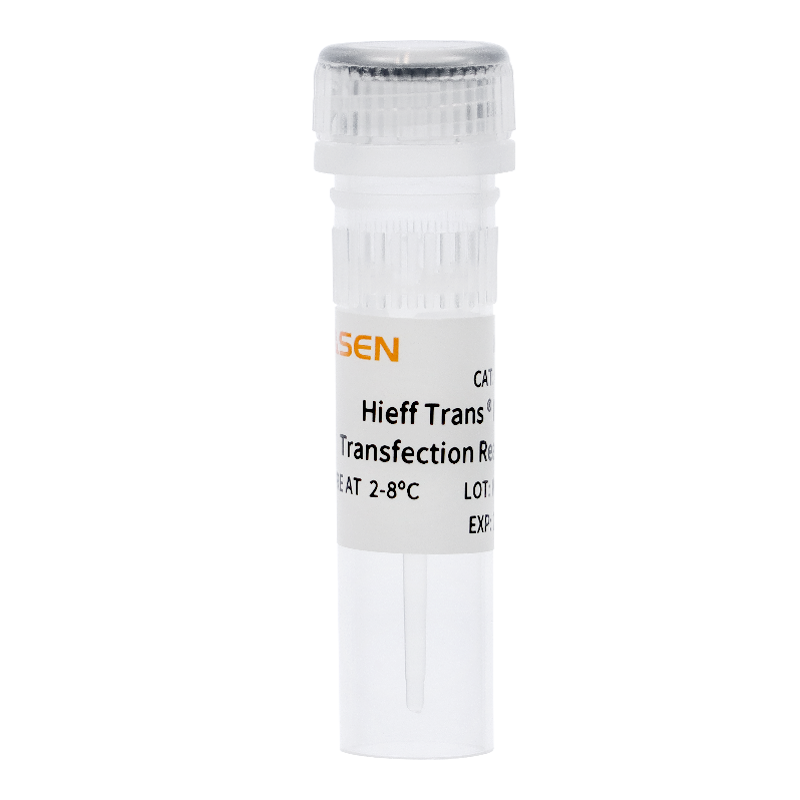
This product is specifically developed for the large-scale production of lentiviral vectors (LV). It is an optimized, linearized polyethylenimine (Linear PEI).
Synthesized entirely through chemical processes, this product is free of animal-derived components and exhibits low cytotoxicity. It is provided as a sterile liquid solution and is fully compatible with both suspension and adherent HEK293 cell systems for LV packaging. Featuring high DNA loading capacity, a low transfection complex ratio, and high complex stability, it greatly facilitates large-scale LV production.
Features
Higher Viral Yield: Increases viral production by 2-3 fold.
Broader Applicability: Suitable for lentiviral (LV) vector preparation in both adherent and suspension cell systems.
Superior Compatibility: Delivers enhanced viral yields for both 4-plasmid and 5-plasmid packaging systems.
Specifications
|
Cat.No. |
40825ES01 / 40825ES03 / 40825ES10 / 40825ES60 |
|
Size |
100 μL / 1 mL / 10 mL / 100 mL |
Components
|
Components No. |
Name |
40825ES01 |
40825ESO3 |
40825ES10 |
40825ES60 |
|
40825 |
Hieff Trans™ UltraLV Transfection Reagent |
100 μL |
1 mL |
10 mL |
100 mL |
Figures
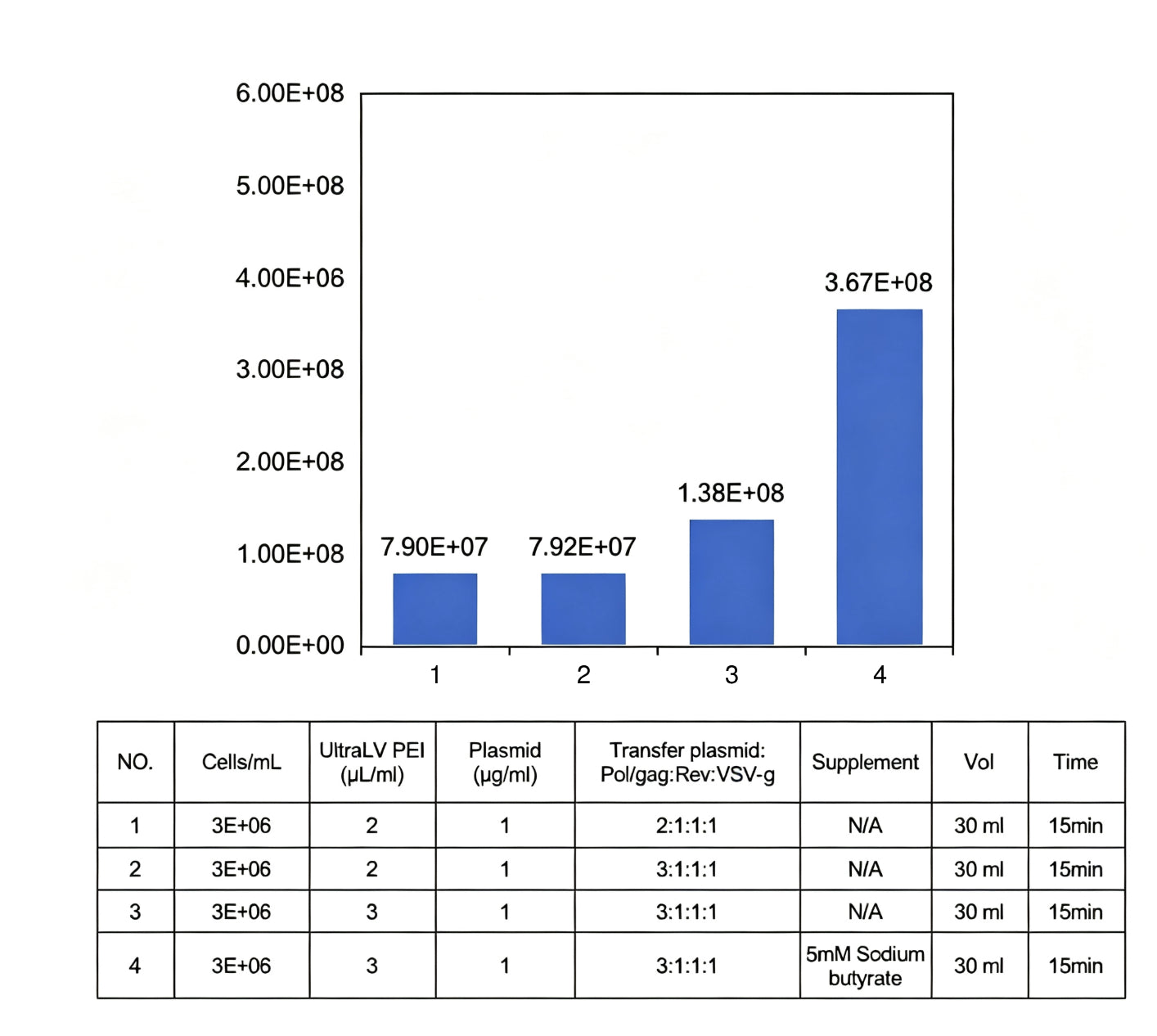
HEK293 (G2S) case study


Under identical experimental conditions (with only the transfection reagent varied), Yeasen reagent achieves a 2-fold increase in lentiviral titer compared to leading commercial alternatives.

The one-step protocol streamlines the process by directly adding the transfection reagent and plasmids into serum-free medium for co-incubation. This eliminates the separate dilution steps required in traditional two-step methods, significantly reducing pipetting and saving time.

The transfection complexes exhibit excellent stability, with viral yields remaining consistent whether incubated for 15 or 30 minutes. This demonstrates a broad operational window, providing greater procedural flexibility and accommodating varying laboratory workflows.


Storage
FAQ
Citations
Documents
Applications
Potrebbe piacerti anche
Indagine
FAQ
Il prodotto è solo per scopi di ricerca e non è destinato all'uso terapeutico o diagnostico su esseri umani o animali. Prodotti e contenuti sono protetti da brevetti, marchi e copyright di proprietà di Yeasen Biotechnology. I simboli dei marchi indicano il paese di origine, non necessariamente la registrazione in tutte le regioni.
Alcune applicazioni potrebbero richiedere ulteriori diritti di proprietà intellettuale di terze parti.
Yeasen è un sostenitore della scienza etica, convinto che la nostra ricerca debba affrontare questioni critiche garantendo al contempo sicurezza e standard etici.