



Frequently Bought Together
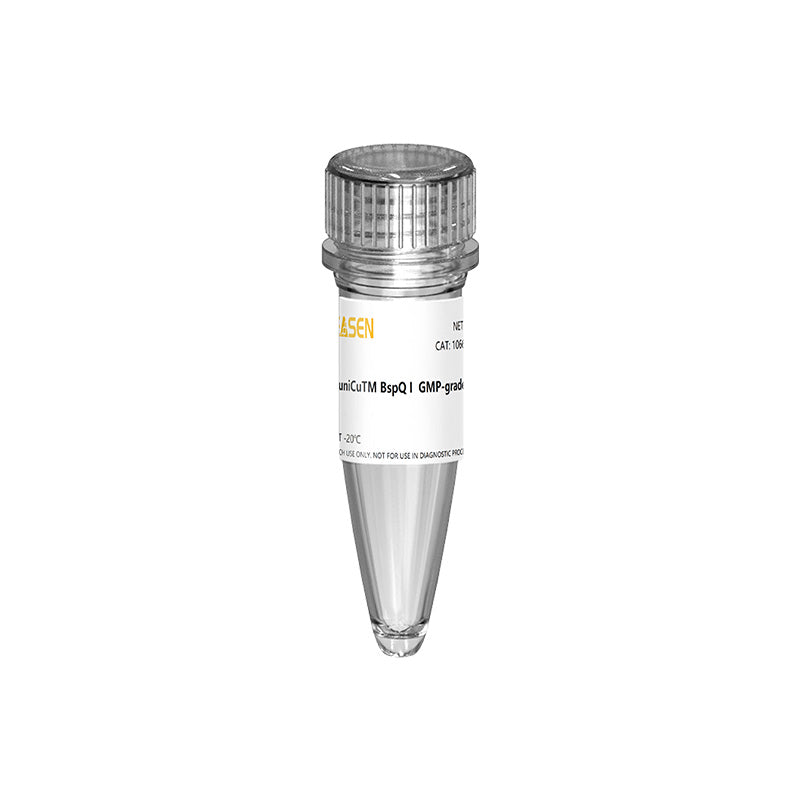
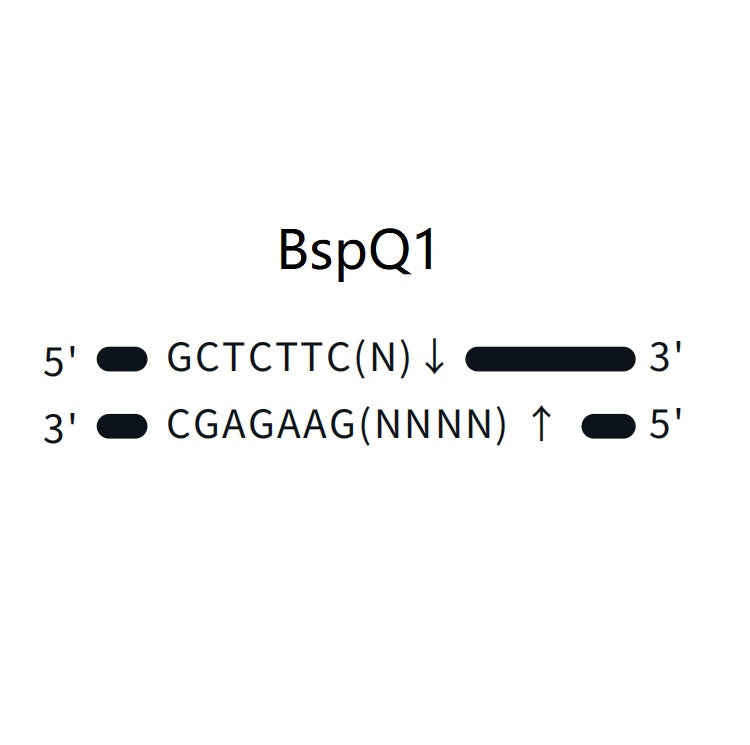
Produk ini merupakan endonuklease restriksi tipe II yang berasal dari protein rekombinan yang dikodekan oleh gen BspQI dalam Bacillus sphaericus yang diekspresikan oleh E.coli. Urutan pengenalannya adalah 5'-GCTCTTCN1/N4-3'. Digunakan untuk mencerna plasmid guna menyiapkan fragmen DNA linierisasi berujung poli (A/T/G/C) untuk memperoleh ujung kohesif tertentu. Produk ini diproduksi sesuai dengan persyaratan proses GMP dan tersedia dalam bentuk cair.
Fitur
- Enzim restriksi tipe IIS mengenali urutan DNA asimetris dan membelah di luar urutan pengenalannya
- Situs Pemotongan Enzim Restriksi: GCTCTTC (1/4)
- Pencernaan DNA untuk mendapatkan ujung lengket tertentu
- Diisolasi dari sumber rekombinan
- Diuji untuk tidak adanya endonuklease, eksonuklease, RNase
Aplikasi
- Mencerna plasmid untuk menyiapkan fragmen DNA linierisasi di ujung Poli (A/T/C/G);
- Linearisasi templat plasmid sebelum transkripsi in vitro
- Intisari pembatasan
Spesifikasi
| Host Ekspresi | E. coli rekombinan dengan gen BspQI |
| Suhu Reaksi | 50℃ |
| Penyangga Penyimpanan | 20 mM Tris-HCl, 0,5 M KCl, 0,1 mM EDTA, 1 mM DTT, 0,1% Triton X-100, 50% Gliserol |
| Definisi Satuan | 1 unit: Jumlah enzim yang diperlukan untuk mencerna 1 μg λDNA dalam 1 jam pada suhu 50℃ dalam sistem 50 μL |
Komponen
| Komponen No. | Nama | 10664ES76 (500 unit) | 10664ES86 (2.500 unit) | 10664ES92 (10 KU) | 10664ES98 (100 KU) |
| 10664 | BspQI mutu GMP (10 U/μL) | 50 mikroliter | 250 mikroliter | 1 ml air | 10 ml air |
Pengiriman dan Penyimpanan
Produk dikirim dengan es kering dan dapat disimpan pada suhu -15℃ ~ -25℃ untuk satu tahun.
Angka
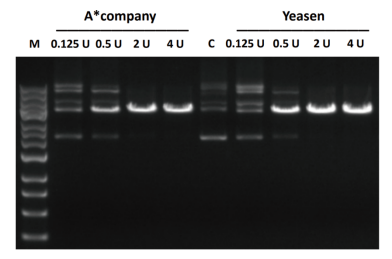
Gambar 1. Kinerja
Dalam sistem reaksi 50 μL, 1 μg λDNA diperlakukan dengan jumlah BspQI yang sesuai (inkubasi pada suhu 50 °C selama 60 menit dan kemudian inkubasi pada suhu 80 °C selama 20 menit untuk menonaktifkan BspQI). Kemudian 20 μL larutan reaksi dimasukkan.
M: penanda DNA
C: Kelompok kontrol tanpa pengobatan BspQI

Storage
FAQ
1. The cut site should be such that the 5' end protrudes or is flush with the end. The presence of the 3' protruding end will increase the generation of false by-products during in vitro transcription (IVT) from the template body.
2. The recognition sequence of the restriction enzyme cleavage site should be as long as possible; the longer the recognition sequence, the less likely it is to appear in the gene fragment.
3. IIS-type endonucleases are the preferred enzymes for linearizing plasmids in vaccine development, as their cleavage sites are outside the recognition sequence, ensuring the integrity of the designed poly(A) tail. After linearizing DNA templates using IIS-type endonucleases, no "scars" will remain, and no unnecessary nucleotides will be added during the IVT process.
4. The endonucleases meet the pharmaceutical production grade requirements (GMP, without animal-derived components, etc.)
At present, for most mRNA development projects, especially vaccine projects, the endonucleases used for linearization of plasmids are still BspQI, BsaI, and XbaI. Among them, BspQI is the most frequently used. It is estimated that there is a certain relationship with the previous designed plasmid sequences from abroad. Of course, it is not limited to these enzymes; we have also encountered cases where other enzymes were used for linearization.
Citations
Applications
Anda mungkin juga menyukai
Pertanyaan
FAQ
Produk ini hanya untuk keperluan penelitian dan tidak ditujukan untuk penggunaan terapeutik atau diagnostik pada manusia atau hewan. Produk dan konten dilindungi oleh paten, merek dagang, dan hak cipta milik
Aplikasi tertentu mungkin memerlukan hak kekayaan intelektual pihak ketiga tambahan.