


Frequently Bought Together
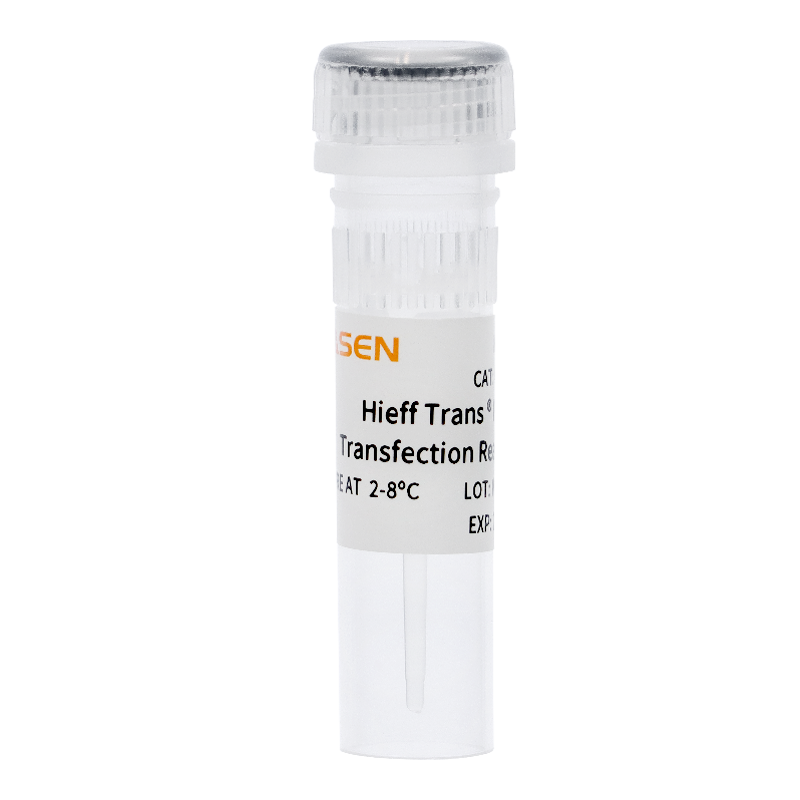
This product is specifically developed for the large-scale production of lentiviral vectors (LV). It is an optimized, linearized polyethylenimine (Linear PEI).
Synthesized entirely through chemical processes, this product is free of animal-derived components and exhibits low cytotoxicity. It is provided as a sterile liquid solution and is fully compatible with both suspension and adherent HEK293 cell systems for LV packaging. Featuring high DNA loading capacity, a low transfection complex ratio, and high complex stability, it greatly facilitates large-scale LV production.
Features
Higher Viral Yield: Increases viral production by 2-3 fold.
Broader Applicability: Suitable for lentiviral (LV) vector preparation in both adherent and suspension cell systems.
Superior Compatibility: Delivers enhanced viral yields for both 4-plasmid and 5-plasmid packaging systems.
Specifications
|
Cat.No. |
40825ES01 / 40825ES03 / 40825ES10 / 40825ES60 |
|
Size |
100 μL / 1 mL / 10 mL / 100 mL |
Components
|
Components No. |
Name |
40825ES01 |
40825ESO3 |
40825ES10 |
40825ES60 |
|
40825 |
Hieff Trans™ UltraLV Transfection Reagent |
100 μL |
1 mL |
10 mL |
100 mL |
Figures
HEK293 (G2S) case study


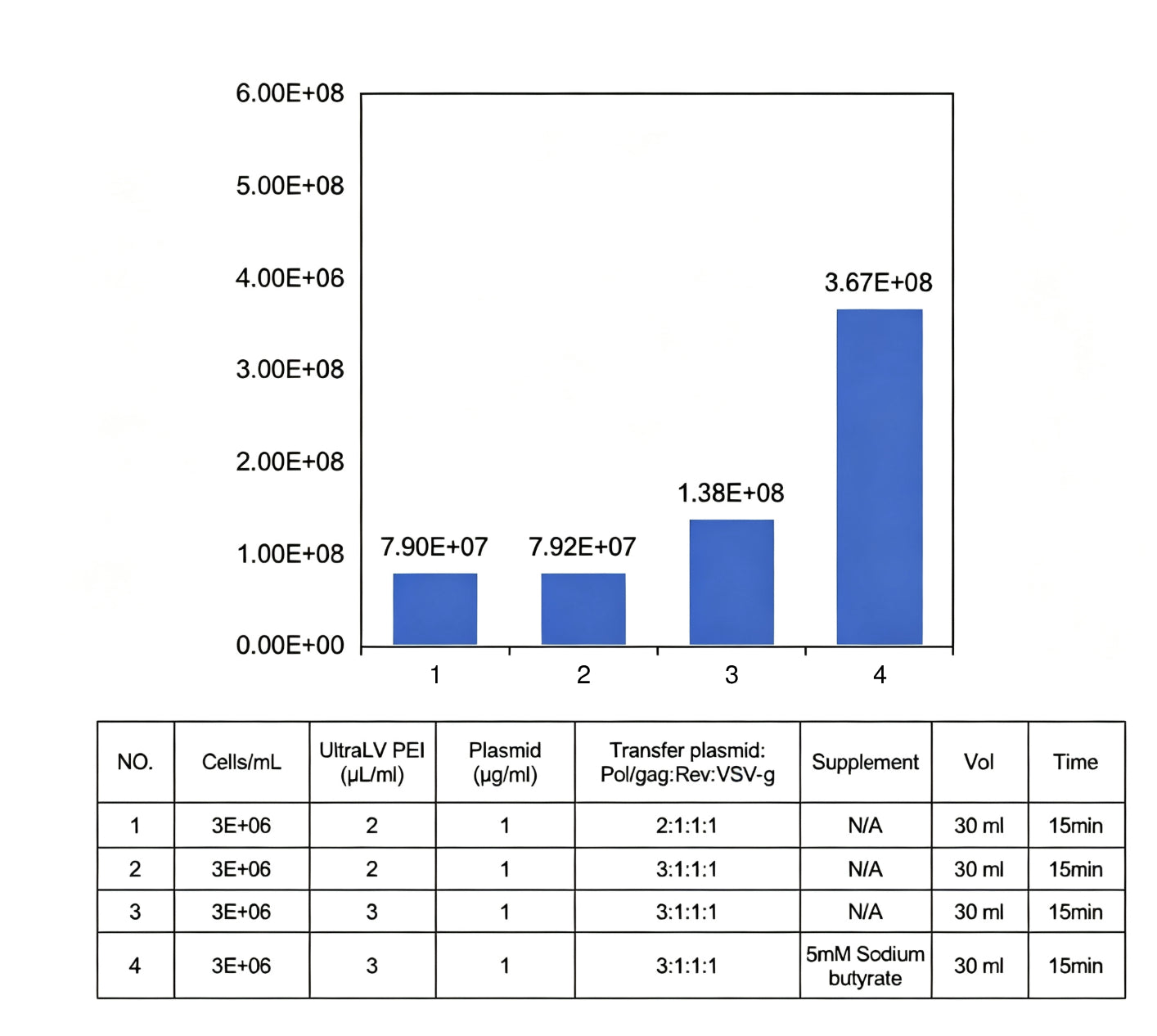
Under identical experimental conditions (with only the transfection reagent varied), Yeasen reagent achieves a 2-fold increase in lentiviral titer compared to leading commercial alternatives.

The one-step protocol streamlines the process by directly adding the transfection reagent and plasmids into serum-free medium for co-incubation. This eliminates the separate dilution steps required in traditional two-step methods, significantly reducing pipetting and saving time.

The transfection complexes exhibit excellent stability, with viral yields remaining consistent whether incubated for 15 or 30 minutes. This demonstrates a broad operational window, providing greater procedural flexibility and accommodating varying laboratory workflows.


Storage
FAQ
Citations
Documents
Applications
आपको यह भी पसंद आ सकता हैं
जाँच करना
उपवास
यह उत्पाद केवल शोध उद्देश्यों के लिए है और मनुष्यों या जानवरों में चिकित्सीय या नैदानिक उपयोग के लिए अभिप्रेत नहीं है। उत्पाद और सामग्री येसेन बायोटेक्नोलॉजी के स्वामित्व वाले पेटेंट, ट्रेडमार्क और कॉपीराइट द्वारा संरक्षित हैं। ट्रेडमार्क प्रतीक मूल देश को इंगित करते हैं, जरूरी नहीं कि सभी क्षेत्रों में पंजीकरण हो।
कुछ अनुप्रयोगों के लिए अतिरिक्त तृतीय-पक्ष बौद्धिक संपदा अधिकारों की आवश्यकता हो सकती है।
येसेन नैतिक विज्ञान के प्रति समर्पित हैं, उनका मानना है कि हमारे शोध में सुरक्षा और नैतिक मानकों को सुनिश्चित करते हुए महत्वपूर्ण प्रश्नों का समाधान किया जाना चाहिए।