

Frequently Bought Together
El kit de síntesis de ARN de alto rendimiento T7 optimiza el sistema de reacción de transcripción. El kit puede sintetizar el ARN monocatenario de manera eficiente mediante el uso de la ARN polimerasa T7, el ADN bicatenario lineal con la secuencia promotora T7 como plantilla y los NTP como sustrato para controlar la secuencia de ADN aguas abajo del promotor. Durante la transcripción, se pueden agregar nucleótidos modificados al sustrato para preparar ARN marcado con biotina o colorante.
Este kit puede sintetizar transcripciones largas y cortas. Se pueden producir 100-200 μg de ARN con 1 μg de ADN de plantilla como entrada. El ARN sintetizado por transcripción se puede utilizar para diversas aplicaciones posteriores, como investigación de la estructura y la función del ARN, protección de ARNasa, hibridación de sondas, ARNi, microinyección e in vitro. traducción.
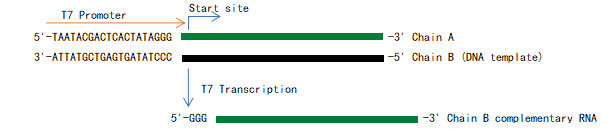
Figura 1: In vitro Proceso de transcripción del ARN
Característica
- Hasta 180 μg de ARN por reacción a partir de 1 μg de la plantilla de control
- Sistema de reacción optimizado para el proceso IVT
- Disminuir la producción de dsRNA
- Mayor integridad y pureza del ARN
Solicitud
- In vitro Síntesis de ARN
Componentes
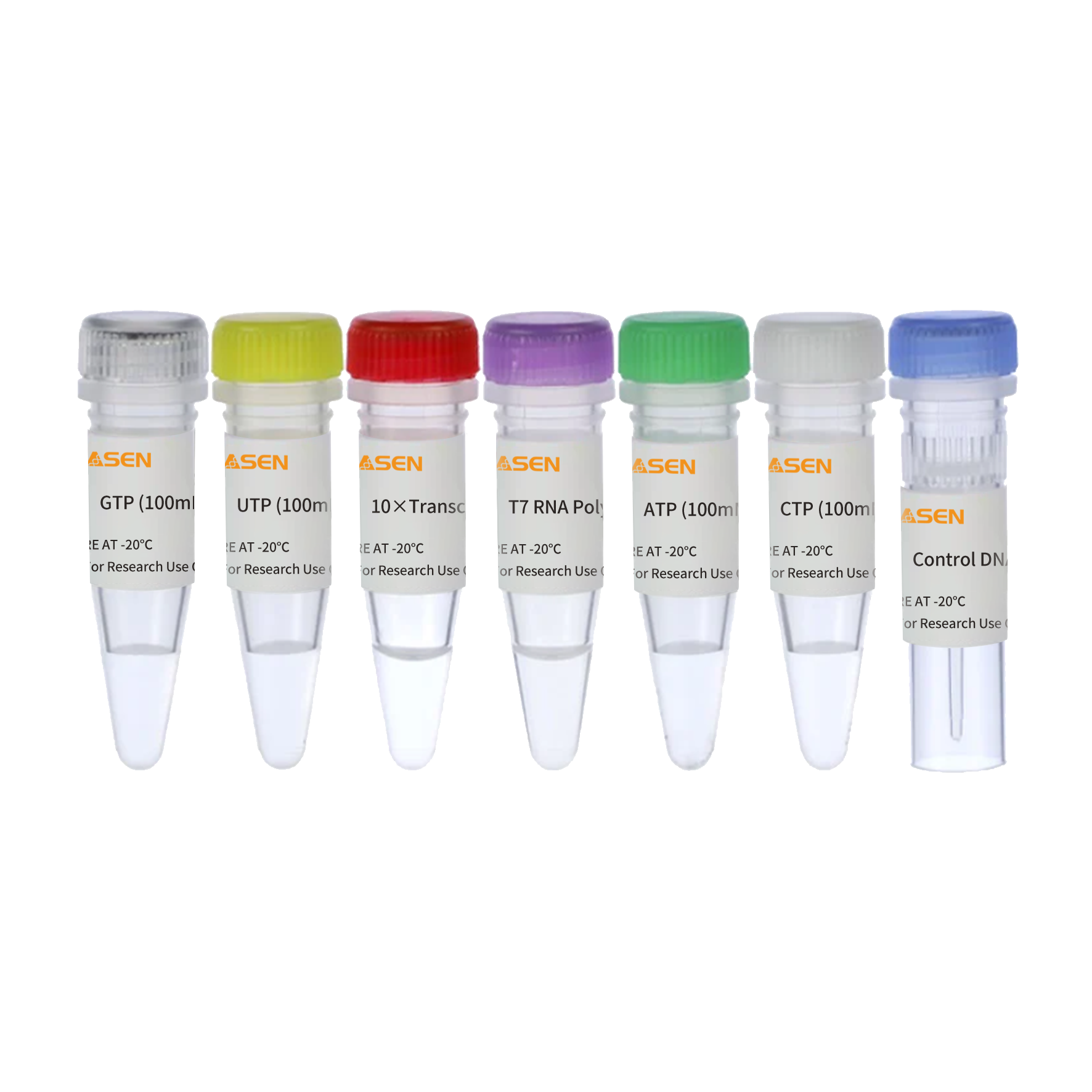
| Componentes No. | Nombre | 10623ES50 (50T) | 10623ES60 (100 T) | 10623ES70 (500 toneladas) |
| 10623-A | Mezcla de ARN polimerasa T7 | 100 μl | 200 μL | 1 ml |
| 10623-B | 10×Búfer de transcripción | 100 μl | 200 μL | 1 ml |
| 10623-C | ATP (100 mM) | 100 μl | 200 μL | 1 ml |
| 10623-D | CTP (100 mM) | 100 μl | 200 μL | 1 ml |
| 10623-E | GTP (100 mM) | 100 μl | 200 μL | 1 ml |
| 10623-F | Cable UTP (100 mM) | 100 μl | 200 μL | 1 ml |
| 10623-G | Plantilla de ADN de control (500 ng/μL) | 10 μl | 20 μL | 100 μl |
Envío y almacenamiento
Transporte con hielo seco. Conservar a una temperatura de entre -15 °C y -25 °C. Válido durante dos años.
Cifras
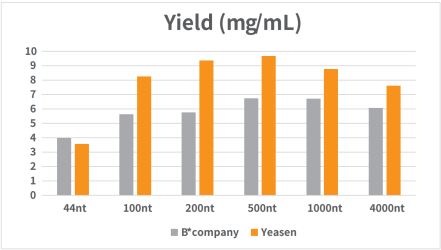
Figura 1. El ARN estándar se sintetizó in vitro utilizando el kit de síntesis de ARN T7.
La reacción se incubó en un instrumento de PCR a 37 ℃ durante 2 h y luego se purificó mediante perlas magnéticas (Cat. n.° 12602). El resultado del rendimiento se analizó mediante un espectrofotómetro NanoDrop como se muestra en la Figura 1.
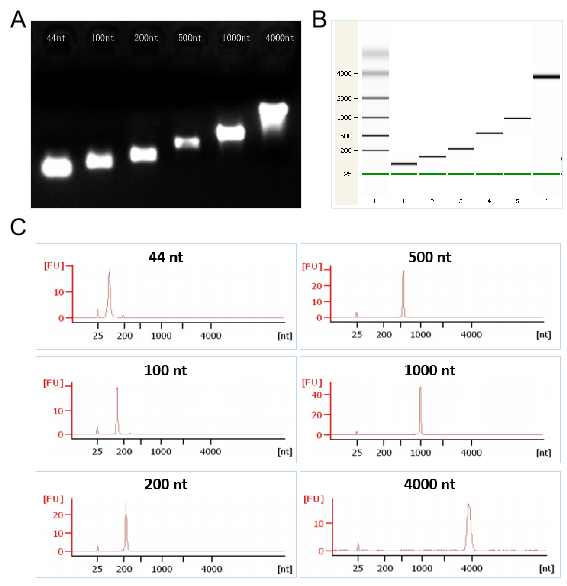
Figuras 2. Demostración de la transcripción de diferentes longitudes de ARN por el kit T7 respectivamente en el electroforetograma (Figuras 2A), el diagrama de electroforesis capilar (Figuras 2B) y el cromatograma (Figuras 2C).
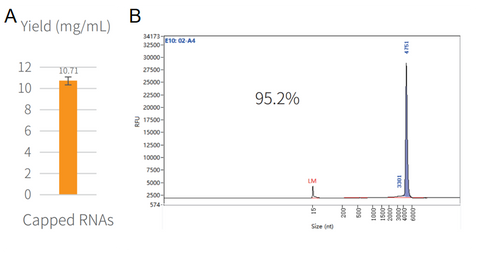
Figura 3. Síntesis de ARN con capuchón in vitro.
La reacción se incubó en un instrumento de PCR a 37 ℃ durante 2 h y luego se purificó con perlas magnéticas (Cat. n.° 12602). El resultado del rendimiento se analizó con un espectrofotómetro NanoDrop, como se muestra en la Figura 3A. El resultado de integridad se analizó mediante electroforesis capilar, como se muestra en la Figura 3B.
1. Bajo rendimiento de transcripción
La calidad de la plantilla está estrechamente relacionada con el rendimiento. Si el rendimiento del grupo experimental es significativamente inferior al del grupo de control, las posibles razones son:
① La plantilla experimental contiene componentes inhibidores;
② La plantilla tiene algo mal.
Sugerencias:
① Vuelva a purificar la plantilla;
② Determinar la cuantificación de la plantilla y su integridad;
③ Prolongar el tiempo de reacción;
④ Aumente la cantidad de entrada de plantilla;
⑤ Pruebe otros promotores y ARN polimerasas.
2. Bajo rendimiento de transcripciones breves
Un fragmento de iniciación de transcripción corto inhibirá la reacción. Cuando el producto de transcripción es menor a 100 nt, extender el tiempo de reacción a 4-8 hs o aumentar la cantidad de plantilla a 2 μg aumentará el rendimiento de ARN.
3. La longitud de la transcripción del ARN es mayor de lo esperado
Si la electroforesis muestra que la banda del producto es mayor que el tamaño esperado, las posibles razones:
①Es posible que la plantilla de plásmido no esté completamente linealizada;
②El extremo 3' de la cadena sensorial tiene una estructura prominente;
③El ARN tiene una estructura secundaria que no está completamente desnaturalizada.
Sugerencias:
①Verifique si la plantilla está completamente linealizada y, si es necesario, realice una linealización adicional;
②Seleccione una enzima de restricción adecuada para evitar salientes 3', o utilice el fragmento Klenow/ADN polimerasa T4 para completar la transcripción antes de continuar;
③Utilice gel desnaturalizado para detectar productos de ARN.
4. La longitud de la transcripción del ARN es menor de lo esperado
Si la electroforesis muestra que la banda del producto es más pequeña que el tamaño esperado, las posibles razones:
①La plantilla contiene una secuencia de terminación similar a la ARN polimerasa T7;
②El contenido de GC en la plantilla es alto.
Sugerencias:
①Reducir la temperatura de reacción (por ejemplo, 30 °C). A veces, reducir la temperatura puede aumentar la longitud de la transcripción, pero reducirá el rendimiento. O probar diferentes ARN polimerasas para la transcripción;
②Si el contenido de GC de la plantilla es alto, use 42 ℃ para transcribir, o agregar SSB para aumentar el rendimiento y la longitud de la transcripción.
5. Electroforesis de colas de productos de transcripción.
Durante la electroforesis se produce un fenómeno de cola.
Posibles razones:
①Contaminado por ARNasa durante la operación experimental;
②Plantilla de ADN contaminada por ARNasa.
Sugerencias:
①Utilice puntas de pipeta y tubos EP libres de ARNasa, use guantes y máscaras de látex desechables, y todos los reactivos están preparados con H2O libre de ARNasa.
②Vuelva a purificar el ADN plantilla.
[1] Dong Z, Zheng N, Hu C, et al.El ARN 8 similar a microARN de Nosema bombycis (Nb-milR8) aumenta la patogenicidad fúngica al modular la expresión del gen BmPEX16 en su huésped, Bombyx mori. Microbiol Spectr. 2021;9(2):e0104821. doi:10.1128/Spectrum.01048-21(IF:7.171)
[2] Wang X, Tang S, Ye S, et al. Cuantificación ultrasensible de miR-195-5p circulante con cascada de amplificación por desplazamiento de triple cadena. Talanta. 2022;242:123300. doi:10.1016/j.talanta.2022.123300(IF:6.057)
Storage
FAQ
The optimization of the IVT system can be achieved by adjusting the template, the amount of T7 enzyme used, and if it is co-transcription with cap addition, the ratio between the cap and NTP can be considered; for enzymatic cap addition, the conditions can be optimized in terms of the dosage of the cap-adding enzyme, 2-O-methyltransferase, and SAM. Regarding the template, apart from the requirement of complete linearization, there is another point, which is sequence design. For example, in the 5'UTR region, pay attention to uAUG and Kozak sequence; for CDS, consider the codon preference, GC3 content, and dinucleotide preference, etc.; 3'UTR: RBP and miRNA binding sites: and another point is the secondary structure of RNA. The stable secondary structure of the 5'UTR pre-sequence will reduce the expression of mRNA; the stable secondary structure of 3'UTR will increase the stability of mRNA and promote the expression of the encoded protein. For the recommended IVT system and more detailed tips, please refer to the mRNA in vitro synthesis experiment manual of Vivian Biotechnology.
The average yield is between 120-220 ug/ul (the yield is highly dependent on the sequence design). In the co-transcription method, the mRNA yield is 8 g/L. With process optimization, the yield will increase. Currently, the quality parameters of the available processes include observing the fluorescence value of GFP and measuring the cap addition rate using LC-MS.
The T7 pol enzyme will use the product RNA as a template and continue to extend the RNA at its 3' end. The extended sequence will form complementary pairing with the 3' end sequence of the original RNA molecule, thereby creating a hairpin structure.
The T7 pol enzyme can use RNA as a template to replicate RNA molecules, and synthesize the complementary strand.
(At present, there is no effective method for removing dsRNA. However, there is a patent report suggesting that a fiber column (sigma) could be tried.)
1. Reduce the concentration of magnesium ions; however, reducing the concentration of magnesium ions will also lead to a decrease in the production of RNA, and a balance point needs to be reached.
2. Increase the reaction temperature of IVT to 50-56℃. This temperature can effectively reduce the content of dsRNA in the product; however, the requirements for equipment for high-temperature reactions will vary, and it may also increase the cost.
3. In the IVT reaction system, certain dispersants such as urea and formamide are added; our process research team has also conducted some experiments on this route, which can achieve the effect of inhibiting dsRNA. However, whether it is suitable for process scaling-up still needs further research.
This kind of precipitation occurs by chance and is also closely related to the sequence design.
Solution: (1) Reduce the concentration of magnesium ions, but this will result in a decrease in yield. The amount of T7 enzyme needs to be increased and the reaction time (from 2 hours to 3-4 hours) needs to be extended; (2) The form of NTP (the presence of magnesium ions at a high concentration, such as 46 mM, does not select NTP, but when the magnesium ion concentration decreases, the yield of NTP (Tris salt form) does not change much, and the yield of the triNa form of NTP decreases significantly.
Citations
Documents
| Manual |
|---|
| 10623_Manual_HB230115_EN.pdf |
Applications

También te puede gustar
Consulta
Preguntas frecuentes
El producto es solo para fines de investigación y no está destinado a uso terapéutico o diagnóstico en humanos o animales. Los productos y el contenido están protegidos por patentes, marcas comerciales y derechos de autor propiedad de Yeasen Biotechnology. Los símbolos de marca comercial indican el país de origen, no necesariamente el registro en todas las regiones.
Algunas aplicaciones pueden requerir derechos de propiedad intelectual adicionales de terceros.
Yeasen se dedica a la ciencia ética y cree que nuestra investigación debe abordar cuestiones críticas al tiempo que garantiza la seguridad y los estándares éticos.