
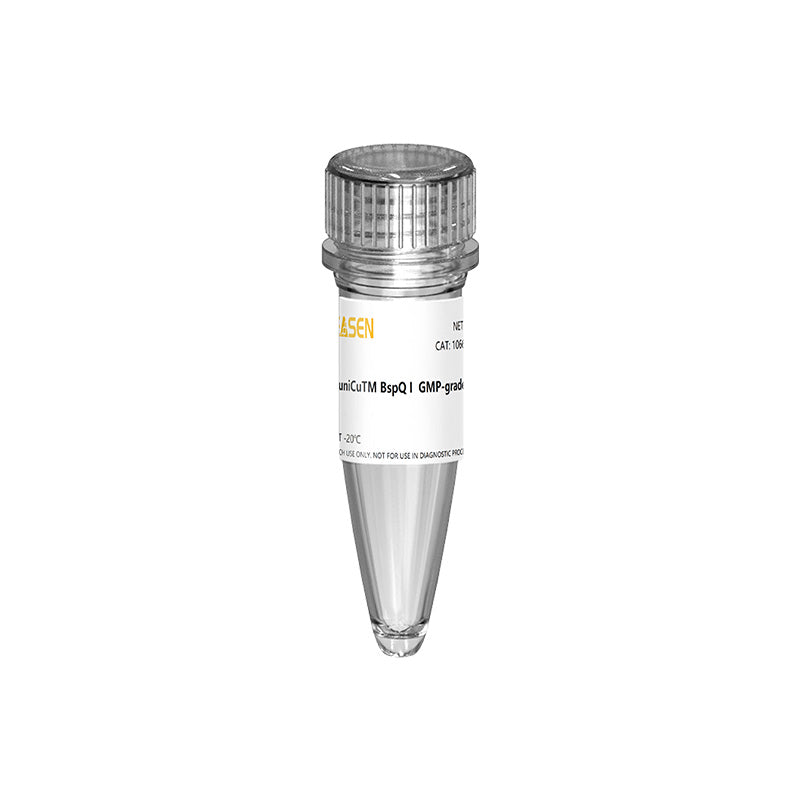

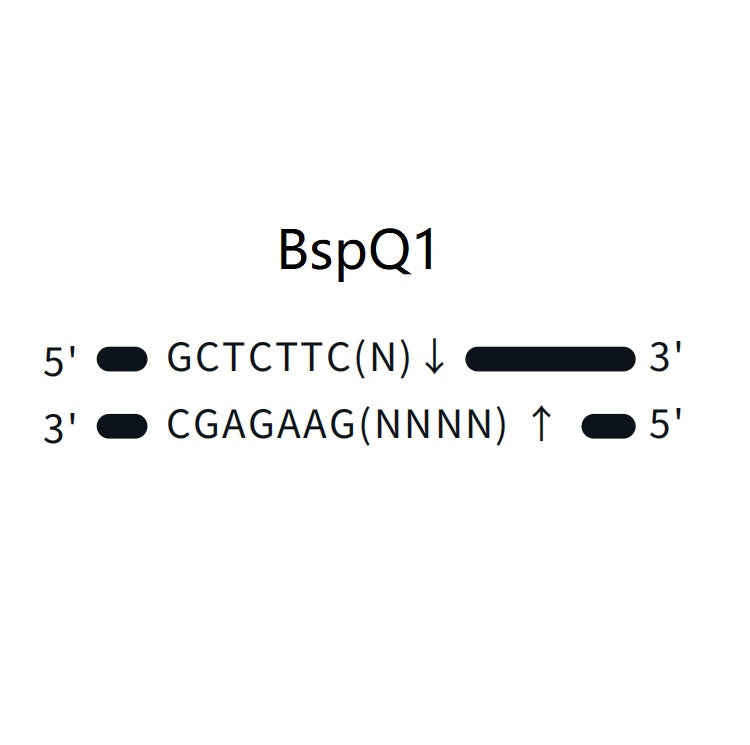


Denna produkt är ett typ II-restriktionsendonukleas som härrör från det rekombinanta proteinet som kodas av BspQI-genen i Bacillus sphaericus uttryckt av E.coli. Dess igenkänningssekvens är 5'-GCTCTTCN1/N4-3'. Används för att smälta plasmider för att framställa poly (A/T/G/C)-terminerade linjäriserade DNA-fragment för att erhålla specifika kohesiva ändar. Denna produkt tillverkas i enlighet med GMP-processkrav och tillhandahålls i flytande form.
Särdrag
- Typ IIS-restriktionsenzymer känner igen asymmetriska DNA-sekvenser och klyver utanför deras igenkänningssekvens
- Restriktionsenzymklippningsställe: GCTCTTC (1/4)
- Digestion av DNA för att erhålla specifika klibbiga ändar
- Isolerad från en rekombinant källa
- Testad för frånvaro av endonukleaser, exonukleaser, RNaser
Ansökan
- Digerera plasmiden för att framställa ett linjäriserat DNA-fragment i slutet av Poly (A/T/C/G);
- Linjärisera plasmidmallen före in vitro-transkription
- Restriktionssmältning
Specifikation
| Uttrycksvärd | Rekombinant E. coli med BspQI-genen |
| Reaktionstemperatur | 50 ℃ |
| Förvaringsbuffert | 20 mM Tris-HCl, 0,5 M KCl, 0,1 mM EDTA, 1 mM DTT, 0,1 % Triton X-100, 50 % glycerol |
| Enhetsdefinition | 1 enhet: Mängden enzym som krävs för att smälta 1 μg λDNA inom 1 timme vid 50 ℃ i ett 50 μL system |
Komponenter
| Komponentnr. | Namn | 10664ES76 (500 U) | 10664ES86 (2 500 U) | 10664ES92 (10 KU) | 10664ES98 (100 KU) |
| 10664 | BspQI GMP-grad (10 U/μL) | 50 μL | 250 μL | 1 ml | 10 ml |
Frakt och förvaring
Produkten levereras med torris och kan förvaras vid -15℃ ~ -25℃ för en år.
Siffror
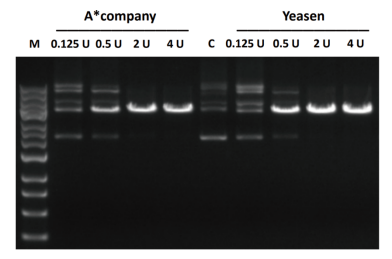
Figur 1. YEASEN BspQI:s prestanda är överlägsen.
I ett 50 μL reaktionssystem behandlades 1 μg λDNA med motsvarande mängd BspQI (inkubera vid 50 °C i 60 minuter och inkubera sedan vid 80 °C i 20 minuter för att inaktivera BspQI). Sedan laddades 20 μL av reaktionslösningen.
M: DNA-markör
C: Kontrollgruppen utan BspQI-behandling

Storage
FAQ
1. The cut site should be such that the 5' end protrudes or is flush with the end. The presence of the 3' protruding end will increase the generation of false by-products during in vitro transcription (IVT) from the template body.
2. The recognition sequence of the restriction enzyme cleavage site should be as long as possible; the longer the recognition sequence, the less likely it is to appear in the gene fragment.
3. IIS-type endonucleases are the preferred enzymes for linearizing plasmids in vaccine development, as their cleavage sites are outside the recognition sequence, ensuring the integrity of the designed poly(A) tail. After linearizing DNA templates using IIS-type endonucleases, no "scars" will remain, and no unnecessary nucleotides will be added during the IVT process.
4. The endonucleases meet the pharmaceutical production grade requirements (GMP, without animal-derived components, etc.)
At present, for most mRNA development projects, especially vaccine projects, the endonucleases used for linearization of plasmids are still BspQI, BsaI, and XbaI. Among them, BspQI is the most frequently used. It is estimated that there is a certain relationship with the previous designed plasmid sequences from abroad. Of course, it is not limited to these enzymes; we have also encountered cases where other enzymes were used for linearization.
Citations
Applications
Du kanske också gillar
Förfrågan
Vanliga frågor
Produkten är endast avsedd för forskningsändamål och är inte avsedd för terapeutisk eller diagnostisk användning hos människor eller djur. Produkter och innehåll skyddas av patent, varumärken och upphovsrätt som ägs av Yeasen Biotechnology. Varumärkessymboler anger ursprungsland, inte nödvändigtvis registrering i alla regioner.
Vissa applikationer kan kräva ytterligare immateriella rättigheter från tredje part.
Yeasen är dedikerad till etisk vetenskap, och anser att vår forskning bör behandla kritiska frågor samtidigt som den säkerställer säkerhet och etiska standarder.