
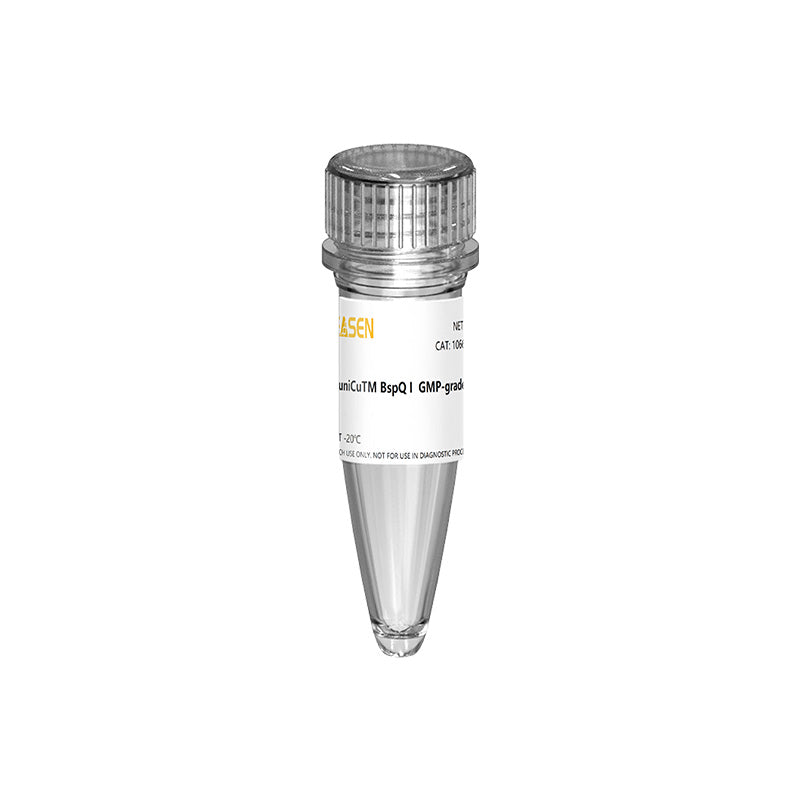

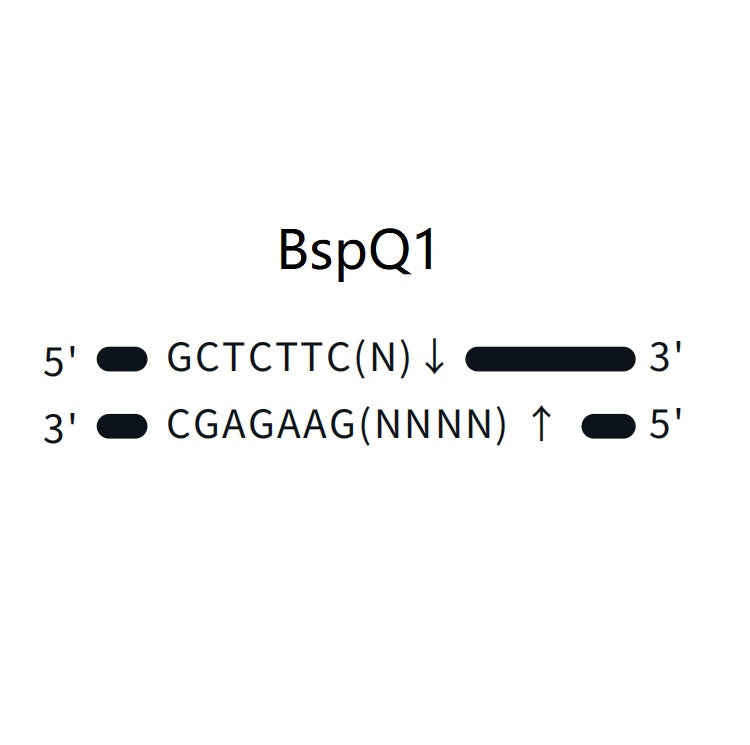


本製品は、Bacillus sphaericus由来のBspQI遺伝子によってコードされる組換えタンパク質を大腸菌で発現させたII型制限酵素です。認識配列は5'-GCTCTTCN1/N4-3'です。プラスミドを消化し、ポリ(A/T/G/C)末端を有する直鎖状DNA断片を調製することで、特異的な付着末端を得ることができます。本製品はGMPプロセス要件に従って製造され、液状で提供されます。
特徴
DA DMF認定**(MF038306)
GMPグレード、動物由来成分不使用: ISO 13485およびGMP基準に基づいて製造
高効率、低スター活性: 37℃で16時間で完全分解、スター活性なし
ヌクレアーゼフリー:サンプルの完全性と信頼性の高い下流結果を保証するために、エンドヌクレアーゼ、エキソヌクレアーゼ、RNaseが含まれていないことが厳密にテストされ確認されています。
主要ブランドに匹敵するパフォーマンス
応用
プラスミドを消化して、ポリ(A/T/C/G)の末端に直線化された DNA 断片を調製します。
試験管内転写前にプラスミドテンプレートを直線化する
制限消化
仕様
発現ホスト
BspQI遺伝子を導入した組み換え大腸菌
反応温度
50℃
ストレージバッファ
20 mM トリス-HCl、0.5 M KCl、0.1 mM EDTA、1 mM DTT、0.1% トリトンX-100、50% グリセロール
ユニット定義
1単位:50μLのシステムで50℃、1時間以内に1μgのλDNAを分解するために必要な酵素量
コンポーネント
コンポーネント番号
名前
10664ES76 (500ユニット)
10664ES86 (2,500ユニット)
10664ES92 (10 KU)
10664ES98 (100 KU)
10664
BspQI GMPグレード(10 U/μL)
50μL
250μL
1mL
10mL
配送と保管
製品はドライアイスと一緒に発送され、-15℃~-25℃で1年間保管可能です。
数字
1. 制限酵素消化効率の向上
図1. 異なる酵素量(0.125~4 U)での消化効率の比較:2 Uで最適なパフォーマンスを発揮
50 μL反応系において、1 μgのλDNAを対応する量のBspQIで処理し(50 °Cで60分間インキュベートした後、80 °Cで20分間インキュベートしてBspQIを不活性化)、その後、反応液20 μLをロードした。 M: DNAマーカーC: BspQI処理なしの対照群
2. 0.5~3時間で高効率な酵素分解
図 2. インキュベーション時間(0.1~3 時間)にわたる消化パフォーマンス:NEB による一貫した結果。
文書:
安全データシート
10664_MSDS_HB250708.pdf
マニュアル
10664_マニュアル_HB221110_EN.pdf
Frequently Bought Together
本製品は、Bacillus sphaericus由来のBspQI遺伝子によってコードされる組換えタンパク質を大腸菌で発現させたII型制限酵素です。認識配列は5'-GCTCTTCN1/N4-3'です。プラスミドを消化し、ポリ(A/T/G/C)末端を有する直鎖状DNA断片を調製することで、特異的な付着末端を得ることができます。本製品はGMPプロセス要件に従って製造され、液状で提供されます。
特徴
- DA DMF認定**(MF038306)
- GMPグレード、動物由来成分不使用: ISO 13485およびGMP基準に基づいて製造
- 高効率、低スター活性: 37℃で16時間で完全分解、スター活性なし
- ヌクレアーゼフリー:サンプルの完全性と信頼性の高い下流結果を保証するために、エンドヌクレアーゼ、エキソヌクレアーゼ、RNaseが含まれていないことが厳密にテストされ確認されています。
- 主要ブランドに匹敵するパフォーマンス
応用
- プラスミドを消化して、ポリ(A/T/C/G)の末端に直線化された DNA 断片を調製します。
- 試験管内転写前にプラスミドテンプレートを直線化する
- 制限消化
仕様
| 発現ホスト | BspQI遺伝子を導入した組み換え大腸菌 |
| 反応温度 | 50℃ |
| ストレージバッファ | 20 mM トリス-HCl、0.5 M KCl、0.1 mM EDTA、1 mM DTT、0.1% トリトンX-100、50% グリセロール |
| ユニット定義 | 1単位:50μLのシステムで50℃、1時間以内に1μgのλDNAを分解するために必要な酵素量 |
コンポーネント
| コンポーネント番号 | 名前 | 10664ES76 (500ユニット) | 10664ES86 (2,500ユニット) | 10664ES92 (10 KU) | 10664ES98 (100 KU) |
| 10664 | BspQI GMPグレード(10 U/μL) | 50μL | 250μL | 1mL | 10mL |
配送と保管
製品はドライアイスと一緒に発送され、-15℃~-25℃で1年間保管可能です。
数字
1. 制限酵素消化効率の向上
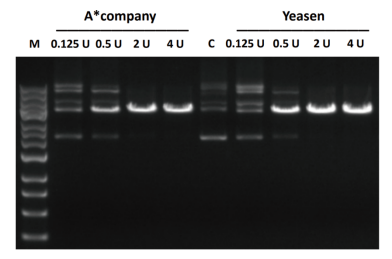
図1. 異なる酵素量(0.125~4 U)での消化効率の比較:2 Uで最適なパフォーマンスを発揮
50 μL反応系において、1 μgのλDNAを対応する量のBspQIで処理し(50 °Cで60分間インキュベートした後、80 °Cで20分間インキュベートしてBspQIを不活性化)、その後、反応液20 μLをロードした。
M: DNAマーカー
C: BspQI処理なしの対照群
2. 0.5~3時間で高効率な酵素分解

図 2. インキュベーション時間(0.1~3 時間)にわたる消化パフォーマンス:NEB による一貫した結果。
文書:
安全データシート
Storage
FAQ
In the aspect of preparing mRNA in vitro transcription templates, the selection of restriction endonucleases is mainly based on the following factors:
1. The cut site should be such that the 5' end protrudes or is flush with the end. The presence of the 3' protruding end will increase the generation of false by-products during in vitro transcription (IVT) from the template body.
2. The recognition sequence of the restriction enzyme cleavage site should be as long as possible; the longer the recognition sequence, the less likely it is to appear in the gene fragment.
3. IIS-type endonucleases are the preferred enzymes for linearizing plasmids in vaccine development, as their cleavage sites are outside the recognition sequence, ensuring the integrity of the designed poly(A) tail. After linearizing DNA templates using IIS-type endonucleases, no "scars" will remain, and no unnecessary nucleotides will be added during the IVT process.
4. The endonucleases meet the pharmaceutical production grade requirements (GMP, without animal-derived components, etc.)
At present, for most mRNA development projects, especially vaccine projects, the endonucleases used for linearization of plasmids are still BspQI, BsaI, and XbaI. Among them, BspQI is the most frequently used. It is estimated that there is a certain relationship with the previous designed plasmid sequences from abroad. Of course, it is not limited to these enzymes; we have also encountered cases where other enzymes were used for linearization.
Citations
Applications
あなたも好きかもしれません
問い合わせ
よくある質問
この製品は研究目的のみに使用され、人間や動物の治療や診断に使用することを意図したものではありません。製品とコンテンツは、
特定のアプリケーションでは、追加のサードパーティの知的財産権が必要になる場合があります。