


Frequently Bought Together
Das T7 High Yield RNA Synthesis Kit optimiert das Transkriptionsreaktionssystem. Das Kit kann die einzelsträngige RNA effizient synthetisieren, indem es T7-RNA-Polymerase, die lineare doppelsträngige DNA mit der T7-Promotorsequenz als Vorlage und NTPs als Substrat zur Steuerung der DNA-Sequenz stromabwärts des Promotors verwendet. Während der Transkription können dem Substrat modifizierte Nukleotide hinzugefügt werden, um Biotin oder farbstoffmarkierte RNA herzustellen.
Mit diesem Kit können lange und kurze Transkripte synthetisiert werden. 100–200 μg RNA können mit 1 μg DNA-Vorlagen-Input produziert werden. Die durch Transkription synthetisierte RNA kann für verschiedene nachgelagerte Anwendungen verwendet werden, wie z. B. RNA-Struktur- und Funktionsforschung, RNase-Schutz, Sondenhybridisierung, RNAi, Mikroinjektion und in vitro. Übersetzung.
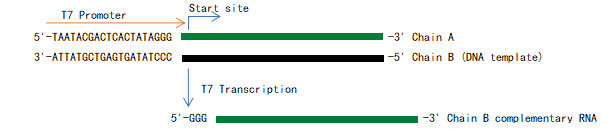
Abbildung 1: In vitro RNA-Transkriptionsprozess
Besonderheit
- Bis zu 180 μg RNA pro Reaktion aus 1 μg der Kontrollvorlage
- Optimiertes Reaktionssystem für den IVT-Prozess
- Verringern Sie die dsRNA-Produktion
- Höhere RNA-Integrität und Reinheit
Anwendung
- In vitro RNA-Synthese
Komponenten
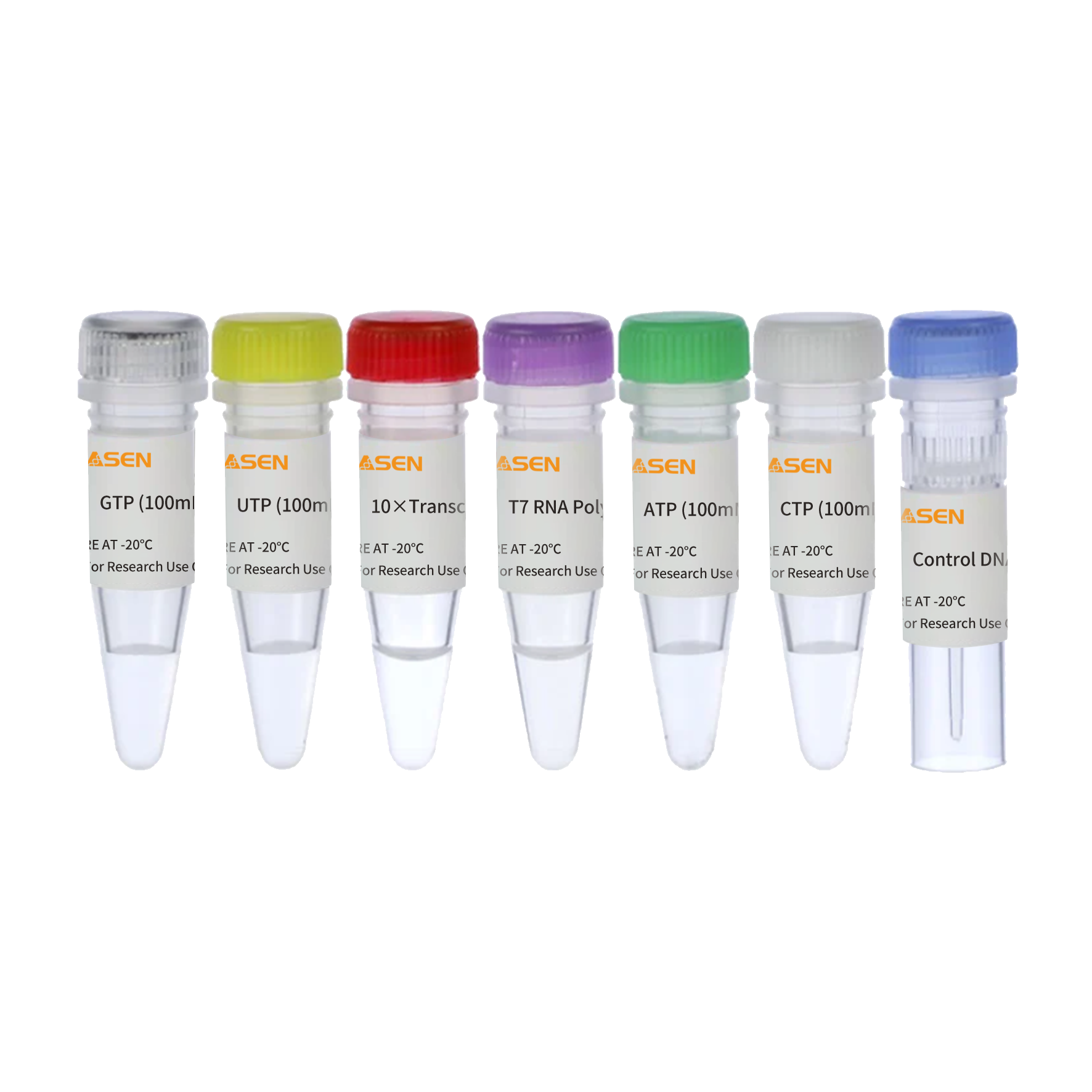
| Komponenten Nr. | Name | 10623ES50 (50 T) | 10623ES60 (100 T) | 10623ES70 (500 T) |
| 10623-A | T7 RNA-Polymerase-Mischung | 100 μl | 200 μl | 1 ml |
| 10623-B | 10×Transkriptionspuffer | 100 μl | 200 μl | 1 ml |
| 10623-C | ATP (100 mM) | 100 μl | 200 μl | 1 ml |
| 10623-D | CTP (100 mM) | 100 μl | 200 μl | 1 ml |
| 10623-E | GTP (100 mM) | 100 μl | 200 μl | 1 ml |
| 10623-F | UTP (100 mM) | 100 μl | 200 μl | 1 ml |
| 10623-G | Kontroll-DNA-Vorlage (500 ng/μl) | 10 μl | 20 μl | 100 μl |
Versand und Lagerung
Trockeneistransport. Lagerung bei -15 °C bis -25 °C, zwei Jahre gültig.
Zahlen
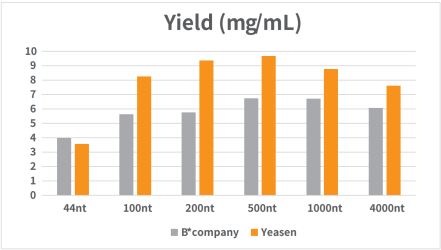
Abbildung 1. Standard-RNA wurde in vitro mithilfe des T7-RNA-Synthesekits synthetisiert.
Die Reaktion wurde 2 Stunden lang bei 37 °C in einem PCR-Gerät inkubiert und dann mit Magnetkügelchen (Kat.-Nr. 12602) gereinigt. Das Ergebnis wurde mit einem NanoDrop-Spektralphotometer analysiert, wie in Abbildung 1 dargestellt.
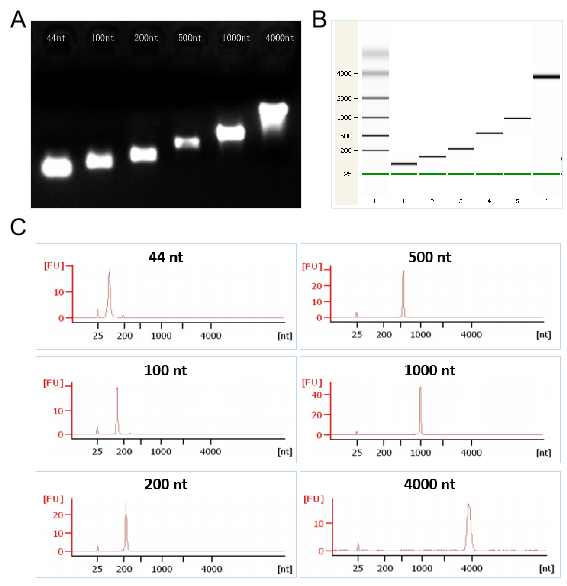
Abbildung 2. Die Transkriptionsdemonstration verschiedener RNA-Längen durch das T7-Kit jeweils im Elektrophoretogramm (Abbildung 2A), im Kapillarelektrophoresediagramm (Abbildung 2B) und im Chromatogramm (Abbildung 2C)
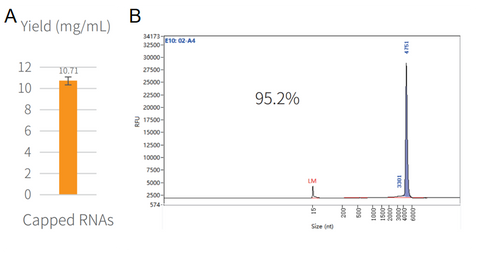
Abbildung 3. Synthese von gecapterter RNA in vitro.
Die Reaktion wurde 2 Stunden lang bei 37 °C in einem PCR-Gerät inkubiert und dann mit Magnetkügelchen (Kat.-Nr. 12602) gereinigt. Das Ergebnis wurde mit einem NanoDrop-Spektralphotometer analysiert (siehe Abbildung 3A). Das Integritätsergebnis wurde mit einer Kapillarelektrophorese analysiert (siehe Abbildung 3B).
1. Geringe Transkriptausbeute
Die Qualität der Vorlage hängt eng mit der Ausbeute zusammen. Wenn die Ausbeute der Versuchsgruppe deutlich niedriger ist als die der Kontrollgruppe, kann dies folgende Gründe haben:
① Die Versuchsvorlage enthält hemmende Komponenten.
② Mit der Vorlage stimmt etwas nicht.
Vorschläge:
① Reinigen Sie die Vorlage erneut.
② Bestimmen Sie die Vorlagenquantifizierung und ihre Integrität.
③ Verlängern Sie die Reaktionszeit;
④ Erhöhen Sie die Menge der Vorlageneingabe.
⑤ Probieren Sie andere Promotoren und RNA-Polymerasen aus.
2. Geringe Ausbeute an Kurztranskripten
Ein kurzes Transkriptionsinitiationsfragment hemmt die Reaktion. Wenn das Transkriptionsprodukt weniger als 100 nt beträgt, erhöht eine Verlängerung der Reaktionszeit auf 4-8 Stunden oder eine Erhöhung der Matrizenmenge auf 2 μg die RNA-Ausbeute.
3. Die RNA-Transkriptionslänge ist größer als erwartet
Wenn die Elektrophorese zeigt, dass das Produktband größer als erwartet ist, kann dies folgende Gründe haben:
①Die Plasmidvorlage ist möglicherweise nicht vollständig linearisiert;
②Das 3'-Ende des Sense-Strangs hat eine markante Struktur;
③Die RNA hat eine Sekundärstruktur, die nicht vollständig denaturiert ist.
Vorschläge:
①Überprüfen Sie, ob die Vorlage vollständig linearisiert ist, und führen Sie gegebenenfalls eine zusätzliche Linearisierung durch.
②Wählen Sie ein geeignetes Restriktionsenzym, um 3'-Überhänge zu vermeiden, oder verwenden Sie Klenow-Fragment/T4-DNA-Polymerase, um die Transkription abzuschließen, bevor Sie fortfahren;
③Verwenden Sie denaturiertes Gel, um RNA-Produkte zu erkennen.
4. Die RNA-Transkriptionslänge ist kürzer als erwartet
Wenn die Elektrophorese zeigt, dass das Produktband kleiner als die erwartete Größe ist, kann dies folgende Gründe haben:
①Die Vorlage enthält eine Terminationssequenz ähnlich der T7-RNA-Polymerase;
②Der GC-Gehalt in der Vorlage ist hoch.
Vorschläge:
①Reduzieren Sie die Reaktionstemperatur (z. B. 30 °C). Manchmal kann eine niedrigere Temperatur die Transkriptionslänge erhöhen, verringert jedoch die Ausbeute. Oder probieren Sie verschiedene RNA-Polymerasen für die Transkription aus.
②Wenn der GC-Gehalt der Vorlage hoch ist, verwenden Sie 42℃ zum Transkribieren oder fügen Sie SSB hinzu, um die Ausbeute und die Transkriptionslänge zu erhöhen.
5. Elektrophorese-Tailing von Transkriptionsprodukten
Während der Elektrophorese kommt es zum Tailing-Phänomen.
Mögliche Gründe:
①Während des Versuchsbetriebs durch RNase kontaminiert;
②Durch RNase kontaminierte DNA-Vorlage.
Vorschläge:
①Verwenden Sie RNase-freie Pipettenspitzen und EP-Röhrchen, tragen Sie Einweghandschuhe und Masken aus Latex und bereiten Sie alle Reagenzien mit RNase-freiem H2O vor.
② Reinigen Sie die Vorlagen-DNA erneut.
[1] Dong Z, Zheng N, Hu C, et al.Nosema bombycis microRNA-ähnliche RNA 8 (Nb-milR8) erhöht die Pathogenität von Pilzen durch Modulation der BmPEX16-Genexpression in seinem Wirt Bombyx mori. Microbiol Spectr. 2021;9(2):e0104821. doi:10.1128/Spectrum.01048-21(IF:7.171)
[2] Wang X, Tang S, Ye S, et al. Ultrasensitive Quantifizierung von zirkulierendem miR-195-5p mit dreifacher Strangverdrängungsamplifikationskaskade. Talanta. 2022;242:123300. doi:10.1016/j.talanta.2022.123300(IF:6.057)
Storage
FAQ
The optimization of the IVT system can be achieved by adjusting the template, the amount of T7 enzyme used, and if it is co-transcription with cap addition, the ratio between the cap and NTP can be considered; for enzymatic cap addition, the conditions can be optimized in terms of the dosage of the cap-adding enzyme, 2-O-methyltransferase, and SAM. Regarding the template, apart from the requirement of complete linearization, there is another point, which is sequence design. For example, in the 5'UTR region, pay attention to uAUG and Kozak sequence; for CDS, consider the codon preference, GC3 content, and dinucleotide preference, etc.; 3'UTR: RBP and miRNA binding sites: and another point is the secondary structure of RNA. The stable secondary structure of the 5'UTR pre-sequence will reduce the expression of mRNA; the stable secondary structure of 3'UTR will increase the stability of mRNA and promote the expression of the encoded protein. For the recommended IVT system and more detailed tips, please refer to the mRNA in vitro synthesis experiment manual of Vivian Biotechnology.
The average yield is between 120-220 ug/ul (the yield is highly dependent on the sequence design). In the co-transcription method, the mRNA yield is 8 g/L. With process optimization, the yield will increase. Currently, the quality parameters of the available processes include observing the fluorescence value of GFP and measuring the cap addition rate using LC-MS.
The T7 pol enzyme will use the product RNA as a template and continue to extend the RNA at its 3' end. The extended sequence will form complementary pairing with the 3' end sequence of the original RNA molecule, thereby creating a hairpin structure.
The T7 pol enzyme can use RNA as a template to replicate RNA molecules, and synthesize the complementary strand.
(At present, there is no effective method for removing dsRNA. However, there is a patent report suggesting that a fiber column (sigma) could be tried.)
1. Reduce the concentration of magnesium ions; however, reducing the concentration of magnesium ions will also lead to a decrease in the production of RNA, and a balance point needs to be reached.
2. Increase the reaction temperature of IVT to 50-56℃. This temperature can effectively reduce the content of dsRNA in the product; however, the requirements for equipment for high-temperature reactions will vary, and it may also increase the cost.
3. In the IVT reaction system, certain dispersants such as urea and formamide are added; our process research team has also conducted some experiments on this route, which can achieve the effect of inhibiting dsRNA. However, whether it is suitable for process scaling-up still needs further research.
This kind of precipitation occurs by chance and is also closely related to the sequence design.
Solution: (1) Reduce the concentration of magnesium ions, but this will result in a decrease in yield. The amount of T7 enzyme needs to be increased and the reaction time (from 2 hours to 3-4 hours) needs to be extended; (2) The form of NTP (the presence of magnesium ions at a high concentration, such as 46 mM, does not select NTP, but when the magnesium ion concentration decreases, the yield of NTP (Tris salt form) does not change much, and the yield of the triNa form of NTP decreases significantly.
Citations
Documents
Applications

Sie können auch mögen
Anfrage
FAQ
Das Produkt ist nur für Forschungszwecke bestimmt und nicht für die therapeutische oder diagnostische Anwendung bei Menschen oder Tieren. Produkte und Inhalte sind durch Patente, Marken und Urheberrechte von
Für bestimmte Anwendungen sind möglicherweise zusätzliche geistige Eigentumsrechte Dritter erforderlich.