
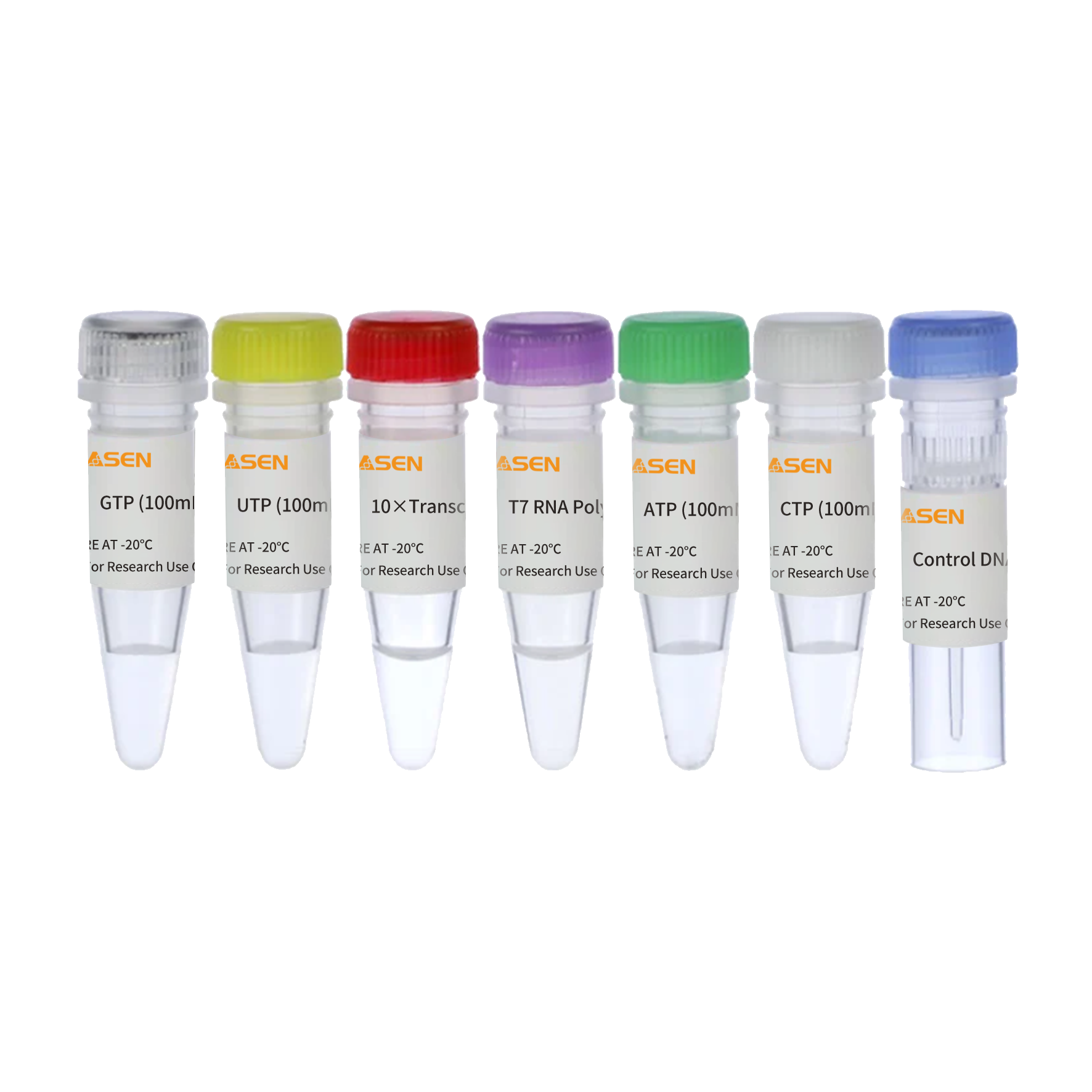

T7 High Yield RNA Synthesis Kit оптимизирует систему реакции транскрипции. Набор может эффективно синтезировать одноцепочечную РНК, используя РНК-полимеразу T7, линейную двухцепочечную ДНК с последовательностью промотора T7 в качестве шаблона, NTPs в качестве субстрата для контроля последовательности ДНК ниже промотора. Во время транскрипции к субстрату можно добавлять модифицированные нуклеотиды для получения РНК, меченой биотином или красителем.
Этот набор может синтезировать длинные транскрипты и короткие транскрипты, РНК может быть произведена в количестве 100-200 мкг с 1 мкг вводимой ДНК-матрицы. РНК, синтезированная путем транскрипции, может быть использована для различных последующих приложений, таких как исследование структуры и функции РНК, защита РНКазы, гибридизация зондов, РНК-интерференция, микроинъекция и in vitro перевод.
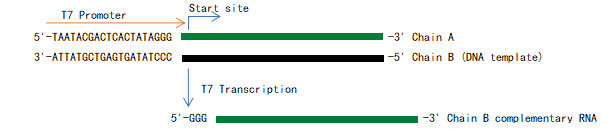
Рисунок 1: In vitro Процесс транскрипции РНК
Особенность
- До 180 мкг РНК на реакцию из 1 мкг контрольной матрицы
- Оптимизированная система реакции для процесса IVT
- Уменьшить выработку дцРНК
- Более высокая целостность и чистота РНК
Приложение
- В пробирке синтез РНК
Компоненты
| Номер компонента | Имя | 10623ES50 (50 т) | 10623ES60 (100 т) | 10623ES70 (500 т) |
| 10623-А | Смесь РНК-полимеразы Т7 | 100 мкл | 200 мкл | 1 мл |
| 10623-Б | 10×Транскрипционный буфер | 100 мкл | 200 мкл | 1 мл |
| 10623-С | АТФ (100 мМ) | 100 мкл | 200 мкл | 1 мл |
| 10623-Д | CTP (100 мМ) | 100 мкл | 200 мкл | 1 мл |
| 10623-Е | ГТФ (100 мМ) | 100 мкл | 200 мкл | 1 мл |
| 10623-Ф | UTP (100 мМ) | 100 мкл | 200 мкл | 1 мл |
| 10623-Г | Контрольная ДНК-матрица (500 нг/мкл) | 10 мкл | 20 мкл | 100 мкл |
Доставка и хранение
Транспортировка сухим льдом. Хранить при температуре -15℃ ~ -25℃, срок годности два года.
Цифры
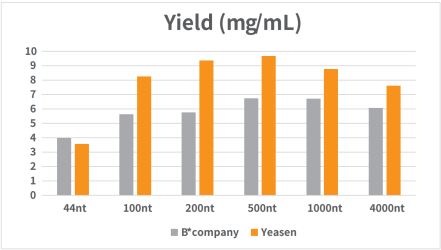
Рисунок 1. Стандартная РНК была синтезирована in vitro с использованием набора для синтеза РНК T7.
Реакция инкубировалась в ПЦР-инструменте при 37℃ в течение 2 часов, а затем очищалась магнитными шариками (Cat#12602). Результат выхода анализировался спектрофотометром NanoDrop, как показано на рисунке 1.
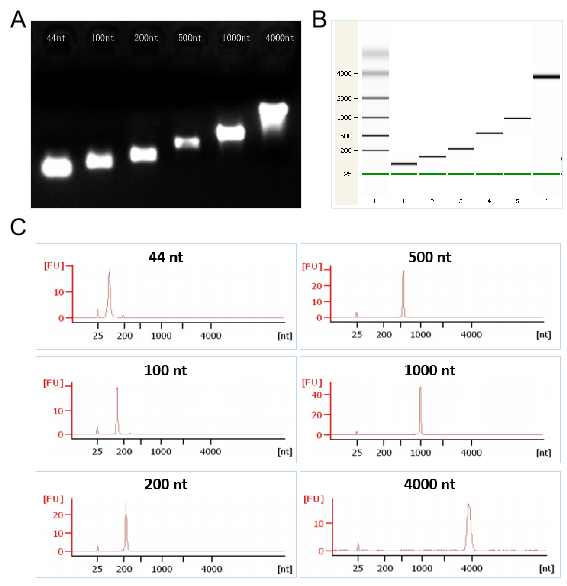
Рисунки 2. Демонстрация транскрипции РНК различной длины с помощью набора T7 соответственно на электрофоретограмме (рисунки 2A), диаграмме капиллярного электрофореза (рисунки 2B) и хроматограмме (рисунки 2C)
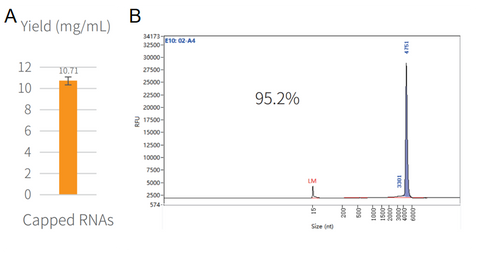
Рисунок 3. Синтез кэпированной РНК in vitro.
Реакция инкубировалась в ПЦР-приборе при 37℃ в течение 2 часов, а затем очищалась магнитными шариками (Cat#12602). Результат выхода анализировался спектрофотометром NanoDrop, как показано на рисунке 3A. Результат целостности анализировался капиллярным электрофорезом, как показано на рисунке 3B.
1. Низкий выход транскрипта
Качество шаблона тесно связано с урожайностью. Если урожайность экспериментальной группы значительно ниже, чем у контрольной группы, то возможны следующие причины:
① экспериментальный шаблон содержит ингибирующие компоненты;
② В шаблоне что-то не так.
Предложения:
① Повторно очистите шаблон;
② Определить количественную оценку шаблона и его целостность;
③ Увеличить время реакции;
④ Увеличить объем вводимых шаблонов;
⑤ Попробуйте другие промоторы и РНК-полимеразы.
2. Низкий выход коротких транскриптов
Короткий фрагмент инициации транскрипции будет ингибировать реакцию. Если продукт транскрипции составляет менее 100 нт, увеличение времени реакции до 4-8 ч или увеличение количества матрицы до 2 мкг увеличит выход РНК.
3. Длина транскрипции РНК больше ожидаемой
Если электрофорез показывает, что полоса продукта больше ожидаемого размера, то возможные причины:
①Плазмидная матрица может быть не полностью линеаризована;
②3'-конец смысловой цепи имеет выраженную структуру;
③РНК имеет вторичную структуру, которая не полностью денатурирована.
Предложения:
①Проверьте, полностью ли линеаризован шаблон, и при необходимости выполните дополнительную линеаризацию;
②Выберите подходящий фермент рестрикции, чтобы избежать выступающих 3'-концев, или используйте фрагмент Кленова/ДНК-полимеразу Т4 для завершения транскрипции перед продолжением;
③Используйте денатурированный гель для обнаружения продуктов РНК.
4. Длина транскрипции РНК меньше ожидаемой
Если электрофорез показывает, что полоса продукта меньше ожидаемого размера, то возможные причины:
①Шаблон содержит терминирующую последовательность, похожую на РНК-полимеразу Т7;
②Содержание GC в шаблоне высокое.
Предложения:
①Снизьте температуру реакции (например, 30°C). Иногда снижение температуры может увеличить длину транскрипции, но это уменьшит выход. Или попробуйте другие РНК-полимеразы для транскрипции;
②Если содержание ГХ в шаблоне высокое, используйте 42℃ для транскрипции или добавления SSB для увеличения выхода и длины транскрипции.
5. Электрофорез продуктов транскрипции
Во время электрофореза наблюдается явление «хвоста».
Возможные причины:
①Загрязнение РНКазой во время экспериментальной эксплуатации;
②Загрязненная РНКазой матрица ДНК.
Предложения:
①Используйте наконечники пипеток и пробирки EP, не содержащие РНКазы, надевайте одноразовые латексные перчатки и маски, а все реагенты приготавливаются с использованием H2O, не содержащей РНКазы.
②Повторно очистите шаблон ДНК.
[1] Донг З., Чжэн Н., Ху С. и др.МикроРНК-подобная РНК 8 Nosema bombycis (Nb-milR8) повышает патогенность грибка, модулируя экспрессию гена BmPEX16 у его хозяина, Bombyx mori. Microbiol Spectr. 2021;9(2):e0104821. doi:10.1128/Spectrum.01048-21(IF:7.171)
[2] Ван X, Тан С, Йе С и др. Сверхчувствительное количественное определение циркулирующей miR-195-5p с каскадом амплификации с тройным смещением нитей. Talanta. 2022;242:123300. doi:10.1016/j.talanta.2022.123300(IF:6.057)
Storage
FAQ
The optimization of the IVT system can be achieved by adjusting the template, the amount of T7 enzyme used, and if it is co-transcription with cap addition, the ratio between the cap and NTP can be considered; for enzymatic cap addition, the conditions can be optimized in terms of the dosage of the cap-adding enzyme, 2-O-methyltransferase, and SAM. Regarding the template, apart from the requirement of complete linearization, there is another point, which is sequence design. For example, in the 5'UTR region, pay attention to uAUG and Kozak sequence; for CDS, consider the codon preference, GC3 content, and dinucleotide preference, etc.; 3'UTR: RBP and miRNA binding sites: and another point is the secondary structure of RNA. The stable secondary structure of the 5'UTR pre-sequence will reduce the expression of mRNA; the stable secondary structure of 3'UTR will increase the stability of mRNA and promote the expression of the encoded protein. For the recommended IVT system and more detailed tips, please refer to the mRNA in vitro synthesis experiment manual of Vivian Biotechnology.
The average yield is between 120-220 ug/ul (the yield is highly dependent on the sequence design). In the co-transcription method, the mRNA yield is 8 g/L. With process optimization, the yield will increase. Currently, the quality parameters of the available processes include observing the fluorescence value of GFP and measuring the cap addition rate using LC-MS.
The T7 pol enzyme will use the product RNA as a template and continue to extend the RNA at its 3' end. The extended sequence will form complementary pairing with the 3' end sequence of the original RNA molecule, thereby creating a hairpin structure.
The T7 pol enzyme can use RNA as a template to replicate RNA molecules, and synthesize the complementary strand.
(At present, there is no effective method for removing dsRNA. However, there is a patent report suggesting that a fiber column (sigma) could be tried.)
1. Reduce the concentration of magnesium ions; however, reducing the concentration of magnesium ions will also lead to a decrease in the production of RNA, and a balance point needs to be reached.
2. Increase the reaction temperature of IVT to 50-56℃. This temperature can effectively reduce the content of dsRNA in the product; however, the requirements for equipment for high-temperature reactions will vary, and it may also increase the cost.
3. In the IVT reaction system, certain dispersants such as urea and formamide are added; our process research team has also conducted some experiments on this route, which can achieve the effect of inhibiting dsRNA. However, whether it is suitable for process scaling-up still needs further research.
This kind of precipitation occurs by chance and is also closely related to the sequence design.
Solution: (1) Reduce the concentration of magnesium ions, but this will result in a decrease in yield. The amount of T7 enzyme needs to be increased and the reaction time (from 2 hours to 3-4 hours) needs to be extended; (2) The form of NTP (the presence of magnesium ions at a high concentration, such as 46 mM, does not select NTP, but when the magnesium ion concentration decreases, the yield of NTP (Tris salt form) does not change much, and the yield of the triNa form of NTP decreases significantly.
Citations
Documents
| Manual |
|---|
| 10623_Manual_HB230115_EN.pdf |
Applications

Вам также может понравиться
Расследование
Часто задаваемые вопросы
Продукт предназначен только для исследовательских целей и не предназначен для терапевтического или диагностического использования на людях или животных. Продукты и содержимое защищены патентами, товарными знаками и авторскими правами, принадлежащими Yeasen Biotechnology. Символы товарных знаков указывают на страну происхождения, а не обязательно на регистрацию во всех регионах.
Для некоторых приложений могут потребоваться дополнительные права интеллектуальной собственности третьих лиц.
Йесен привержен этической науке, полагая, что наши исследования должны затрагивать важнейшие вопросы, обеспечивая при этом безопасность и соблюдение этических стандартов.