
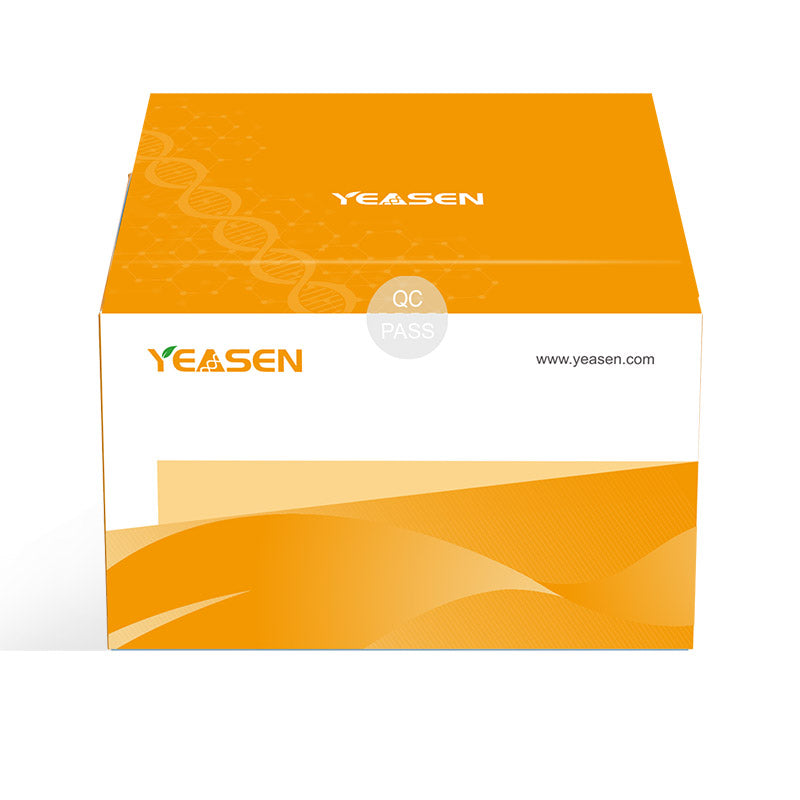

Description
The Hieff™ Plant RNA Kit is suitable for extracting RNA from polysaccharide polyphenol plants such as Arabidopsis thaliana, rice, maize, wheat, tomato, tobacco, cotton and Holly. The extraction and purification of total RNA from plant samples (100-200 mg fresh or cryopreserved samples) can be completed within 40 minutes without the use of toxic organic substances such as phenol and chloroform. The silicon matrix material used in the centrifugal adsorption column is a unique new material of our company, which can maximize the recovery of high-purity RNA with our unique lysis solution formula. DNase I directly digests gDNA on the column, and the extracted total RNA has high purity, stable and reliable quality, and can be applied to various downstream application experiments, such as RT-PCR, RT-qPCR, in vitro transcription, molecular cloning etc.
Features
Safety: no need to use organic reagents such as phenol chloroform.
Fast: RNA extraction from samples can be completed within 40 min minutes.
Widely compatibility: It is suitable for RNA extraction from Arabidopsis thaliana, rice, corn, wheat, tomato, tobacco, cotton, holly and other simple polysaccharide and polyphenol plant samples.
Low genome residue: equipped with DNase I, which can effectively remove DNA pollution.
Applications
Plant RNA extraction;Total RNA extraction from plants;
Specifications
|
Cat.No. |
19291ES08 /19291ES50 |
|
Size |
5 T / 50 T |
Components
|
Category |
Components No. |
Name |
19291ES08 |
19291ES50 |
|
Part I |
19291-A |
DNase Buffer |
250 μL |
1.25 mL ×2 |
|
19291-B |
DNase I (RNase-free) |
25 μL |
250 μL |
|
|
Part II |
19291-C |
RNA Adsorption Column P4 (RNA Column P4) |
5 |
50 |
|
19291-D |
2 mL Collection Tube P4 |
5 |
50 |
|
|
19291-E |
Lysate LB (LB Buffer P4) |
5 mL |
50 mL |
|
|
19291-F |
Deproteinized solution PL (PL Buffer P4) |
4 mL |
40 mL |
|
|
19291-G |
Wash Buffer W* |
1.3 mL |
13 mL |
|
|
19291-H |
RNase-free H2O |
1 mL |
5 mL |
Shipping and Storage
Part I should be stored at 2~8℃ for 2 years.
Part II should be stored at room temperature for 2 years.
Figures
RNA was extracted from Rice, corn, Arabidopsis, tomato. The extracted RNA was then subjected to agarose gel electrophoresis, and the electrophoretogram is shown below.

Table 1. High quality of extracted products.
FAQ
Q: Can the plant RNA extraction kit also be used for extracting RNA from fungi?
A: You can give it a try.
Q: What are the samples of polysaccharides and polyphenols?
A: Cotton, coniferous trees, ginkgo; the flesh of bananas and grapes; the seeds of wheat and peanuts; fungi such as mushrooms, etc.
Q: Why are two columns used for extraction?
A: DNA filtration column: Specifically adsorbs DNA from the tissue lysate and filters out the solid substances in the lysate. RNA adsorption column: Specifically adsorbs RNA.
Q: RNA Degradation
A: The samples were repeatedly subjected to freezing and thawing, or there was contamination with RNase during the extraction process.
Q: Low RNA production
A: If the starting amount of the sample is too high or the material is not fully lysed, it is recommended to use a smaller amount of sample and thoroughly grind or homogenize it.
Q: There is genomic DNA contamination.
A: The initial sample input volume was too high. The initial input volume should be reduced. Alternatively, in subsequent experiments, a reverse transcription kit with the removed genomic material can be selected for removal.
Documents:
Safety Data Sheet
Manuals
Citations & References:
Payment & Security
Your payment information is processed securely. We do not store credit card details nor have access to your credit card information.
You may also like
Inquiry
FAQ
The product is for research purposes only and is not intended for therapeutic or diagnostic use in humans or animals. Products and content are protected by patents, trademarks, and copyrights owned by Yeasen Biotechnology. Trademark symbols indicate the country of origin, not necessarily registration in all regions.
Yeasen is dedicated to ethical science, believing our research should address critical questions while ensuring safety and ethical standards.