



Frequently Bought Together
Hieff Unicon™ Universal Blue qPCR Master Mix (Dye Based) is a pre-solution for 2×real-time quantitative PCR amplification characterized by high sensitivity and specificity, is blue in color, and has the effect of sample addition tracing. The core component Hieff Unicon™ Taq DNA polymerase uses antibody hot start to effectively inhibit non-specific amplification due to primer annealing during sample preparation. At the same time, the formula adds the promoting factors to improve the amplification efficiency of PCR reaction and equalize the amplification of genes with different GC contents (30 ~ 70%), so that quantitative PCR can obtain a good linear relationship in a wide quantitative region. This product contains special ROX Passive Reference Dye, which is applicable to most qPCR instruments. It is not necessary to adjust the concentration of ROX on different instruments. It is only necessary to add primers and templates to prepare the reaction system for amplification.
Features
Built-in visual indicator: It contains an inert blue dye that does not interfere with real-time PCR and provides higher visibility in tubes or Wells.
High specificity: It contains Taq DNA polymerase and is tightly controlled by an antibody-mediated heat-priming mechanism, thereby avoiding nonspecific amplification.
Wide instrument compatibility: It is compatible with most qPCR instruments and eliminates the need to adjust the concentration of ROX on different instruments
Applications
Gene Expression
Specifications
| Concentration | 2× |
| Detection method | SYBR Green dye |
| PCR method | qPCR |
| Polymerase | Taq DNA polymerase |
| Type of sample | DNA |
| Application equipment | Most qPCR instruments |
| Product Type | Premix for real-time fluorescence quantitative PCR |
| Apply to (application) | Gene Expression |
Components
| Components No. | Name | 11184ES03 | 11184ES08 | 11184ES50 | 11184ES60 |
| 11184 |
Hieff Unicon™ Universal Blue qPCR Master Mix (Dye Based) |
1 mL | 5×1 mL | 50×1 mL | 100×1 mL |
Figures
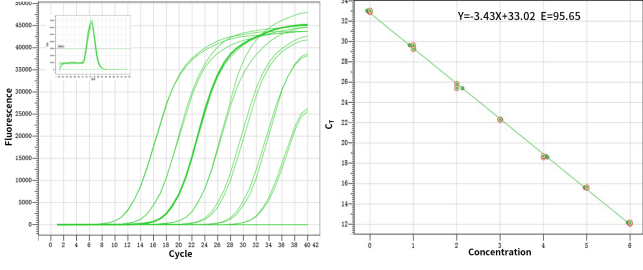
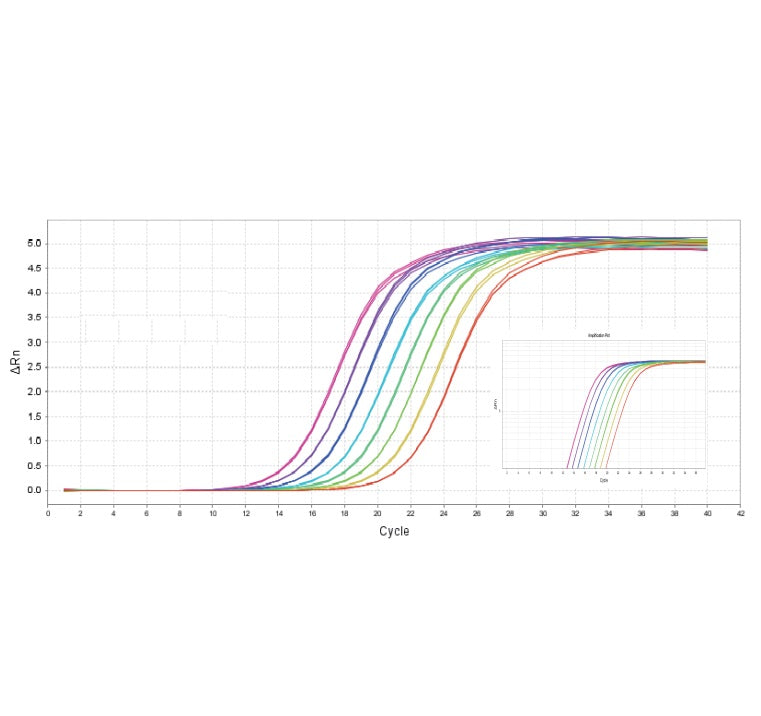
Figure 1. High sensitivity: the ability to detect a single copy.
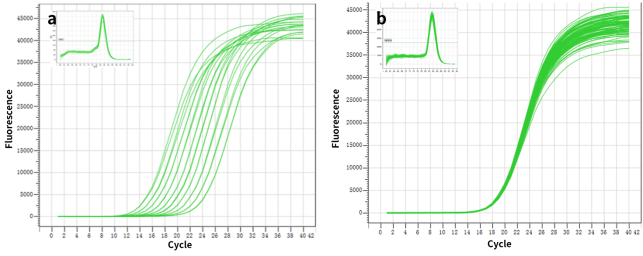
Figure2. High resolution & Excellent reproducibility of duplicate wells.
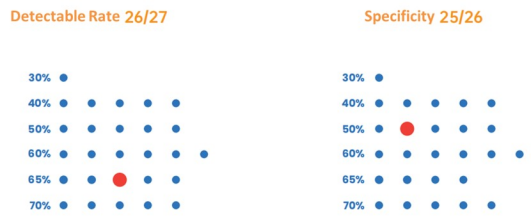
Figure3. Excellent detection rate and specificity: broadly suited for the amplification of 30-70% GC.

Cited from "VCP enhances autophagy-related osteosarcoma progression by recruiting USP2 to inhibit ubiquitination and degradation of FASN, Cell Death & Disease, volume 15, Article number: 788 (2024) "
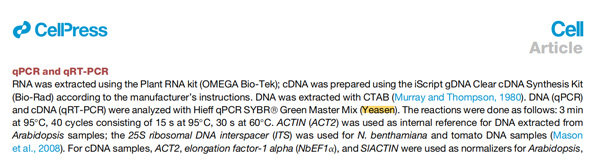
Cited from "A Defense Pathway Linking Plasma Membrane and Chloroplasts and Co-opted by Pathogens. Cell . 2020 Sep 3;182(5):1109-1124.e25. doi: 10.1016/j.cell.2020.07.020. "
Storage
FAQ
(1) Standard curve: Amplification efficiency range: 90-110%, corresponding slope: -3 to -3.5. R2 > 0.98. (Amplification efficiency = 10 - 1/slope - 1), when the slope is -3.32, the amplification efficiency is 100%.
(2) Amplification curve: S-shaped curve, and Ct value is between 15 and 35, negative control Ct > 35 or no Ct value.
(3) Melting curve: Single peak. The Ct value is greater than 15 cycles because the 10 times standard deviation of the fluorescence value in 3-15 cycles is the fluorescence threshold, and a too small Ct value will affect the curve.
a) Use a different reference gene;
b) Change the primers.
(2) The commonly used amount is 500-1000 ng of total RNA for reverse transcription, dilute it 10 times and take 1 μL of cDNA for the qPCR experiment.
(1) Standard curve: Amplification efficiency range: 90-110%, corresponding slope: -3 to -3.5. R2 > 0.98. (Amplification efficiency = 10 - 1/slope - 1), when the slope is -3.32, the amplification efficiency is 100%.
(2) Amplification curve: S-shaped curve, and Ct value is between 15 and 35, negative control Ct > 35 or no Ct value.
(3) Melting curve: Single peak.
b) The 10 times the standard deviation of the fluorescence values for 3 to 15 cycles is the fluorescence threshold. A too small Ct value will affect the curve.
Citations
Documents
| Brochure |
|---|
| Comprehensive_And_Professional_qPCR_Solution.pdf |
| Hieff_qPCR_Master_Mix_Series.pdf |

You may also like
Inquiry
FAQ
The product is for research purposes only and is not intended for therapeutic or diagnostic use in humans or animals. Products and content are protected by patents, trademarks, and copyrights owned by Yeasen Biotechnology. Trademark symbols indicate the country of origin, not necessarily registration in all regions.
Certain applications may require additional third-party intellectual property rights.
Yeasen is dedicated to ethical science, believing our research should address critical questions while ensuring safety and ethical standards.