
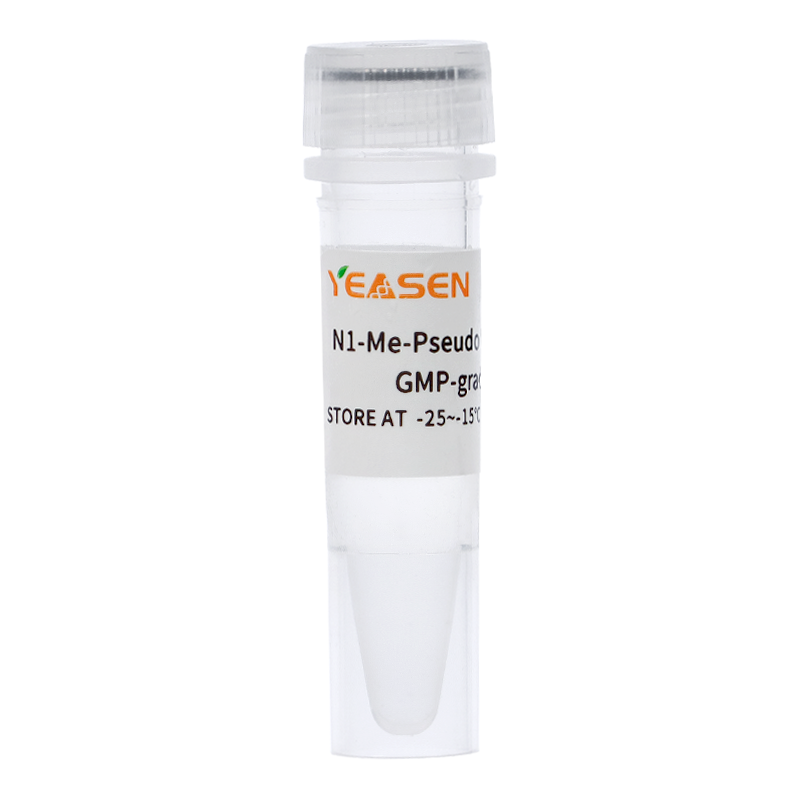

N1-Me-Pseudo UTP solution is one of the most commonly used modified nucleoside triphosphates. It is mostly used as the reaction substrate or coenzyme of enzymes, such as in vitro transcription, RNA amplification, siRNA synthesis, etc. The modified mRNA containing pseudouridine has better nuclease stability and translation characteristics and changes the innate immune receptor and in vitro transcription. The interaction of RNA has a wide range of applications in the field of therapy and diagnosis.
This product is produced in accordance with GMP process requirements and provided in liquid form.
Features
Validated, product-specific manufacturing processes and analytical methods compliant with ISO 13485 and GMP requirements.
Product-specific stability studies ensuring consistent performance. AOF (Animal-Origin Free) production process and raw materials, with complete TSE/BSE statements.
Nitrosamine risk assessment and statement available.
Comprehensive regulatory support documents provided.
Scalable manufacturing capacity for large-scale production.
Multiple salt forms available (Na⁺, Tris, etc.) to meet diverse downstream application needs.
Optimized Tris–NTP reaction system delivering increased IVT yield and reduced dsRNA content.
Application
RNA synthesis and amplification
Building block for in vitro transcription
Specification
| CAS No. | 1428903-59-6 (free acid) |
| Molecular formula | C10H17N2O15P3 (free acid) |
| Molecular weight | 498.17 g/moL (free acid) |
| Purity | ≥ 99% |
| Content | 200mM ± 3mM |
| Structure | 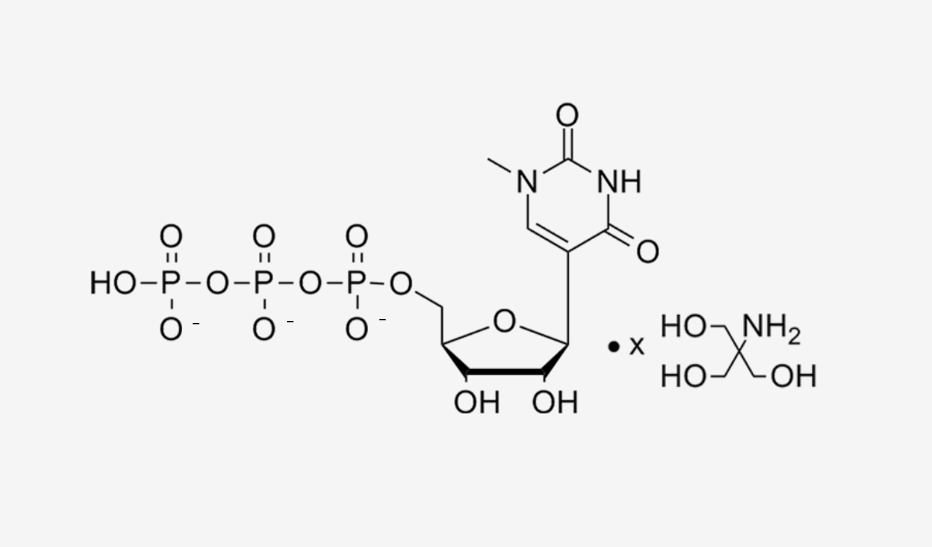 |
Component
| Components No. | Name | 10692ES70 | 10692ES80 | 10692ES92 | 10692ES98 |
| 10692 | N1-Me-Pseudo UTP Tris Solution GMP-grade (200 mM) | 100 μL | 1 mL | 10 mL | 100 mL |
Figures
- Increased the IVT yield
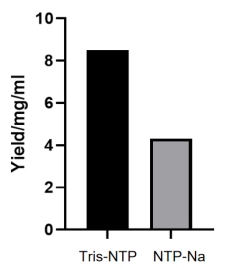
Figure 1. The IVT yield was significantly increased under the optimized Tris NTP reaction system, compared with the sodium NTP reaction system.
- Decreased the dsRNA content

Figure 2. The content of dsRNA was significantly decreased under the optimized Tris NTP reaction system, compared with the sodium NTP reaction system. The content of dsRNA was detected by the Dot Blot method.
Storage
FAQ
Citations
Documents
Applications
You may also like
Inquiry
FAQ
The product is for research purposes only and is not intended for therapeutic or diagnostic use in humans or animals. Products and content are protected by patents, trademarks, and copyrights owned by Yeasen Biotechnology. Trademark symbols indicate the country of origin, not necessarily registration in all regions.
Certain applications may require additional third-party intellectual property rights.
Yeasen is dedicated to ethical science, believing our research should address critical questions while ensuring safety and ethical standards.