



Frequently Bought Together
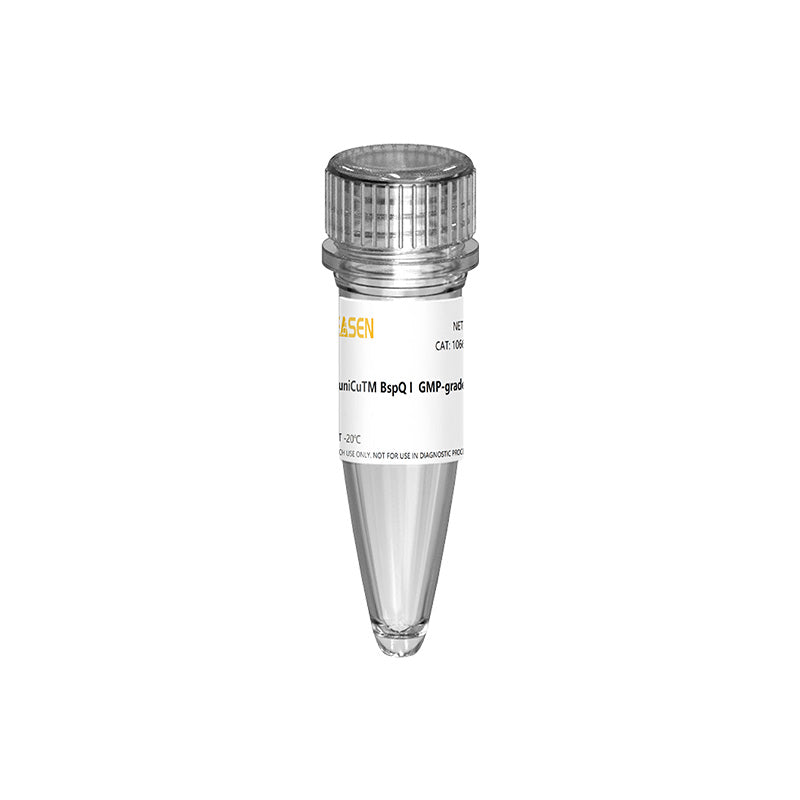
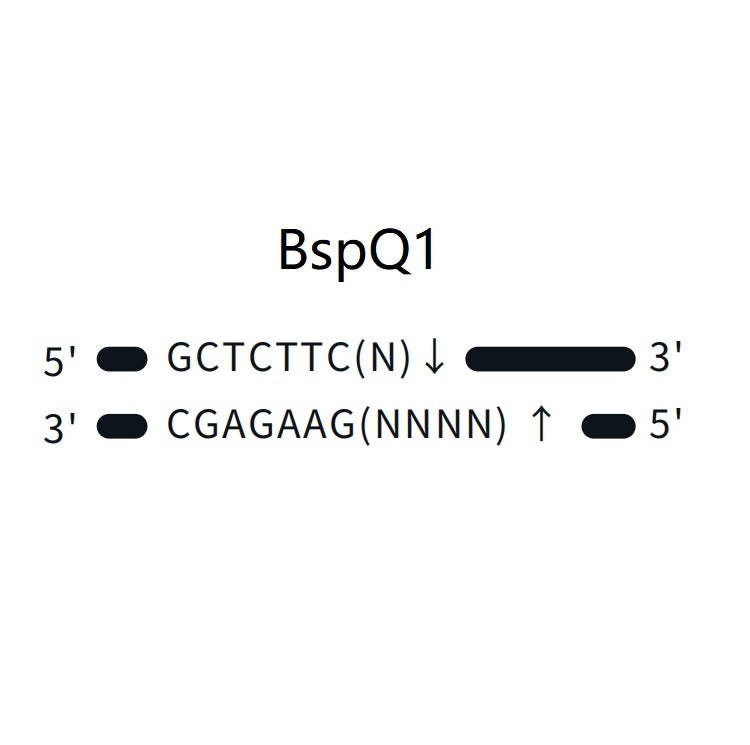
This product is a type II restriction endonuclease derived from the recombinant protein encoded by the BspQI gene in Bacillus sphaericus expressed by E.coli. Its recognition sequence is 5'-GCTCTTCN1/N4-3'. Use to digest plasmids to prepare poly (A/T/G/C)-terminated linearized DNA fragments to obtain specific cohesive ends. This product is produced in accordance with GMP process requirements and provided in a liquid form.
Features
- DA DMF Certified** (MF038306)
- GMP Grade, Animal-Origin Free: Manufactured under ISO 13485 and GMP standards
- High Efficiency, Low Star Activity: Full digestion at 37°C in 16 hours, no star activity
- Nuclease-Free: Rigorously tested and confirmed free of endonucleases, exonucleases, and RNases to ensure sample integrity and reliable downstream results
- Performance Matches Leading Brands
Application
- Digest the plasmid to prepare a linearized DNA fragment at the end of Poly (A/T/C/G);
- Linearize plasmid template before in vitro transcription
- Restriction digest
Specification
| Expression Host | Recombinant E. coli with BspQI gene |
| Reaction Temperature | 50℃ |
| Storage Buffer | 20 mM Tris-HCl, 0.5 M KCl, 0.1 mM EDTA, 1 mM DTT, 0.1% Triton X-100, 50% Glycerol |
| Unit Definition | 1 unit: The amount of enzyme required to digest 1 μg of λDNA within 1 h at 50℃ in a 50 μL system |
Components
| Components No. | Name | 10664ES76 (500 U) | 10664ES86 (2,500 U) | 10664ES92 (10 KU) | 10664ES98 (100 KU) |
| 10664 | BspQI GMP-grade (10 U/μL) | 50 μL | 250 μL | 1 mL | 10 mL |
Shipping and Storage
The product is shipped with dry ice and can be stored at -15℃ ~ -25℃ for one year.
Figures
1. Enhanced Restriction Enzyme Digestion Efficiency
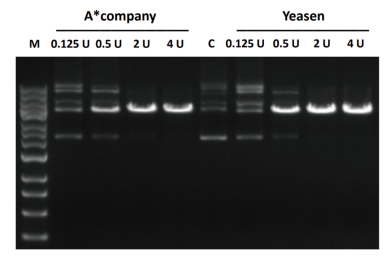
Figure 1. Comparison of Digestion Efficiency at Different Enzyme Amounts (0.125–4 U): 2 U Delivers Optimal Performance
In a 50 μL reaction system, 1 μg of λDNA was treated with the corresponding amount of BspQI (incubate at 50 °C for 60 min and then incubate at 80 °C for 20 min to inactivate BspQI). Then 20 μL of the reaction solution was loaded.
M: DNA marker
C: The control group without BspQI treatment
2. High-Efficiency Enzymatic Digestion in 0.5–3 Hours

FAQ
Q: The enzyme cleavage sites for template linearization are mostly BspQI and bsaI. Why are these two enzymes chosen? I noticed that they both belong to the IIS type restriction endonucleases. Does this have any specific impact?
A: In the aspect of preparing mRNA in vitro transcription templates, the selection of restriction endonucleases is mainly based on the following factors:
The cut site should be such that the 5' end protrudes or is flush with the end. The presence of the 3' protruding end will increase the generation of false by-products during in vitro transcription (IVT) from the template body.
② The recognition sequence of the restriction enzyme cleavage site should be as long as possible; the longer the recognition sequence, the less likely it is to appear in the gene fragment.
③ IIS-type endonucleases are the preferred enzymes for linearizing plasmids in vaccine development, as their cleavage sites are outside the recognition sequence, ensuring the integrity of the designed poly(A) tail. After linearizing DNA templates using IIS-type endonucleases, no "scars" will remain, and no unnecessary nucleotides will be added during the IVT process.
④ The endonucleases meet the pharmaceutical production grade requirements (GMP, without animal-derived components, etc.)
At present, for most mRNA development projects, especially vaccine projects, the endonucleases used for linearization of plasmids are still BspQI, BsaI, and XbaI. Among them, BspQI is the most frequently used. It is estimated that there is a certain relationship with the previous designed plasmid sequences from abroad. Of course, it is not limited to these enzymes; we have also encountered cases where other enzymes were used for linearization.
Documents:
Storage
FAQ
Citations
Documents
Applications
You may also like
Inquiry
FAQ
The product is for research purposes only and is not intended for therapeutic or diagnostic use in humans or animals. Products and content are protected by patents, trademarks, and copyrights owned by Yeasen Biotechnology. Trademark symbols indicate the country of origin, not necessarily registration in all regions.
Certain applications may require additional third-party intellectual property rights.
Yeasen is dedicated to ethical science, believing our research should address critical questions while ensuring safety and ethical standards.