

Frequently Bought Together
T7 High Yield RNA Synthesis Kit optimaliseert het transcriptiereactiesysteem. De kit kan de enkelstrengs RNA efficiënt synthetiseren door T7 RNA-polymerase te gebruiken, het lineaire dubbelstrengs DNA met de T7-promotorsequentie als template, NTP's als substraat om de DNA-sequentie stroomafwaarts van de promoter te controleren. Tijdens transcriptie kunnen gemodificeerde nucleotiden aan het substraat worden toegevoegd om biotine of kleurstofgelabeld RNA te bereiden.
Deze kit kan lange transcripten en korte transcripten synthetiseren, RNA kan worden geproduceerd in 100-200 μg met 1 μg DNA-template-input. Het RNA dat door transcriptie wordt gesynthetiseerd, kan worden gebruikt voor verschillende downstream-toepassingen, zoals RNA-structuur- en functieonderzoek, RNase-bescherming, probehybridisatie, RNAi, micro-injectie en in vitro vertaling.
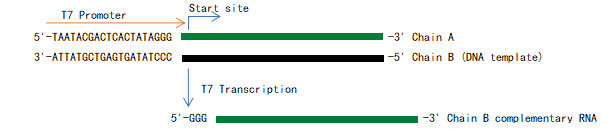
Figuur 1: In vitro RNA-transcriptieproces
Functie
- Tot 180 μg RNA per reactie uit 1 μg van de controletemplate
- Geoptimaliseerd reactiesysteem voor het IVT-proces
- Verminder de dsRNA-productie
- Hogere RNA-integriteit en -zuiverheid
Sollicitatie
- In vitro RNA-synthese
Componenten
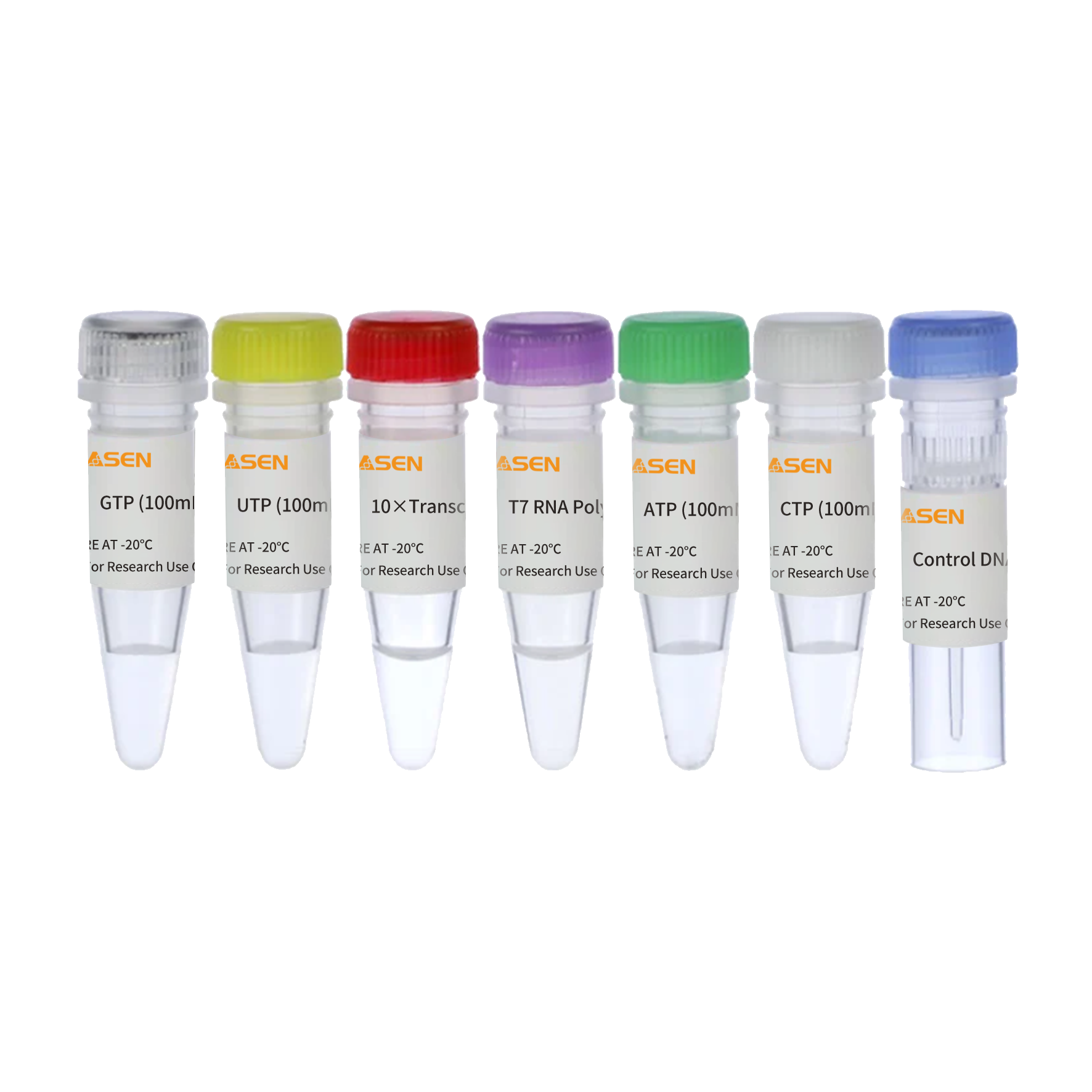
| Componenten nr. | Naam | 10623ES50 (50 ton) | 10623ES60 (100 ton) | 10623ES70 (500 ton) |
| 10623-A | T7 RNA-polymerase-mix | 100 μL | 200 μL | 1 ml |
| 10623-B | 10×Transcriptiebuffer | 100 μL | 200 μL | 1 ml |
| 10623-C | ATP (100mM) | 100 μL | 200 μL | 1 ml |
| 10623-D | CTP (100 mM) | 100 μL | 200 μL | 1 ml |
| 10623-E | GTP (100mM) | 100 μL | 200 μL | 1 ml |
| 10623-F | UTP (100 mM) | 100 μL | 200 μL | 1 ml |
| 10623-G | Controle DNA-sjabloon (500ng/μL) | 10 μL | 20 μL | 100 μL |
Verzending en opslag
Transport van droogijs. Bewaren bij -15℃ ~ -25℃, twee jaar geldig.
Cijfers
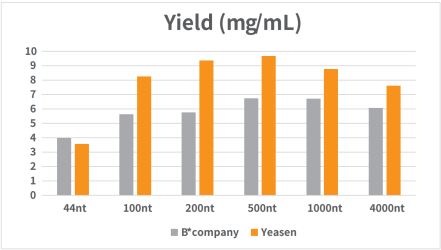
Figuur 1. Standaard-RNA werd in vitro gesynthetiseerd met behulp van de T7 RNA-synthesekit.
De reactie werd geïncubeerd in een PCR-instrument bij 37℃ gedurende 2 uur en vervolgens gezuiverd door magnetische kralen (Cat#12602). Het opbrengstresultaat werd geanalyseerd door NanoDrop-spectrofotometer zoals weergegeven in Figuur 1.
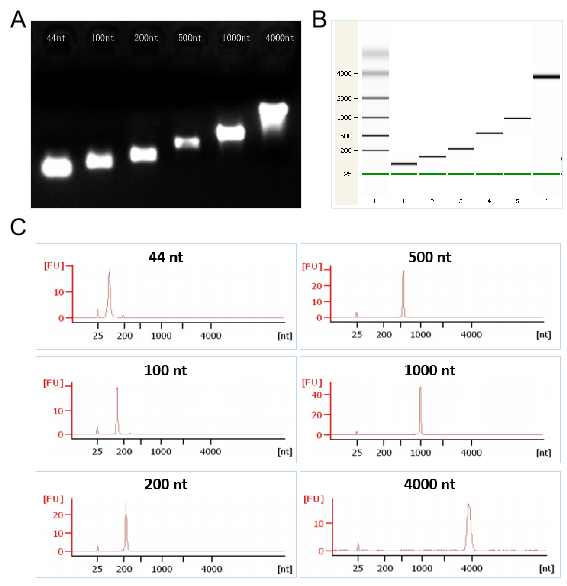
Figuur 2. De transcriptiedemonstratie van verschillende lengtes RNA door de T7-kit respectievelijk in het elektroforetogram (Figuur 2A), het capillaire elektroforesediagram (Figuur 2B) en het chromatogram (Figuur 2C)
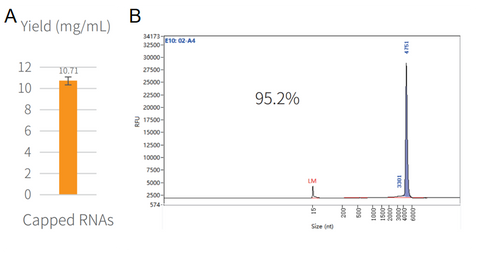
Figuur 3. Synthese van gecapte RNA in vitro.
De reactie werd geïncubeerd in een PCR-instrument bij 37℃ gedurende 2 uur en vervolgens gezuiverd door magnetische kralen (Cat#12602). Het opbrengstresultaat werd bepaald door een NanoDrop-spectrofotometer zoals weergegeven in Figuur 3A. Het integriteitsresultaat werd geanalyseerd door capillaire elektroforese zoals weergegeven in Figuur 3B.
1. Lage transcriptieopbrengst
De kwaliteit van de template is nauw verbonden met de opbrengst. Als de opbrengst van de experimentele groep significant lager is dan de controlegroep, zijn de mogelijke redenen:
① het experimentele sjabloon bevat remmende componenten;
② Er klopt iets niet in de sjabloon.
Suggesties:
① Reinig de sjabloon opnieuw;
② Bepaal de sjabloonkwantificering en de integriteit ervan;
③ Verleng de reactietijd;
④ Verhoog de hoeveelheid sjablooninvoer;
⑤ Probeer andere promotoren en RNA-polymerasen.
2. Lage opbrengst van korte transcripten
Een kort transcriptie-initiatiefragment zal de reactie remmen. Wanneer het transcriptieproduct minder dan 100 nt is, zal het verlengen van de reactietijd tot 4-8 uur of het verhogen van de hoeveelheid template tot 2 μg de RNA-opbrengst verhogen.
3. De RNA-transcriptielengte is groter dan verwacht
Als uit de elektroforese blijkt dat de productband groter is dan de verwachte grootte, zijn dit de mogelijke redenen:
①Het plasmidesjabloon is mogelijk niet volledig gelineariseerd;
②Het 3'-uiteinde van de sense-streng heeft een opvallende structuur;
③Het RNA heeft een secundaire structuur die niet volledig gedenatureerd is.
Suggesties:
①Controleer of de sjabloon volledig is gelineariseerd en voer indien nodig extra linearisatie uit;
②Selecteer een geschikt restrictie-enzym om 3'-overhangen te voorkomen, of gebruik Klenow Fragment/T4 DNA-polymerase om de transcriptie te voltooien voordat u verdergaat;
③Gebruik gedenatureerde gel om RNA-producten te detecteren.
4. De RNA-transcriptielengte is korter dan verwacht
Als uit de elektroforese blijkt dat de productband kleiner is dan de verwachte grootte, zijn dit de mogelijke redenen:
①Het sjabloon bevat een terminatiesequentie die lijkt op T7 RNA-polymerase;
②Het GC-gehalte in de sjabloon is hoog.
Suggesties:
①Verlaag de reactietemperatuur (bijvoorbeeld 30°C). Soms kan het verlagen van de temperatuur de transcriptielengte vergroten, maar het zal de opbrengst verminderen. Of probeer verschillende RNA-polymerasen voor transcriptie;
②Als het GC-sjabloongehalte hoog is, gebruik dan 42℃ om te transcripteren, of voeg SSB toe om de opbrengst en transcriptielengte te vergroten.
5. Elektroforese-tailing van transcriptieproducten
Er is sprake van een staartverschijnsel tijdens elektroforese.
Mogelijke redenen:
①Verontreinigd met RNase tijdens experimentele operatie;
②Verontreinigd DNA-sjabloon door RNase.
Suggesties:
①Gebruik RNase-vrije pipetpunten en EP-buisjes, draag wegwerphandschoenen en -maskers van latex en alle reagentia worden bereid met RNase-vrij H2O.
②Zuiver het template-DNA opnieuw.
[1] Dong Z, Zheng N, Hu C, et al.Nosema bombycis microRNA-achtige RNA 8 (Nb-milR8) verhoogt de pathogeniciteit van schimmels door de genexpressie van BmPEX16 in zijn gastheer, Bombyx mori, te moduleren. Microbiol Spectr. 2021;9(2):e0104821. doi:10.1128/Spectrum.01048-21(IF:7.171)
[2] Wang X, Tang S, Ye S, et al. Ultragevoelige kwantificering van circulerende miR-195-5p met triple streng displacement amplification cascade. Talanta. 2022;242:123300. doi:10.1016/j.talanta.2022.123300(IF:6.057)
Storage
FAQ
The optimization of the IVT system can be achieved by adjusting the template, the amount of T7 enzyme used, and if it is co-transcription with cap addition, the ratio between the cap and NTP can be considered; for enzymatic cap addition, the conditions can be optimized in terms of the dosage of the cap-adding enzyme, 2-O-methyltransferase, and SAM. Regarding the template, apart from the requirement of complete linearization, there is another point, which is sequence design. For example, in the 5'UTR region, pay attention to uAUG and Kozak sequence; for CDS, consider the codon preference, GC3 content, and dinucleotide preference, etc.; 3'UTR: RBP and miRNA binding sites: and another point is the secondary structure of RNA. The stable secondary structure of the 5'UTR pre-sequence will reduce the expression of mRNA; the stable secondary structure of 3'UTR will increase the stability of mRNA and promote the expression of the encoded protein. For the recommended IVT system and more detailed tips, please refer to the mRNA in vitro synthesis experiment manual of Vivian Biotechnology.
The average yield is between 120-220 ug/ul (the yield is highly dependent on the sequence design). In the co-transcription method, the mRNA yield is 8 g/L. With process optimization, the yield will increase. Currently, the quality parameters of the available processes include observing the fluorescence value of GFP and measuring the cap addition rate using LC-MS.
The T7 pol enzyme will use the product RNA as a template and continue to extend the RNA at its 3' end. The extended sequence will form complementary pairing with the 3' end sequence of the original RNA molecule, thereby creating a hairpin structure.
The T7 pol enzyme can use RNA as a template to replicate RNA molecules, and synthesize the complementary strand.
(At present, there is no effective method for removing dsRNA. However, there is a patent report suggesting that a fiber column (sigma) could be tried.)
1. Reduce the concentration of magnesium ions; however, reducing the concentration of magnesium ions will also lead to a decrease in the production of RNA, and a balance point needs to be reached.
2. Increase the reaction temperature of IVT to 50-56℃. This temperature can effectively reduce the content of dsRNA in the product; however, the requirements for equipment for high-temperature reactions will vary, and it may also increase the cost.
3. In the IVT reaction system, certain dispersants such as urea and formamide are added; our process research team has also conducted some experiments on this route, which can achieve the effect of inhibiting dsRNA. However, whether it is suitable for process scaling-up still needs further research.
This kind of precipitation occurs by chance and is also closely related to the sequence design.
Solution: (1) Reduce the concentration of magnesium ions, but this will result in a decrease in yield. The amount of T7 enzyme needs to be increased and the reaction time (from 2 hours to 3-4 hours) needs to be extended; (2) The form of NTP (the presence of magnesium ions at a high concentration, such as 46 mM, does not select NTP, but when the magnesium ion concentration decreases, the yield of NTP (Tris salt form) does not change much, and the yield of the triNa form of NTP decreases significantly.
Citations
Documents
| Manual |
|---|
| 10623_Manual_HB230115_EN.pdf |
Applications

Misschien vind je het ook leuk
Navraag
FAQ
Het product is alleen bedoeld voor onderzoeksdoeleinden en is niet bedoeld voor therapeutisch of diagnostisch gebruik bij mensen of dieren. Producten en inhoud worden beschermd door patenten, handelsmerken en auteursrechten die eigendom zijn van
Voor bepaalde toepassingen zijn mogelijk aanvullende intellectuele eigendomsrechten van derden vereist.