


Frequently Bought Together
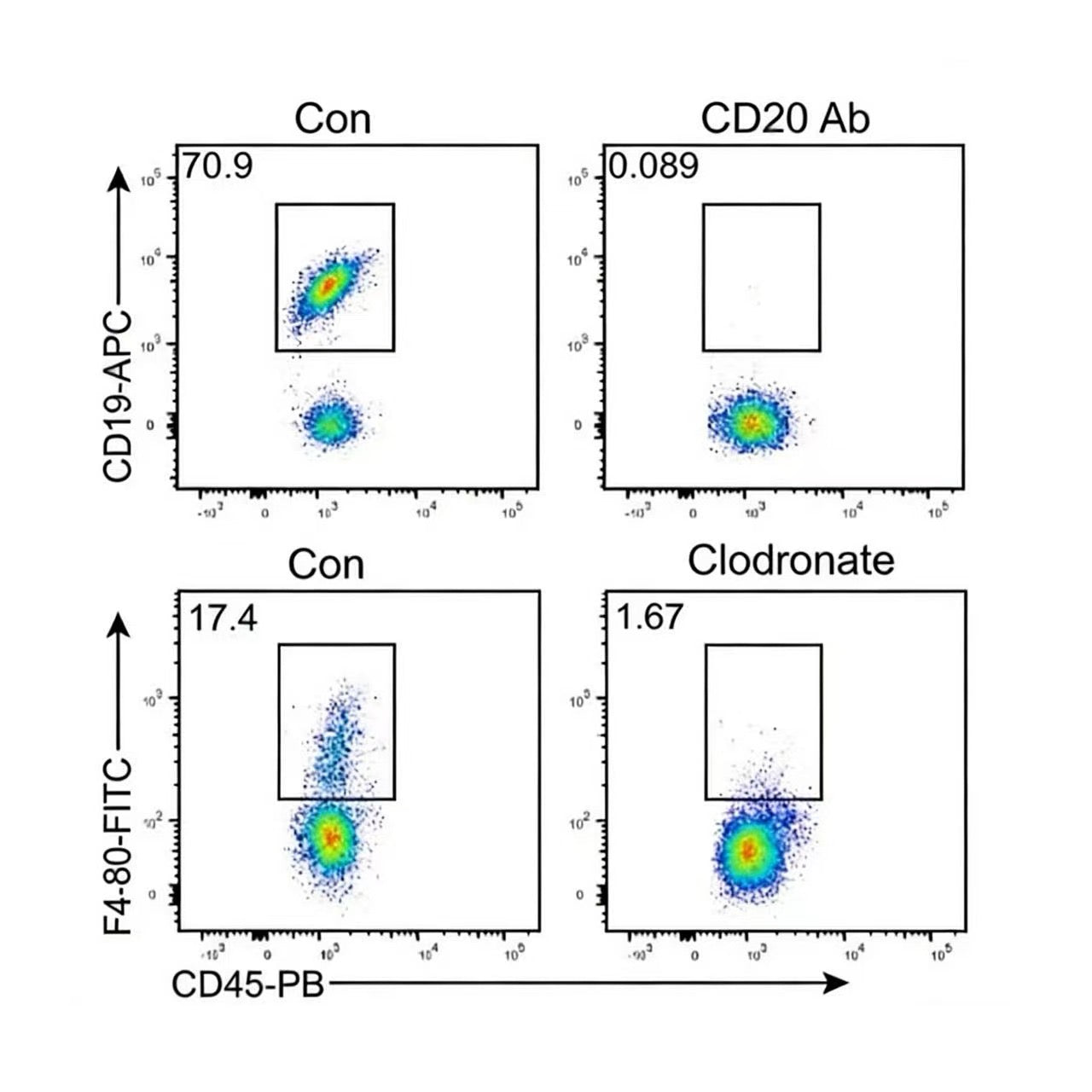
Clodronate Liposomes are currently the most mature, convenient, and cost-effective tool for macrophage depletion. They can effectively eliminate macrophages in various tissues and sites within animals, including the liver, spleen, lungs, and blood, and are currently the most widely used method for macrophage depletion.
After Clodronate Liposomes are injected into a living organism, they are phagocytosed by macrophages. Under the action of lysosomal phosphatases within the macrophages, the clodronate dissolved in the liposomes is gradually released and accumulates intracellularly. When a certain concentration is reached, the macrophages will suffer irreversible damage, inducing apoptosis.
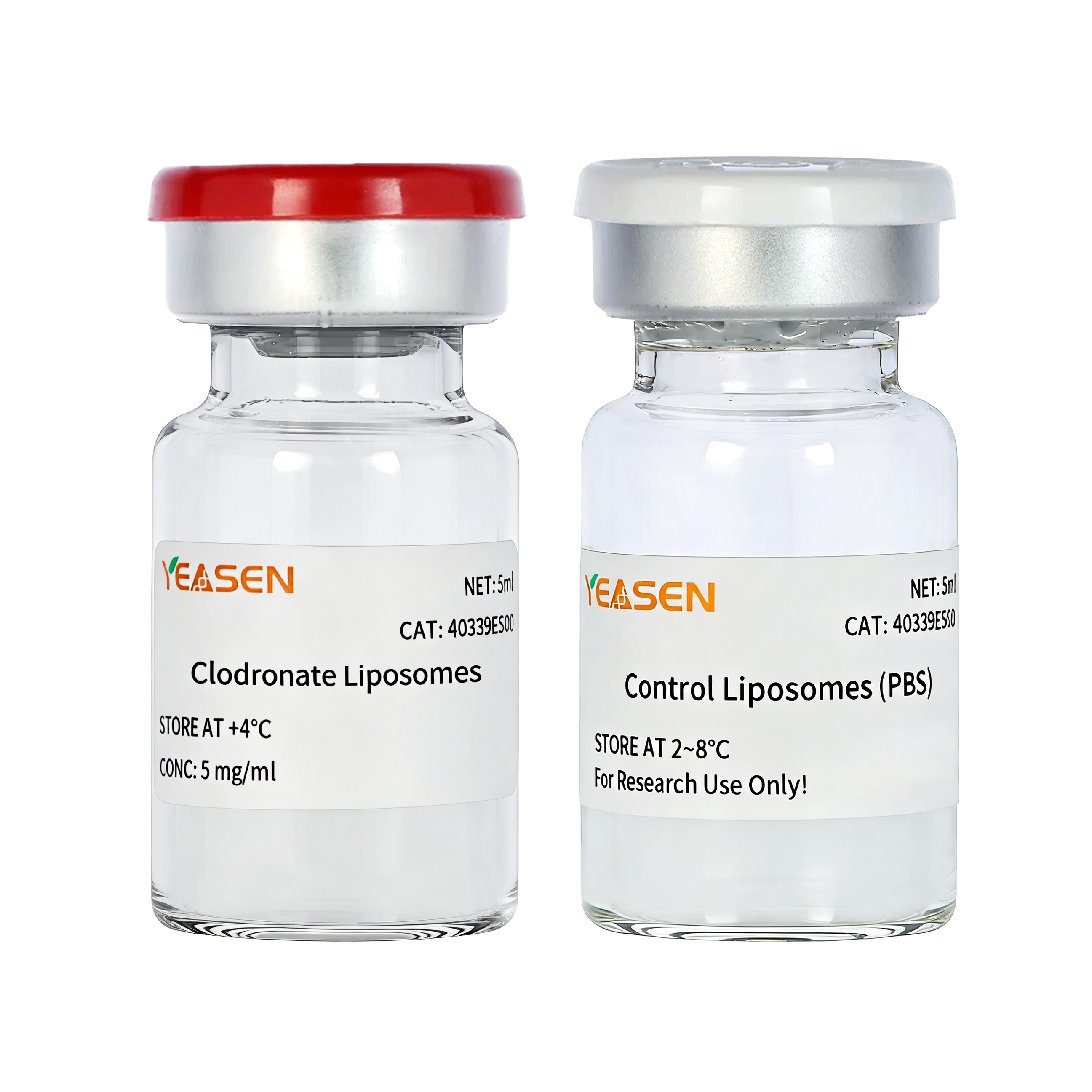
This product is an upgraded combination pack based on the original Clodronate Liposomes (Cat#40337ES), containing both an In Vivo Macrophage Depletion Reagent and an Empty Liposome Control for enhanced experimental convenience.
Features
Efficient Macrophage Depletion: Efficient macrophage depletion through clodronate-encapsulated liposomes.
High specificity: Selectively targeting phagocytic macrophages and monocytes.
Validated in Multiple Models: Validated in multiple animal models for immunology, inflammation, and tumor microenvironment studies.
Ready-to-Use Format: Ready-to-use formulation for convenient and reproducible experiments.
Components
|
Components No. |
Name |
Cat.No. |
Storage |
||
|
40339ES05 |
40339ES08 |
40339ES10 |
|||
|
40337ES |
Clodronate Liposomes |
2 mL |
5 mL |
10 mL |
2~8℃ |
|
40338ES |
Control Liposomes(PBS) |
2 mL |
5 mL |
10 mL |
2~8℃ |
Figure
1. Case Study: Efficient Depletion of Perivascular Macrophages in the Mouse Brain

Figure 1. Efficient depletion of perivascular macrophages in the brain following intracisternal administration of Yeasen Macrophage Depletion Reagent (Cat. No. 40339ES).
Mice received a single injection of 4 µL clodronate liposomes (CLO) into the cisterna magna; control animals received an equal volume of PBS. Brain tissues were collected 7 days post-injection and sectioned for immunofluorescence staining using anti-CD163 antibody (Cell Signaling Technology, #24595) to label perivascular macrophages. Quantification of macrophages per unit vessel length showed a significant reduction in the CLO group (33.10 ± X.XX) compared to PBS controls (96.59 ± X.XX), corresponding to a ~66% decrease (or approximately 34% of control levels). Note: If CD26 was intended instead of CD163, please confirm—CD163 is a canonical marker for perivascular macrophages in the CNS; CD26 is atypical for this population.
Learn More:
Storage
FAQ
Injection of a non-homogeneous suspension—liposomes sediment over time. Always gently mix before and during use, especially when injecting multiple animals sequentially.
IInjection of cold liposomes directly from 4°C—always warm to room temperature before administration.
Citations
Applications


You may also like
Inquiry
FAQ
The product is for research purposes only and is not intended for therapeutic or diagnostic use in humans or animals. Products and content are protected by patents, trademarks, and copyrights owned by Yeasen Biotechnology. Trademark symbols indicate the country of origin, not necessarily registration in all regions.
Certain applications may require additional third-party intellectual property rights.
Yeasen is dedicated to ethical science, believing our research should address critical questions while ensuring safety and ethical standards.