
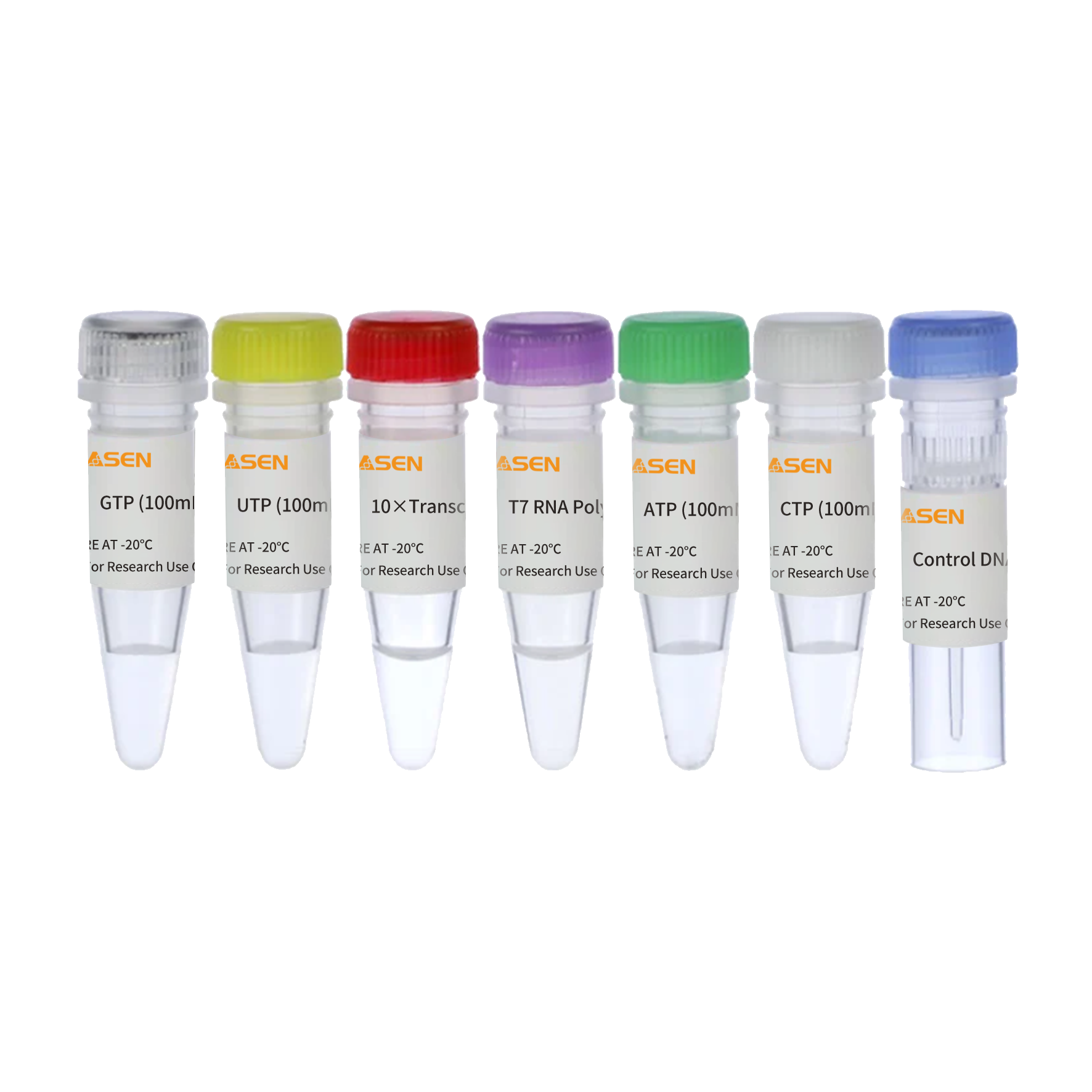


T7 High Yield RNA Synthesis Kit optimizes the transcription reaction system. The kit can synthesize the single-stranded RNA efficiently by using T7 RNA polymerase, the linear double-stranded DNA with the T7 promoter sequence as the template, NTPs as the substrate to control the DNA sequence downstream of the promoter. During transcription, modified nucleotides can be added to the substrate to prepare biotin or dye-labeled RNA.
This kit can synthesize long transcripts and short transcripts, RNA can be produced 100-200 μg with 1 μg of DNA template input. The RNA synthesized by transcription can be used for various downstream applications, such as RNA structure and function research, RNase protection, probe hybridization, RNAi, microinjection, and in vitro translation.
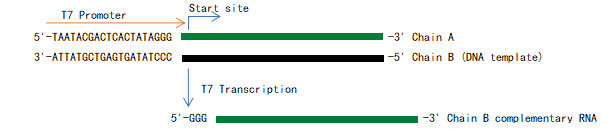
Figure 1: In vitro RNA transcription process
Feature
Up to 180 μg of RNA per reaction from 1 μg of the control template
Optimized reaction system for the IVT process
Decrease the dsRNA production
Higher RNA integrity and purity
Application
In vitro RNA synthesis
Components
| Components No. | Name | 10623ES50 (50 T) | 10623ES60 (100 T) | 10623ES70 (500 T) |
| 10623-A | T7 RNA Polymerase Mix | 100 μL | 200 μL | 1 mL |
| 10623-B | 10×Transcription Buffer | 100 μL | 200 μL | 1 mL |
| 10623-C | ATP (100mM) | 100 μL | 200 μL | 1 mL |
| 10623-D | CTP (100mM) | 100 μL | 200 μL | 1 mL |
| 10623-E | GTP (100mM) | 100 μL | 200 μL | 1 mL |
| 10623-F | UTP (100mM) | 100 μL | 200 μL | 1 mL |
| 10623-G | Control DNA Template (500ng/μL) | 10 μL | 20 μL | 100 μL |
Figures
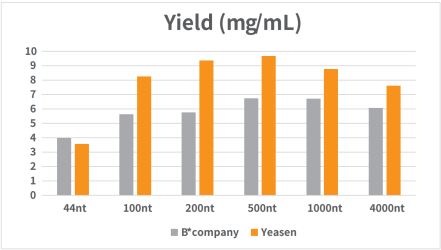
Figure 1. Standard RNA was synthesized in vitro using T7 RNA synthesis kit.
The reaction was incubated in a PCR instrument at 37℃ for 2h and then purified by magnetic beads (Cat#12602). The yield result was analyzed by NanoDrop spectrophotometer as shown in Figure 1.
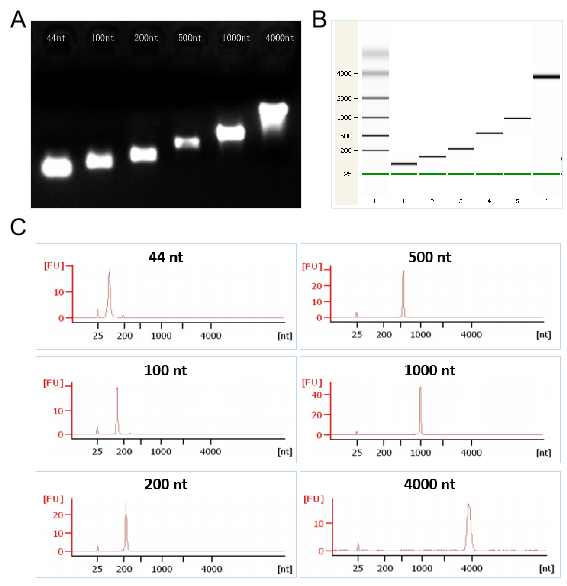
Figures 2. The transcription demonstration of different lengths of RNA by T7 kit respectively in the electrophoretogram (Figures 2A), the capillary electrophoresis diagram (Figures 2B), and the chromatogram (Figures 2C)
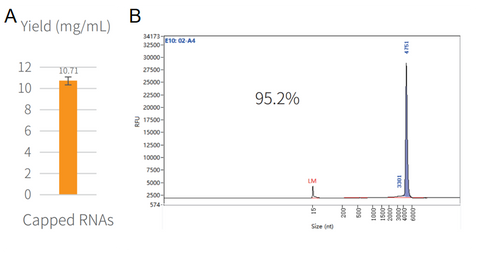
Figure 3. Synthesis of capped RNA in vitro.
The reaction was incubated in PCR instrument at 37℃ for 2h, and then purified by magnetic beads (Cat#12602). The yield result was assayed by NanoDrop spectrophotometer as shown in Figure 3A. The integrity result was analyzed by capillary electrophoresis as shown in Figure 3B.
FAQs:
The quality of the template is closely related to the yield. If the yield of the experimental group is significantly lower than the control group, the possible reasons are:
1) the experimental template contains inhibitory components;
2) The template has something wrong.
Suggestions:
1) Re-purify the template;
2) Determine the template quantification and its integrity;
3) Extend the reaction time;
4) Increase the amount of template input;
5) Try other promoters and RNA polymerases.
2. Low yield of short transcripts
A short transcription initiation fragment will inhibit the reaction. When the transcription product is less than 100 nt, extending the reaction time to 4-8 hs or increasing the amount of template to 2 μg will increase RNA yield.
3. RNA transcription length is greater than expected
If the electrophoresis shows that the product band is larger than the expected size, the possible reasons:
1) The plasmid template may not be completely linearized;
2) The 3' end of the sense strand has a prominent structure;
3) The RNA has a secondary structure that is not completely denatured.
Suggestions:
1) Check whether the template is completely linearized, and if necessary, perform additional linearization;
2) Select a suitable restriction enzyme to avoid 3' overhangs, or use Klenow Fragment /T4 DNA polymerase to complete the transcription before proceeding;
3) Use denatured gel to detect RNA products.
4. RNA transcription length is less than expected
If the electrophoresis shows that the product band is smaller than the expected size, the possible reasons:
1) The template contains a termination sequence similar to T7 RNA polymerase;
2) The GC content in the template is high.
Suggestions:
1) Lower the reaction temperature (for example, 30°C). Sometimes lowering the temperature can increase the transcription length, but it will reduce the yield. Or try different RNA polymerases for transcription;
2) If the template GC content is high, use 42℃ to transcript, or add SSB to increase the yield and transcription length.
5. Electrophoresis tailing of transcription products
There is a tailing phenomenon during electrophoresis.
Possible reasons:
1) Contaminated by RNase during experimental operation;
2) Contaminated DNA template by RNase.
Suggestions:
1)Use RNase-free pipette tips and EP tubes, wear disposable latex gloves and masks, and all reagents are prepared with RNase free H2O.
2) Re-purify the template DNA.
Storage
FAQ
The optimization of the IVT system can be achieved by adjusting the template, the amount of T7 enzyme used, and if it is co-transcription with cap addition, the ratio between the cap and NTP can be considered; for enzymatic cap addition, the conditions can be optimized in terms of the dosage of the cap-adding enzyme, 2-O-methyltransferase, and SAM. Regarding the template, apart from the requirement of complete linearization, there is another point, which is sequence design. For example, in the 5'UTR region, pay attention to uAUG and Kozak sequence; for CDS, consider the codon preference, GC3 content, and dinucleotide preference, etc.; 3'UTR: RBP and miRNA binding sites: and another point is the secondary structure of RNA. The stable secondary structure of the 5'UTR pre-sequence will reduce the expression of mRNA; the stable secondary structure of 3'UTR will increase the stability of mRNA and promote the expression of the encoded protein. For the recommended IVT system and more detailed tips, please refer to the mRNA in vitro synthesis experiment manual of Vivian Biotechnology.
The average yield is between 120-220 ug/ul (the yield is highly dependent on the sequence design). In the co-transcription method, the mRNA yield is 8 g/L. With process optimization, the yield will increase. Currently, the quality parameters of the available processes include observing the fluorescence value of GFP and measuring the cap addition rate using LC-MS.
The T7 pol enzyme will use the product RNA as a template and continue to extend the RNA at its 3' end. The extended sequence will form complementary pairing with the 3' end sequence of the original RNA molecule, thereby creating a hairpin structure.
The T7 pol enzyme can use RNA as a template to replicate RNA molecules, and synthesize the complementary strand.
(At present, there is no effective method for removing dsRNA. However, there is a patent report suggesting that a fiber column (sigma) could be tried.)
1. Reduce the concentration of magnesium ions; however, reducing the concentration of magnesium ions will also lead to a decrease in the production of RNA, and a balance point needs to be reached.
2. Increase the reaction temperature of IVT to 50-56℃. This temperature can effectively reduce the content of dsRNA in the product; however, the requirements for equipment for high-temperature reactions will vary, and it may also increase the cost.
3. In the IVT reaction system, certain dispersants such as urea and formamide are added; our process research team has also conducted some experiments on this route, which can achieve the effect of inhibiting dsRNA. However, whether it is suitable for process scaling-up still needs further research.
This kind of precipitation occurs by chance and is also closely related to the sequence design.
Solution: (1) Reduce the concentration of magnesium ions, but this will result in a decrease in yield. The amount of T7 enzyme needs to be increased and the reaction time (from 2 hours to 3-4 hours) needs to be extended; (2) The form of NTP (the presence of magnesium ions at a high concentration, such as 46 mM, does not select NTP, but when the magnesium ion concentration decreases, the yield of NTP (Tris salt form) does not change much, and the yield of the triNa form of NTP decreases significantly.
Citations
Documents
Applications

You may also like
Inquiry
FAQ
The product is for research purposes only and is not intended for therapeutic or diagnostic use in humans or animals. Products and content are protected by patents, trademarks, and copyrights owned by Yeasen Biotechnology. Trademark symbols indicate the country of origin, not necessarily registration in all regions.
Certain applications may require additional third-party intellectual property rights.
Yeasen is dedicated to ethical science, believing our research should address critical questions while ensuring safety and ethical standards.